
[Paper Review] Systemic Risk and Vulnerability Analysis of Multi-cloud Environments
The paper conducts a holistic risk and vulnerability analysis of multi-cloud environments using STRIDE and DREAD to identify and rank attack vectors across architecture, APIs, authentication, automation, management differences, and legislation, and suggests mitigations.
With the increasing use of multi-cloud environments, security professionals face challenges in configuration, management, and integration due to uneven security capabilities and features among providers. As a result, a fragmented approach toward security has been observed, leading to new attack vectors and potential vulnerabilities. Other research has focused on single-cloud platforms or specific applications of multi-cloud environments. Therefore, there is a need for a holistic security and vulnerability assessment and defense strategy that applies to multi-cloud platforms. We perform a risk and vulnerability analysis to identify attack vectors from software, hardware, and the network, as well as interoperability security issues in multi-cloud environments. Applying the STRIDE and DREAD threat modeling methods, we present an analysis of the ecosystem across six attack vectors: cloud architecture, APIs, authentication, automation, management differences, and cybersecurity legislation. We quantitatively determine and rank the threats in multi-cloud environments and suggest mitigation strategies.
Motivation & Objective
- Motivate the need for holistic security across multi-cloud environments due to uneven provider security capabilities.
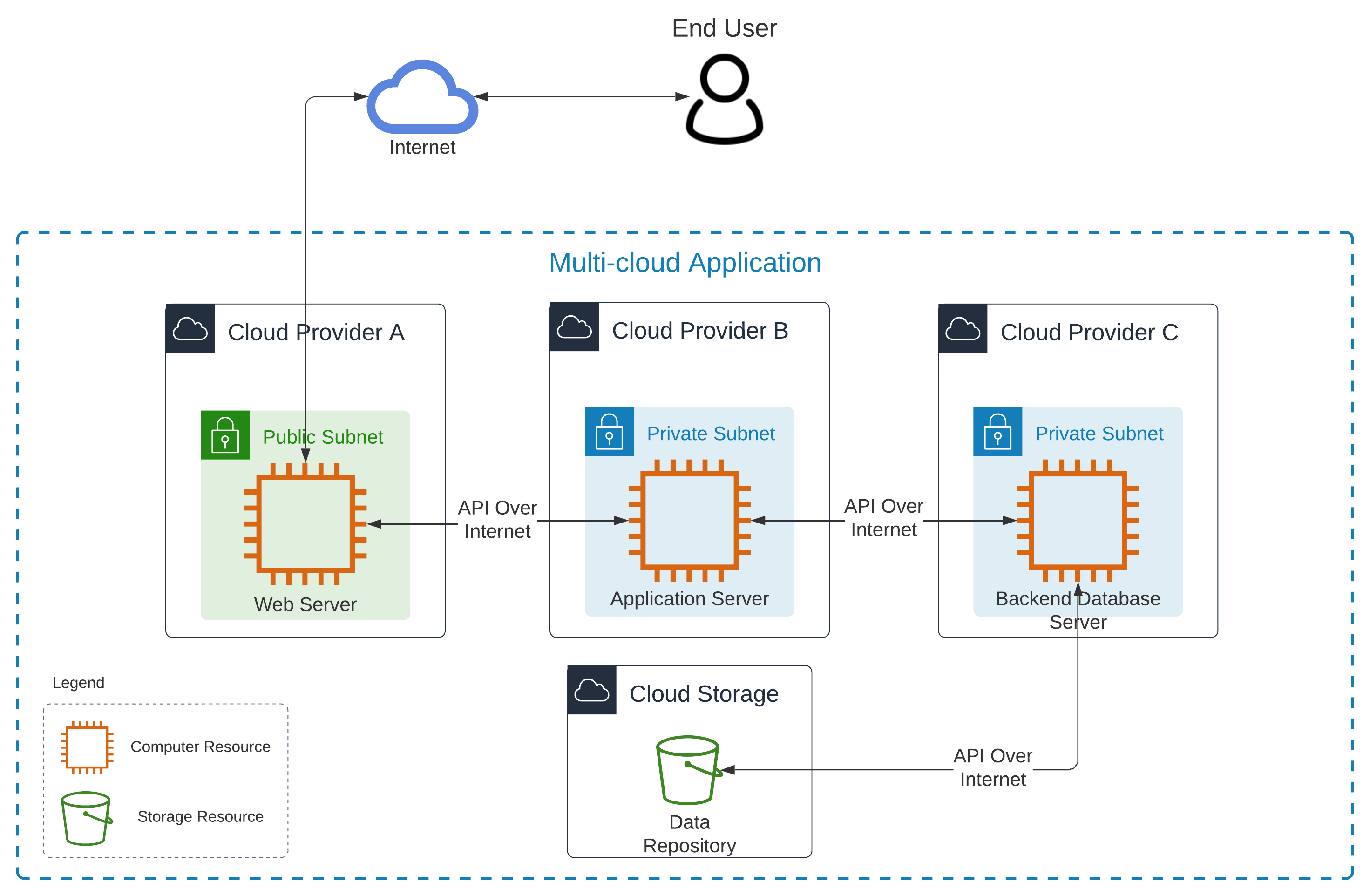
- Define a representative multi-cloud architecture and attack surfaces to study interoperability risks.
- Apply STRIDE to categorize attack vectors and DREAD to quantify and rank risks.
- Identify mitigations for each attack vector to improve multi-cloud security posture.
Proposed method
- Model a three-tier multi-cloud web application architecture distributed across providers.
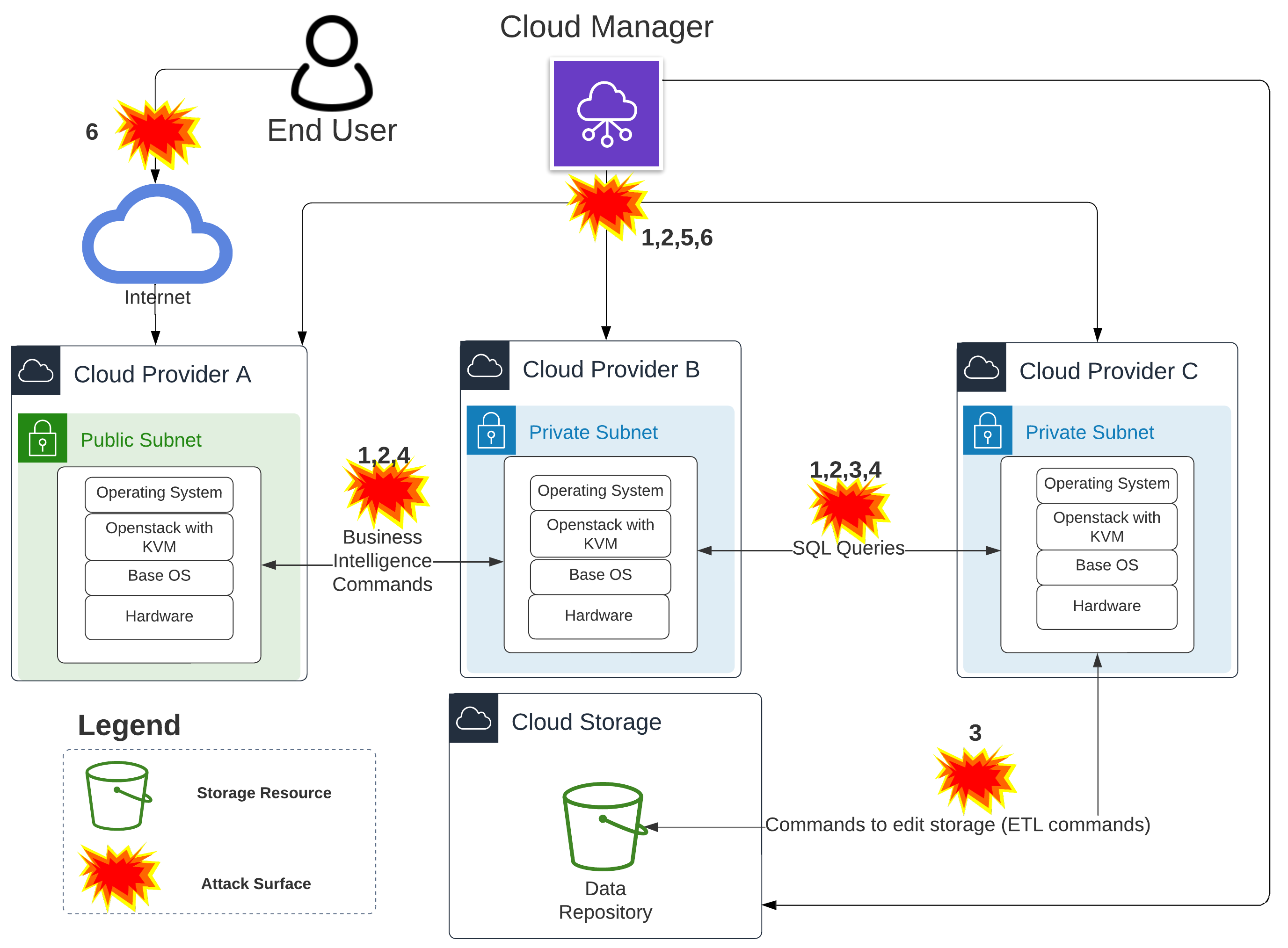
- Use STRIDE to identify and categorize attack vectors across architecture, APIs, authentication, automation, management differences, and legislation.
- Apply DREAD to assign quantitative risk scores to each threat category and prioritize mitigations.
- Propose practical mitigations such as multi-factor authentication and privileged access management for identified risks.
Experimental results
Research questions
- RQ1What attack vectors emerge in multi-cloud environments when considering architecture, APIs, authentication, automation, management, and legislation?
- RQ2How can STRIDE be used to categorize these vectors and DREAD to quantitatively rank their risk in a multi-cloud setting?
- RQ3What mitigations are most effective for reducing risk across the identified multi-cloud attack vectors?
Key findings
- Threats are identified and categorized across six attack vectors in a multi-cloud setting.
- Quantitative risk scores are computed to prioritize threats (via DREAD) and guide mitigation efforts.
- Mitigations include strategies such as multifactor authentication and privileged access management for each attack vector.
- The study emphasizes interoperability challenges as a root cause of security issues in multi-cloud environments.
Read this paper
Open the full text in the Nubint reader and ask about any passage as you read.
Read this paper on NubintThis review was generated by AI from the original paper. Please check the paper before citing it.