
[Paper Review] The Foundation Model Transparency Index
The paper introduces the 2023 Foundation Model Transparency Index (FMTI) with 100 indicators across upstream, model, and downstream domains, scoring 10 major developers on flagship models to assess transparency and guide governance.
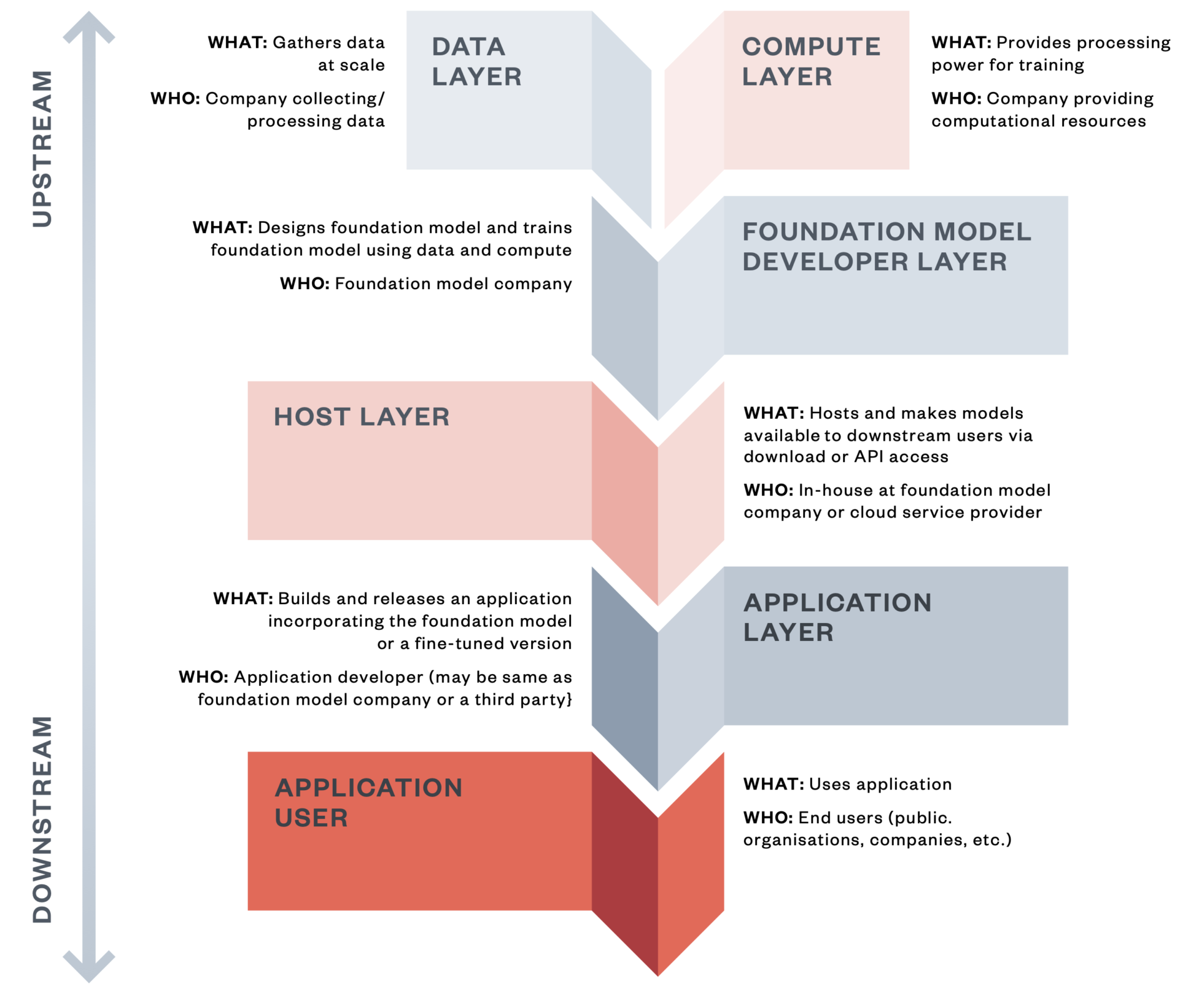
Foundation models have rapidly permeated society, catalyzing a wave of generative AI applications spanning enterprise and consumer-facing contexts. While the societal impact of foundation models is growing, transparency is on the decline, mirroring the opacity that has plagued past digital technologies (e.g. social media). Reversing this trend is essential: transparency is a vital precondition for public accountability, scientific innovation, and effective governance. To assess the transparency of the foundation model ecosystem and help improve transparency over time, we introduce the Foundation Model Transparency Index. The Foundation Model Transparency Index specifies 100 fine-grained indicators that comprehensively codify transparency for foundation models, spanning the upstream resources used to build a foundation model (e.g data, labor, compute), details about the model itself (e.g. size, capabilities, risks), and the downstream use (e.g. distribution channels, usage policies, affected geographies). We score 10 major foundation model developers (e.g. OpenAI, Google, Meta) against the 100 indicators to assess their transparency. To facilitate and standardize assessment, we score developers in relation to their practices for their flagship foundation model (e.g. GPT-4 for OpenAI, PaLM 2 for Google, Llama 2 for Meta). We present 10 top-level findings about the foundation model ecosystem: for example, no developer currently discloses significant information about the downstream impact of its flagship model, such as the number of users, affected market sectors, or how users can seek redress for harm. Overall, the Foundation Model Transparency Index establishes the level of transparency today to drive progress on foundation model governance via industry standards and regulatory intervention.
Motivation & Objective
- Codify a comprehensive, fine-grained framework to measure transparency in foundation models across upstream resources, model details, and downstream use.
- Evaluate transparency practices of 10 major foundation model developers against a standardized set of indicators.
- Provide empirical findings and actionable recommendations for developers, deployers, and policymakers to improve governance of foundation models.
Proposed method
- Decompose transparency into three domains (upstream, model, downstream) with 32–35 indicators per domain, totaling 100 decidable indicators.
- Score 10 major developers against the indicators using publicly available information for their flagship models.
- Allow developers to contest scores to ensure reliability and transparency in scoring.
- Make core materials, indicators, scores, and justifications publicly available to enable reproduibility.
Experimental results
Research questions
- RQ1What is the current state of transparency among major foundation model developers across upstream, model, and downstream domains?
- RQ2How do openness (open vs. closed) correlate with transparency scores across the ecosystem?
- RQ3What are the strongest and weakest transparency dimensions, and where are improvements most needed?
- RQ4How can the findings inform policy, governance, and industry practices for foundation models?
Key findings
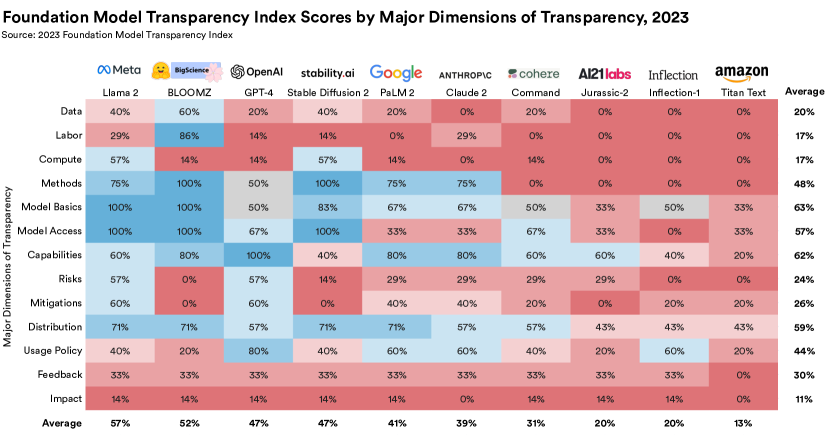
- High overall headroom for transparency, with the top score at 54/100 and the mean at 37/100.
- Significant asymmetry in scores, clustering developers into three groups from high to low performance.
- Upstream transparency performs worst, with data creation, data labor, and compute often receiving zero points.
- Model information and downstream distribution are relatively higher in transparency, but basic details like model size are still frequently undisclosed.
- Open developers outperform closed ones in most subdomains, especially upstream transparency; however, downstream transparency remains limited for both groups.
- Some pairs of developers show highly correlated scores, while Meta stands out as an outlier.
Read this paper
Open the full text in the Nubint reader and ask about any passage as you read.
Read this paper on NubintThis review was generated by AI from the original paper. Please check the paper before citing it.