
[Paper Review] The Vector Grounding Problem
The paper distinguishes five grounding notions, argues referential grounding underpins the vector grounding issue, and contends RLHF-enabled LLMs can ground meaning without requiring multimodality or embodiment.
Large language models (LLMs) produce seemingly meaningful outputs, yet they are trained on text alone without direct interaction with the world. This leads to a modern variant of the classical symbol grounding problem in AI: can LLMs' internal states and outputs be about extra-linguistic reality, independently of the meaning human interpreters project onto them? We argue that they can. We first distinguish referential grounding -- the connection between a representation and its worldly referent -- from other forms of grounding and argue it is the only kind essential to solving the problem. We contend that referential grounding is achieved when a system's internal states satisfy two conditions derived from teleosemantic theories of representation: (1) they stand in appropriate causal-informational relations to the world, and (2) they have a history of selection that has endowed them with the function of carrying this information. We argue that LLMs can meet both conditions, even without multimodality or embodiment.
Motivation & Objective
- Differentiate how internal representations can be grounded in biological or artificial systems.
- Identify five grounding notions and clarify which is central to the vector grounding problem.
- Argue that RLHF-enabled LLMs have the causal-historical relations to the world needed for grounding.
- Assess whether multimodality or embodiment are necessary or sufficient for referential grounding in artificial systems.
Proposed method
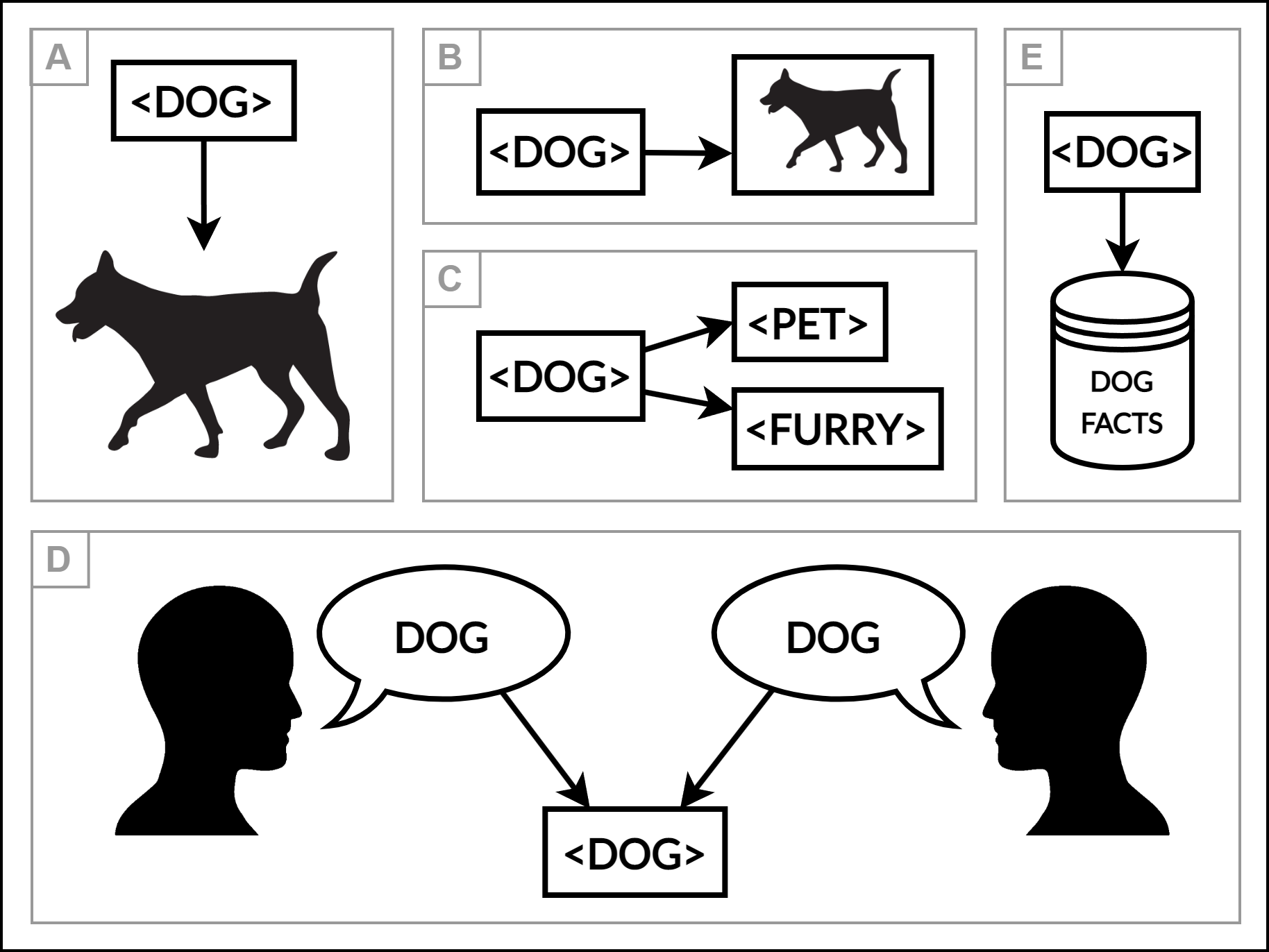
- Survey and define five notions of grounding: referential, sensorimotor, relational, communicative, epistemic.
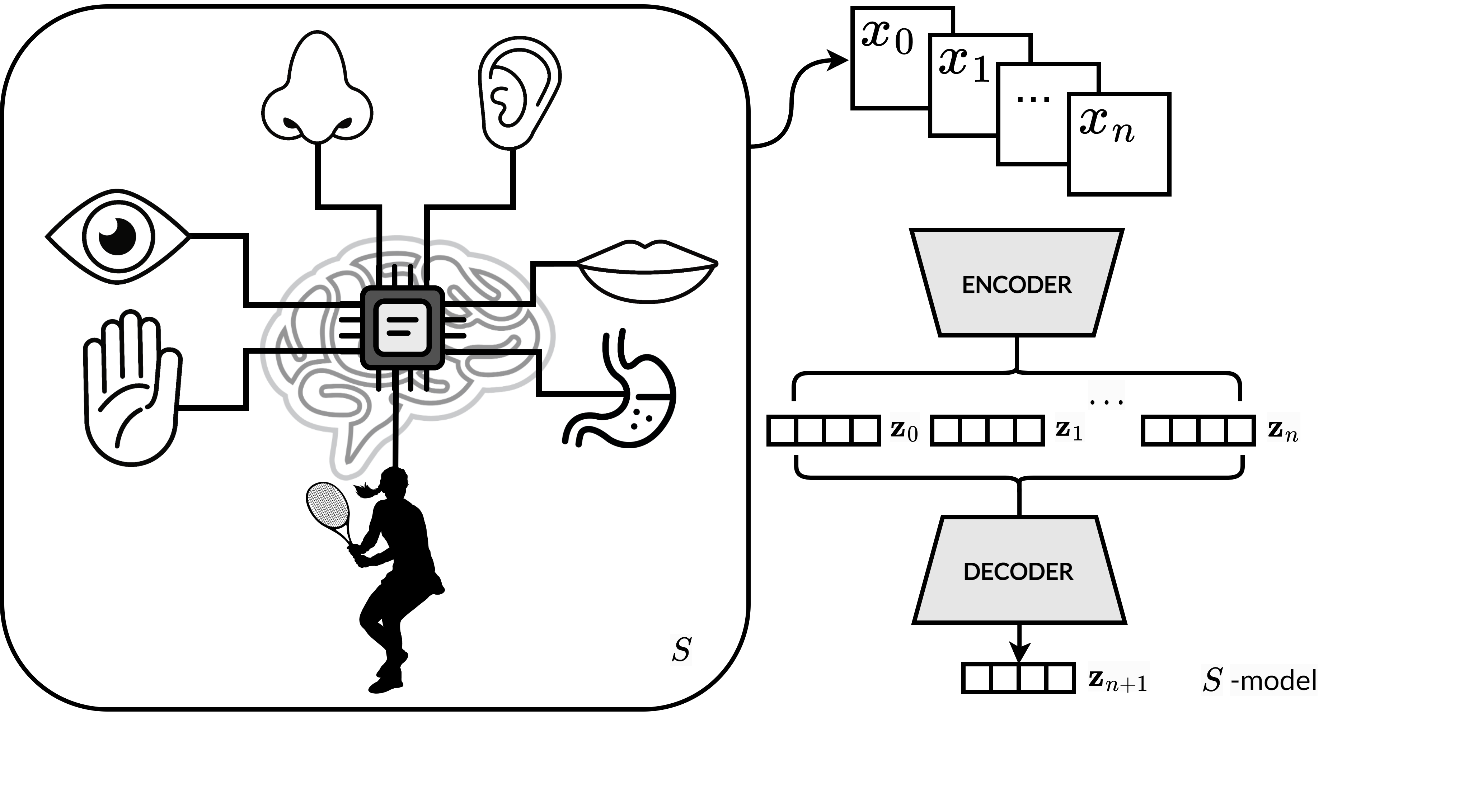
- Explain the Symbol Grounding Problem in classical AI and translate to the vector-based setting of LLMs.
- Introduce the Octopus Test as an intuition pump for grounding challenges in LLMs.
- Argue that referential grounding is essential for grounding in LLMs and discuss how RLHF and in-context learning contribute.
- Evaluate whether multimodality and embodiment are necessary or sufficient for grounding in artificial systems.
Experimental results
Research questions
- RQ1What are the distinct notions of grounding, and which is central to grounding internal representations in LLMs?
- RQ2Can large pre-trained models achieve intrinsic meaning through grounding mechanisms, particularly via RLHF and in-context learning?
- RQ3Are multimodality and embodiment required for referential grounding in artificial systems?
Key findings
- LLMs face a vector-based analogue of the Symbol Grounding Problem and therefore require grounding considerations.
- Referential grounding is identified as the central notion for grounding in LLMs, connecting internal representations to world Referents.
- RLHF and in-context learning provide features that can establish the necessary causal-historical relations to the world for grounding.
- Multimodality and embodiment are argued to be neither necessary nor sufficient conditions for referential grounding in artificial systems.
- The paper emphasizes that grounded internal states may be crucial for broader cognitive capacities but are not by themselves sufficient for understanding or agency.
Read this paper
Open the full text in the Nubint reader and ask about any passage as you read.
Read this paper on NubintThis review was generated by AI from the original paper. Please check the paper before citing it.