
[Paper Review] Topological holography for fermions
Extends the symmetry TFT framework to fermionic systems, deriving a fermionic SymTFT, analyzing 1+1D fermionic SPTs, edge modes, and bosonization, and presenting a new intrinsically gapless fermionic SPT.
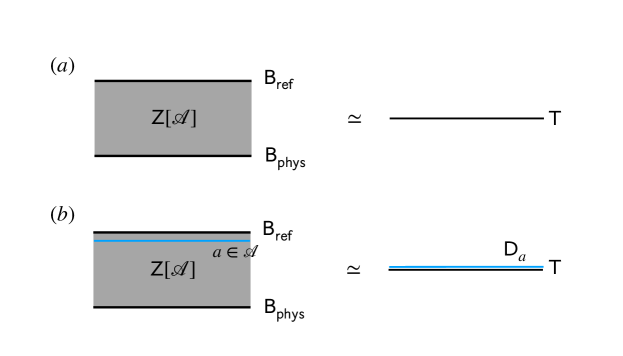
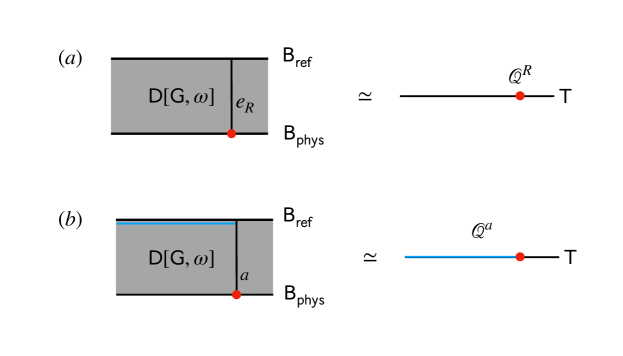
Topological holography is a conjectured correspondence between the symmetry charges and defects of a $D$-dimensional system with the anyons in a $(D+1)$-dimensional topological order: the symmetry topological field theory (SymTFT). Topological holography is conjectured to capture the topological aspects of symmetry in gapped and gapless systems, with different phases corresponding to different gapped boundaries (anyon condensations) of the SymTFT. This correspondence was previously considered primarily for bosonic systems, excluding many phases of condensed matter systems involving fermionic electrons. In this work, we extend the SymTFT framework to establish a topological holography correspondence for fermionic systems. We demonstrate that this fermionic SymTFT framework captures the known properties of $1+1D$ fermion gapped phases and critical points, including the classification, edge-modes, and stacking rules of fermionic symmetry-protected topological phases (SPTs), and computation of partition functions of fermionic conformal field theories (CFTs). Beyond merely reproducing known properties, we show that the SymTFT approach can additionally serve as a practical tool for discovering new physics, and use this framework to construct a new example of a fermionic intrinsically gapless SPT phase characterized by an emergent fermionic anomaly.
Motivation & Objective
- Generalize the SymTFT/topological holography program to fermionic systems enriched by symmetry.
- Show that fermionic SymTFT captures known 1+1D fermionic SPT properties (classification, edge modes, stacking).
- Demonstrate practical use of the framework to discover new physics, including intrinsically gapless fermionic SPTs.
Proposed method
- Construct the fermionic SymTFT for 1+1D systems with symmetry G^F containing Z2^F.
- Implement a fermionic reference boundary via condensing fermionic anyons, introducing local fermions on the boundary.
- Show spin structure dependence arises from the fermionic reference boundary and extract G^F-spin structure data.
- Demonstrate bosonization as a change of the reference boundary in the SymTFT.
- Apply the framework to recover Kitaev chain, Majorana CFT, and various fermionic SPTs; construct a fermionic igSPT with emergent fermionic anomaly.
Experimental results
Research questions
- RQ1Can the fermionic SymTFT reproduce and classify 1+1D fermionic SPT phases and their stacking rules?
- RQ2How does spin structure (G^F-spin structure) influence the fermionic SymTFT and edge physics?
- RQ3What is the role of fermionic condensation on the reference boundary in encoding fermionic phases and anomalies?
- RQ4How does bosonization manifest as a boundary change within the fermionic SymTFT?
- RQ5Can one realize intrinsically fermionic and intrinsically gapless SPTs within this framework?
Key findings
- The fermionic SymTFT framework yields the full classification of 1+1D fermionic SPTs and their stacking rules.
- Edge modes and spin-structure dependence of fermionic phases are naturally captured by the reference boundary construction.
- Bosonization/non-invertible dualities map to changes of the reference boundary within the SymTFT.
- The approach reproduces known phases such as the Kitaev chain and the Majorana CFT within a unifying topological framework.
- The framework enables construction of intrinsically-fermionic, intrinsically-gapless SPTs with emergent anomalous fermionic symmetry.
- It provides a practical field-theoretic route to bosonized descriptions of fermionic systems via SymTFT.
Read this paper
Open the full text in the Nubint reader and ask about any passage as you read.
Read this paper on NubintThis review was generated by AI from the original paper. Please check the paper before citing it.