
[Paper Review] Towards a living earth simulator
The paper proposes the Living Earth Simulator (LES), a federated, interdisciplinary platform integrating agent-based modeling, multiscale simulation, data mining, and real-time visualization to model and forecast complex societal dynamics. By combining big data, social science theories, and interactive tools like serious games, the LES enables cross-scale, theory-driven exploration of collective behaviors and systemic risks, aiming to enhance societal foresight and governance in interconnected, adaptive systems.
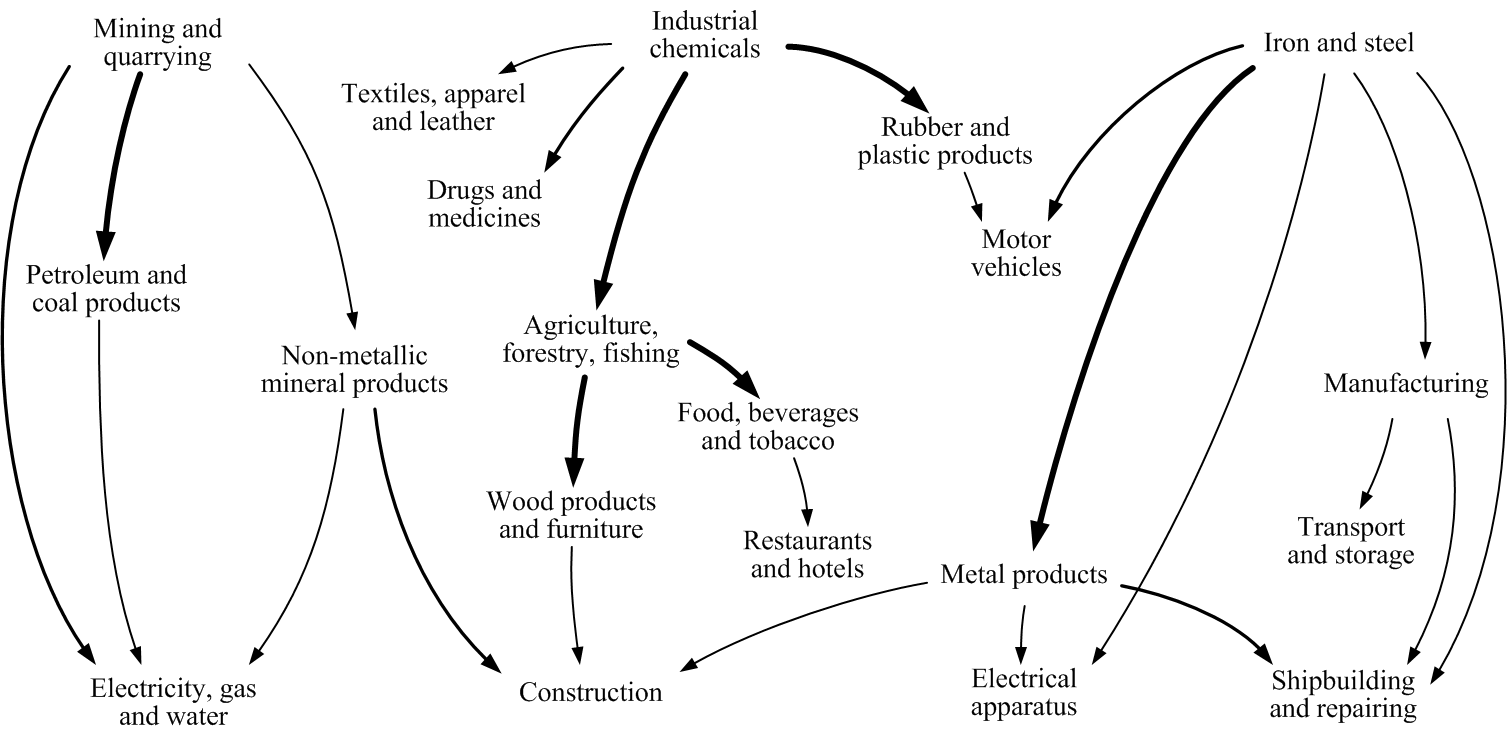
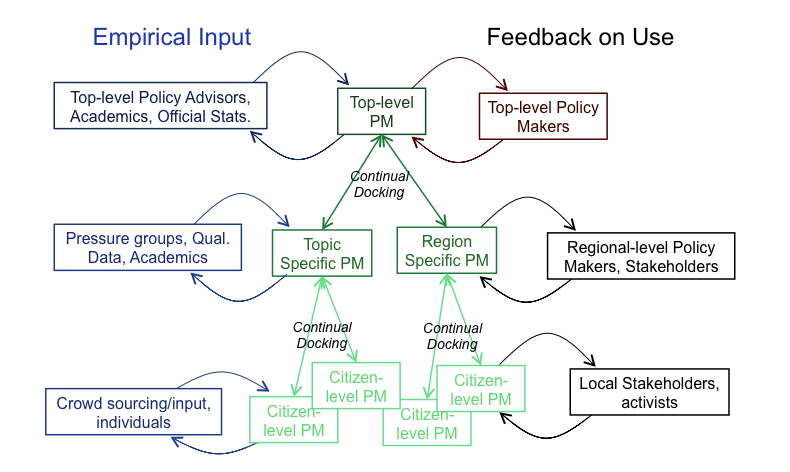
The Living Earth Simulator (LES) is one of the core components of the FuturICT architecture. It will work as a federation of methods, tools, techniques and facilities supporting all of the FuturICT simulation-related activities to allow and encourage interactive exploration and understanding of societal issues. Society-relevant problems will be targeted by leaning on approaches based on complex systems theories and data science in tight interaction with the other components of FuturICT. The LES will evaluate and provide answers to real-world questions by taking into account multiple scenarios. It will build on present approaches such as agent-based simulation and modeling, multiscale modelling, statistical inference, and data mining, moving beyond disciplinary borders to achieve a new perspective on complex social systems.
Motivation & Objective
- To address the growing complexity of interconnected societal challenges—such as financial crises, pandemics, and social conflict—by creating a unified simulation platform.
- To overcome disciplinary silos by fusing insights from ICT, complexity science, and the social sciences to model collective human behavior.
- To enable interactive, theory-informed simulation of societal systems through real-time data integration and visualization tools.
- To support proactive governance by simulating multiple scenarios and forecasting outcomes of policy interventions.
- To foster collective self-awareness in society by embedding forecasting and adaptive planning capabilities into socio-technical systems.
Proposed method
- Leverages agent-based modeling to simulate individual and group behaviors in socio-technical systems with adaptive, goal-driven agents.
- Employs multiscale modeling with uncertainty quantification to represent interactions across different spatial and temporal scales.
- Integrates self-organizing knowledge mining to extract patterns and implicit assumptions from heterogeneous data sources.
- Uses statistical inference and data mining to validate models against real-world data and detect emergent system behaviors.
- Deploys interactive visualization and gamification via 'LES Virtual Worlds' to enhance user engagement and understanding of complex dynamics.
- Relies on a federated computing architecture to support real-time data ingestion, model execution, and collaborative scenario exploration.
Experimental results
Research questions
- RQ1How can large-scale, interactive simulations of socio-technical systems be designed to model non-linear, adaptive, and interdependent societal dynamics?
- RQ2What methods enable the integration of big data, social theories, and computational models to improve forecasting of collective behaviors?
- RQ3How can real-time monitoring and feedback loops be embedded into simulation platforms to support adaptive governance?
- RQ4In what ways can gamification and visualization tools enhance understanding and decision-making in complex societal simulations?
- RQ5What are the methodological and ethical challenges in modeling adaptive human behavior that evolves in response to predictions?
Key findings
- The Living Earth Simulator enables the simulation of complex societal phenomena such as social contagion, conflict, and institutional collapse through integrated modeling frameworks.
- Real-time data from mobile and social media sources can be leveraged to inform and validate models of social behavior during crises.
- Serious games and interactive visualizations significantly improve user engagement and the ability to explore scenario-based policy outcomes.
- The platform supports multiscale modeling with uncertainty quantification, allowing for robust analysis of system-level behaviors across different spatial and temporal scales.
- The integration of cognitive and behavioral theories into models reveals that social adaptation to predictions introduces new methodological and ethical challenges.
- The LES architecture facilitates cross-methodological collaboration across disciplines, enabling hypothesis testing and virtual experimentation in socio-technical systems.
Read this paper
Open the full text in the Nubint reader and ask about any passage as you read.
Read this paper on NubintThis review was generated by AI from the original paper. Please check the paper before citing it.