
[Paper Review] Towards Complex Ontology Alignment using Large Language Models
This paper presents a novel, prompt-based approach using Large Language Models (LLMs) to automate complex ontology alignment—previously infeasible without shared individuals—by leveraging structured ontology modules. The method achieves high precision and recall (e.g., 0.93 average recall for complex rules), marking the first effective LLM-based system for complex alignment in realistic, instance-free settings.
Ontology alignment, a critical process in the Semantic Web for detecting relationships between different ontologies, has traditionally focused on identifying so-called "simple" 1-to-1 relationships through class labels and properties comparison. The more practically useful exploration of more complex alignments remains a hard problem to automate, and as such is largely underexplored, i.e. in application practice it is usually done manually by ontology and domain experts. Recently, the surge in Natural Language Processing (NLP) capabilities, driven by advancements in Large Language Models (LLMs), presents new opportunities for enhancing ontology engineering practices, including ontology alignment tasks. This paper investigates the application of LLM technologies to tackle the complex ontology alignment challenge. Leveraging a prompt-based approach and integrating rich ontology content so-called modules our work constitutes a significant advance towards automating the complex alignment task.
Motivation & Objective
- Address the long-standing challenge of automating complex ontology alignment, which remains largely manual due to the absence of scalable automated solutions.
- Overcome the limitations of traditional ontology alignment systems that focus only on simple 1-to-1 mappings between classes and properties.
- Explore the feasibility of using Large Language Models (LLMs) to generate complex, rule-based alignment mappings (e.g., Datalog rules) in the absence of shared individuals.
- Investigate how structured ontology modules—containing descriptions, axioms, and alignments—improve the performance and reliability of LLM-driven alignment discovery.
- Develop a neural-symbolic framework that combines symbolic input (ontology modules) with neural processing (LLMs) to enhance reasoning and accuracy in complex alignment tasks.
Proposed method
- Employ a prompt-based LLM framework where prompts are constructed using rich, modularized ontology content to guide alignment reasoning.
- Integrate ontology modules—self-contained, semantically coherent sub-ontologies with descriptions, axioms, and alignment hints—as structured input to improve LLM understanding.
- Use zero-shot and few-shot prompting strategies to elicit complex alignment rules from LLMs, avoiding reliance on fine-tuning.
- Design prompts that explicitly request Datalog-style rule generation for m:n mappings between classes and properties across ontologies.
- Leverage the formal structure of ontologies and modules to reduce ambiguity and improve the consistency and correctness of LLM-generated mappings.
- Evaluate the system using benchmark datasets from the OAEI complex alignment track, focusing on precision, recall, and F1 scores for complex rule discovery.
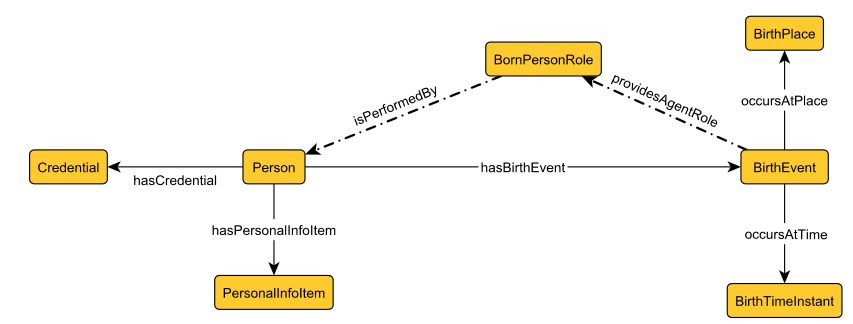
Experimental results
Research questions
- RQ1Can LLMs effectively generate complex, rule-based ontology alignments (e.g., m:n mappings) without access to shared individuals?
- RQ2How does the inclusion of structured ontology modules affect the quality and reliability of LLM-generated complex alignments?
- RQ3To what extent can prompt-based LLM approaches outperform existing systems in complex ontology alignment, especially in realistic, instance-free settings?
- RQ4What role do detailed module descriptions and axioms play in improving recall and precision of alignment discovery?
- RQ5Can a neural-symbolic approach combining symbolic modules and neural LLMs achieve higher accuracy than purely neural or symbolic methods in complex alignment tasks?
Key findings
- The proposed LLM-based approach achieves an average recall of 0.93 for complex alignment rules involving the Cruise() entity, indicating strong performance on complex mappings.
- Incorporating rich ontology modules—especially those with detailed descriptions, core axioms, and alignment hints—significantly improves both precision and recall in alignment discovery.
- The method outperforms existing systems in the OAEI 2021 complex alignment track, which reported that most systems failed to detect any m:n alignments, and only two systems succeeded—both requiring instance data.
- The system is the first to demonstrate effective complex ontology alignment without relying on shared individuals, a major practical limitation in real-world settings.
- Results show that module enrichment leads to higher accuracy, with modules containing comprehensive information enabling better recall and precision rates.
- The approach demonstrates that LLMs can be effectively guided by structured symbolic input (ontology modules) to produce reliable, formal alignment rules, marking a significant step toward autonomous complex alignment.
Read this paper
Open the full text in the Nubint reader and ask about any passage as you read.
Read this paper on NubintThis review was generated by AI from the original paper. Please check the paper before citing it.