
[Paper Review] Towards Reliable Misinformation Mitigation: Generalization, Uncertainty, and GPT-4
This paper proposes a reliability-focused approach to misinformation mitigation using GPT-4, emphasizing generalization, uncertainty quantification, and multilingual performance. It introduces a GPT-4 Uncertainty-Enabled method that detects unverifiable (impossible) examples, improving F1 by 8 points on LIAR-New and 14 on LIAR, while releasing the multilingual LIAR-New dataset with 'Possibility' labels to assess contextual sufficiency for veracity evaluation.
Misinformation poses a critical societal challenge, and current approaches have yet to produce an effective solution. We propose focusing on generalization, uncertainty, and how to leverage recent large language models, in order to create more practical tools to evaluate information veracity in contexts where perfect classification is impossible. We first demonstrate that GPT-4 can outperform prior methods in multiple settings and languages. Next, we explore generalization, revealing that GPT-4 and RoBERTa-large exhibit differences in failure modes. Third, we propose techniques to handle uncertainty that can detect impossible examples and strongly improve outcomes. We also discuss results on other language models, temperature, prompting, versioning, explainability, and web retrieval, each one providing practical insights and directions for future research. Finally, we publish the LIAR-New dataset with novel paired English and French misinformation data and Possibility labels that indicate if there is sufficient context for veracity evaluation. Overall, this research lays the groundwork for future tools that can drive real-world progress to combat misinformation.
Motivation & Objective
- To address the gap between research benchmarks and real-world misinformation detection by focusing on generalization and uncertainty, rather than just classification accuracy.
- To evaluate whether GPT-4 generalizes better than prior models like RoBERTa-large in detecting misinformation across languages and contexts.
- To develop practical methods for handling uncertainty, especially for cases where insufficient context makes truth evaluation impossible.
- To release a new multilingual dataset (LIAR-New) with paired English and French examples and 'Possibility' labels indicating whether context is sufficient for evaluation.
- To explore practical factors like prompting, temperature, versioning, explainability, and web retrieval to guide future deployment of LLM-based misinformation detection systems.
Proposed method
- Fine-tuned GPT-4 for binary and multiclass misinformation classification using the LIAR, CT-FAN-22, and newly released LIAR-New datasets.
- Introduced a GPT-4 Uncertainty-Enabled method that identifies and excludes 'impossible' examples—statements lacking sufficient context for veracity judgment—using model confidence and self-awareness cues.
- Developed a web retrieval pipeline that augments input statements with evidence from PolitiFact articles, significantly improving prediction reliability.
- Applied temperature scaling and systematic prompting to analyze sensitivity and optimize performance across diverse settings.
- Used the Possibility label in LIAR-New to distinguish between cases where truthfulness can be evaluated and those where context is insufficient.
- Conducted ablation studies on model versions, explainability, and retrieval to assess impact on generalization and uncertainty handling.
Experimental results
Research questions
- RQ1How does GPT-4’s generalization performance compare to RoBERTa-large across different misinformation detection benchmarks and languages?
- RQ2Can uncertainty-aware classification improve real-world reliability by identifying unverifiable statements that lack sufficient context?
- RQ3To what extent does web retrieval enhance the performance of LLM-based misinformation classifiers?
- RQ4How do hyperparameters like temperature and prompting strategies affect the robustness and reliability of GPT-4 in misinformation detection?
- RQ5Can the inclusion of 'Possibility' labels in datasets improve model generalization and help distinguish between unverifiable claims and false ones?
Key findings
- GPT-4 outperforms prior methods on both LIAR and CT-FAN-22, achieving state-of-the-art results in both zero-shot and few-shot settings across English and German.
- The GPT-4 Uncertainty-Enabled method detects a significant number of impossible examples and improves F1 by 8 percentage points on LIAR-New and 14 points on LIAR.
- GPT-4 and RoBERTa-large exhibit distinct failure modes, indicating that GPT-4 generalizes differently and potentially more robustly than previous models.
- Web retrieval with PolitiFact articles substantially boosts performance, suggesting that external evidence integration is a viable path to higher reliability.
- The addition of 'Possibility' labels in LIAR-New enables better detection of unverifiable claims, with GPT-4 showing self-awareness when context is missing.
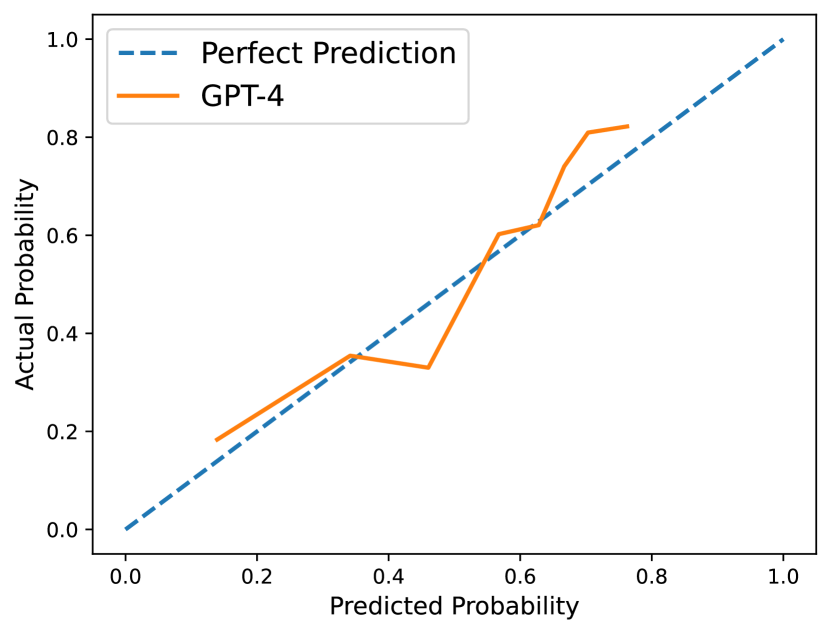
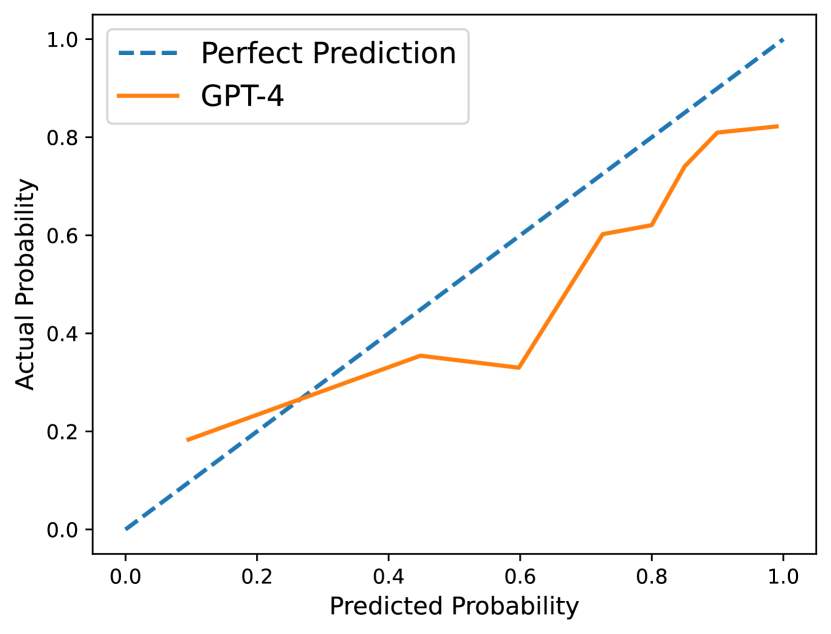
- Soft (probabilistic) performance metrics often diverge from hard classification results, highlighting the importance of uncertainty-aware evaluation over binary accuracy alone.
Read this paper
Open the full text in the Nubint reader and ask about any passage as you read.
Read this paper on NubintThis review was generated by AI from the original paper. Please check the paper before citing it.