
[Paper Review] Towards Robust Fidelity for Evaluating Explainability of Graph Neural Networks
This paper proposes a robust, information-theoretic framework for evaluating graph neural network (GNN) explainability by addressing the critical flaw of distribution shift in existing fidelity metrics. It introduces novel, distribution-shift-resilient metrics—$Fid_{\alpha_1,+}$, $Fid_{\alpha_2,-}$, and $Fid_{\alpha_1,\alpha_2,\Delta}$—that demonstrate significantly stronger alignment with gold-standard edit distances across diverse datasets, outperforming conventional $Fid_+$, $Fid_-$, and $Fid_\Delta$ in consistency and reliability.
Graph Neural Networks (GNNs) are neural models that leverage the dependency structure in graphical data via message passing among the graph nodes. GNNs have emerged as pivotal architectures in analyzing graph-structured data, and their expansive application in sensitive domains requires a comprehensive understanding of their decision-making processes -- necessitating a framework for GNN explainability. An explanation function for GNNs takes a pre-trained GNN along with a graph as input, to produce a `sufficient statistic' subgraph with respect to the graph label. A main challenge in studying GNN explainability is to provide fidelity measures that evaluate the performance of these explanation functions. This paper studies this foundational challenge, spotlighting the inherent limitations of prevailing fidelity metrics, including $Fid_+$, $Fid_-$, and $Fid_Δ$. Specifically, a formal, information-theoretic definition of explainability is introduced and it is shown that existing metrics often fail to align with this definition across various statistical scenarios. The reason is due to potential distribution shifts when subgraphs are removed in computing these fidelity measures. Subsequently, a robust class of fidelity measures are introduced, and it is shown analytically that they are resilient to distribution shift issues and are applicable in a wide range of scenarios. Extensive empirical analysis on both synthetic and real datasets are provided to illustrate that the proposed metrics are more coherent with gold standard metrics. The source code is available at https://trustai4s-lab.github.io/fidelity.
Motivation & Objective
- To identify and address the fundamental flaw in existing GNN explanation fidelity metrics—sensitivity to distribution shifts caused by subgraph removal.
- To establish a formal, information-theoretic definition of GNN explainability based on sufficient statistics and minimal subgraph size.
- To develop surrogate fidelity metrics that are theoretically grounded and resilient to distribution shifts in real-world graph data.
- To empirically validate the proposed metrics against gold-standard edit distances across synthetic and real-world datasets.
- To provide a stable, deterministic evaluation framework for XAI in graph learning that avoids reliance on complex, non-deterministic methods.
Proposed method
- Introduces an information-theoretic definition of explainability, requiring a subgraph to be an (almost) sufficient statistic for the label and minimal in size.
- Proposes new fidelity metrics: $Fid_{\alpha_1,+}$, $Fid_{\alpha_2,-}$, and $Fid_{\alpha_1,\alpha_2,\Delta}$, which control edge removal and retention rates to mitigate distribution shifts.
- Employs a parameterized perturbation strategy where $\alpha_1$ controls the fraction of edges removed from the explanation subgraph in $Fid_{\alpha_1,+}$, and $\alpha_2$ controls the fraction retained from non-explanation subgraphs in $Fid_{\alpha_2,-}$.
- Uses Spearman correlation between proposed metrics and gold-standard edit distance as the primary evaluation metric across multiple datasets and models.
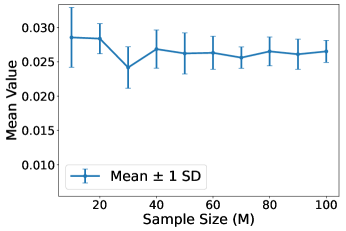
- Employs a controlled experimental setup with 50 sampling iterations per dataset to ensure statistical reliability of correlation scores.
- Validates metrics on both synthetic (Tree-Cycles, Tree-Grid, BA-2motifs) and real-world (MUTAG) datasets using GCN and GIN models.
Experimental results
Research questions
- RQ1How do conventional fidelity metrics like $Fid_+$, $Fid_-$, and $Fid_\Delta$ fail to align with gold-standard explanation quality due to distribution shifts?
- RQ2Can a theoretically grounded, information-theoretic framework for GNN explainability lead to more robust and reliable fidelity metrics?
- RQ3To what extent do the proposed parameterized metrics $Fid_{\alpha_1,+}$ and $Fid_{\alpha_2,-}$ improve alignment with gold-standard edit distances compared to baseline metrics?
- RQ4How do hyperparameters $\alpha_1$ and $\alpha_2$ affect the robustness and correlation of the proposed metrics with the gold standard?
- RQ5Why do existing metrics fail to evaluate GIN on the Tree-Grid dataset, and does the proposed framework resolve this?
Key findings
- The proposed $Fid_{\alpha_1,+}$ metric consistently achieves a Spearman correlation of -1.0 with the gold-standard edit distance across all datasets, indicating a robust inverse relationship.
- The original $Fid_+$ metric shows inconsistent correlations (e.g., 0.229 on Tree-Cycles, -0.924 on BA-2motifs), highlighting its instability and failure to align with the gold standard.
- The proposed $Fid_{\alpha_2,-}$ achieves a perfect 1.000 correlation with the gold standard on Tree-Grid and BA-2motifs, significantly outperforming the original $Fid_-$, which shows mixed results.
- The $Fid_{\alpha_1,\alpha_2,\Delta}$ metric achieves a perfect -1.000 correlation with the gold standard on all datasets, demonstrating its superior alignment and robustness.
- The AUC metric for edge classification is perfectly aligned with the gold standard edit distance (correlation = -1.000), validating its use as a reliable benchmark.
- The GIN model fails to be evaluated on the Tree-Grid dataset by all fidelity metrics, likely due to its poor generalization in node classification tasks, a limitation not resolved by the proposed metrics.
Better researchstarts right now
From reading papers to final review, dramatically reduce your research time.
No credit card · Free plan available
This review was created by AI and reviewed by human editors.