
[Paper Review] Transfer Learning for Human Activity Recognition using Representational Analysis of Neural Networks
This paper proposes a transfer learning framework for human activity recognition (HAR) that leverages representational analysis of convolutional neural networks (CNNs) to identify transferable features across users. By transferring early, generalizable CNN layers and fine-tuning only the deeper, user-specific layers, the method achieves up to 43% higher accuracy and 66% faster training compared to training from scratch, with 68% lower energy consumption on mobile hardware.
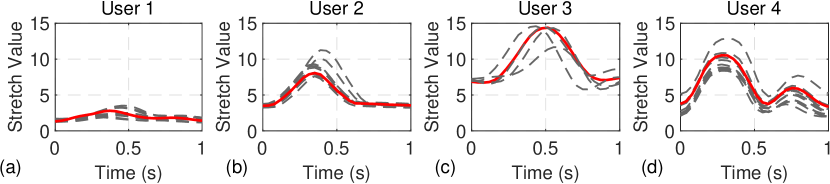
Human activity recognition (HAR) research has increased in recent years due to its applications in mobile health monitoring, activity recognition, and patient rehabilitation. The typical approach is training a HAR classifier offline with known users and then using the same classifier for new users. However, the accuracy for new users can be low with this approach if their activity patterns are different than those in the training data. At the same time, training from scratch for new users is not feasible for mobile applications due to the high computational cost and training time. To address this issue, we propose a HAR transfer learning framework with two components. First, a representational analysis reveals common features that can transfer across users and user-specific features that need to be customized. Using this insight, we transfer the reusable portion of the offline classifier to new users and fine-tune only the rest. Our experiments with five datasets show up to 43% accuracy improvement and 66% training time reduction when compared to the baseline without using transfer learning. Furthermore, measurements on the Nvidia Jetson Xavier-NX hardware platform reveal that the power and energy consumption decrease by 43% and 68%, respectively, while achieving the same or higher accuracy as training from scratch.
Motivation & Objective
- To address the challenge of low HAR accuracy for new users due to variations in activity patterns across individuals.
- To reduce the high computational and energy cost of training HAR classifiers from scratch on mobile and wearable devices.
- To identify which parts of a pre-trained CNN can be transferred across users and which require fine-tuning for personalization.
- To validate the proposed transfer learning approach on multiple public HAR datasets with real-world hardware deployment.
- To demonstrate significant improvements in accuracy, training time, and energy efficiency through systematic representational analysis.
Proposed method
- Conducting canonical correlation analysis (CCA) to measure similarity between feature representations of CNN layers trained on different user clusters.
- Identifying early CNN layers as generalizable features transferable across users, while deeper layers capture user-specific patterns.
- Transferring the weights of early, shared layers from a pre-trained classifier to new users and fine-tuning only the deeper, discriminative layers.
- Training the model on five public HAR datasets (w-HAR, UCI-HAR, WISDM, UCI-HAPT, UniMiB) with user clusters formed via random and k-means clustering for robust evaluation.
- Implementing the framework on an Nvidia Jetson Xavier NX board to measure real-world power and energy consumption.
- Using a 4-user cluster setup (4 UCs) with 4 fine-tuning configurations (1 or 2 layers) to evaluate performance trade-offs.
Experimental results
Research questions
- RQ1Which layers of a pre-trained CNN contain features that generalize across different users in HAR?
- RQ2To what extent can transferring early CNN layers reduce training time and energy consumption for new users?
- RQ3How does fine-tuning only deeper layers affect classification accuracy compared to training from scratch?
- RQ4Can the proposed transfer learning approach maintain or improve accuracy while reducing computational and energy costs on mobile hardware?
- RQ5How does the performance of the transfer learning framework vary across diverse HAR datasets with distinct user activity patterns?
Key findings
- The proposed transfer learning approach achieved up to 43% higher accuracy compared to training from scratch, with an average improvement of 14% across datasets.
- Training time was reduced by up to 66% when fine-tuning only deeper layers instead of retraining from scratch.
- Energy consumption was reduced by 68% on average, with savings ranging from 47% to 68% across datasets, while maintaining or exceeding the accuracy of full retraining.
- Power consumption was reduced by 21% to 43% across datasets, with the highest savings observed in the UCI-HAR and WISDM datasets.
- The representational analysis via CCA confirmed that early CNN layers learn generalizable features across users, while deeper layers capture user-specific activity patterns.
- Hardware measurements on the Nvidia Jetson Xavier NX confirmed that the transfer learning framework enables efficient deployment on low-power mobile platforms.

Read this paper
Open the full text in the Nubint reader and ask about any passage as you read.
Read this paper on NubintThis review was generated by AI from the original paper. Please check the paper before citing it.