
[Paper Review] Transforming Sentiment Analysis in the Financial Domain with ChatGPT
The paper investigates zero-shot ChatGPT 3.5 prompts for forex sentiment analysis, compares with FinBERT, and shows ChatGPT achieving notable gains in sentiment accuracy and its correlation with market returns on a curated forex-news dataset.
Financial sentiment analysis plays a crucial role in decoding market trends and guiding strategic trading decisions. Despite the deployment of advanced deep learning techniques and language models to refine sentiment analysis in finance, this study breaks new ground by investigating the potential of large language models, particularly ChatGPT 3.5, in financial sentiment analysis, with a strong emphasis on the foreign exchange market (forex). Employing a zero-shot prompting approach, we examine multiple ChatGPT prompts on a meticulously curated dataset of forex-related news headlines, measuring performance using metrics such as precision, recall, f1-score, and Mean Absolute Error (MAE) of the sentiment class. Additionally, we probe the correlation between predicted sentiment and market returns as an additional evaluation approach. ChatGPT, compared to FinBERT, a well-established sentiment analysis model for financial texts, exhibited approximately 35\% enhanced performance in sentiment classification and a 36\% higher correlation with market returns. By underlining the significance of prompt engineering, particularly in zero-shot contexts, this study spotlights ChatGPT's potential to substantially boost sentiment analysis in financial applications. By sharing the utilized dataset, our intention is to stimulate further research and advancements in the field of financial services.
Motivation & Objective
- Assess the feasibility of using ChatGPT (GPT-3.5-turbo) for financial sentiment analysis without fine-tuning.
- Create and share a forex-related news headlines dataset annotated with sentiment.
- Evaluate ChatGPT prompts for single and multiple-headline scenarios using standard and market-based metrics.
- Benchmark ChatGPT against FinBERT to quantify gains in sentiment classification and market correlation.
Proposed method
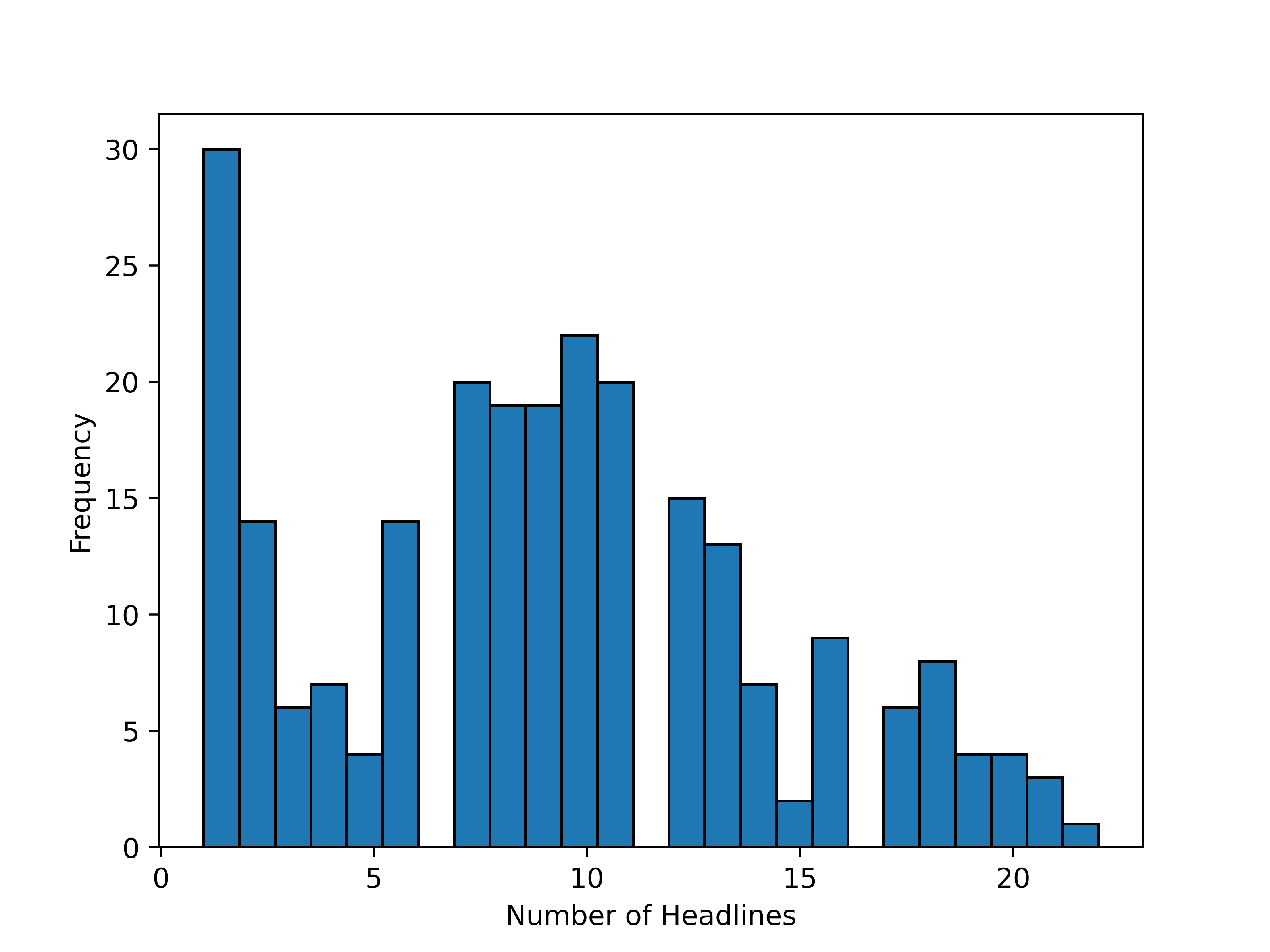
- Assemble and annotate a forex headline dataset (2,291 headlines across AUDUSD, EURCHF, EURUSD, GBPUSD, USDJPY) with positive/negative/neutral labels.
- Use OpenAI GPT-3.5-turbo via API with zero-shot prompts to predict sentiment or sentiment scores for headlines.
- Design multiple prompts (P1–P6 and their numeric variants P1N–P6N) to elicit token or JSON outputs and assess prompt engineering effects.
- Compare ChatGPT results to FinBERT (via Hugging Face Transformers) using accuracy, precision, recall, F1, and a Sentiment MAE (S-MAE).
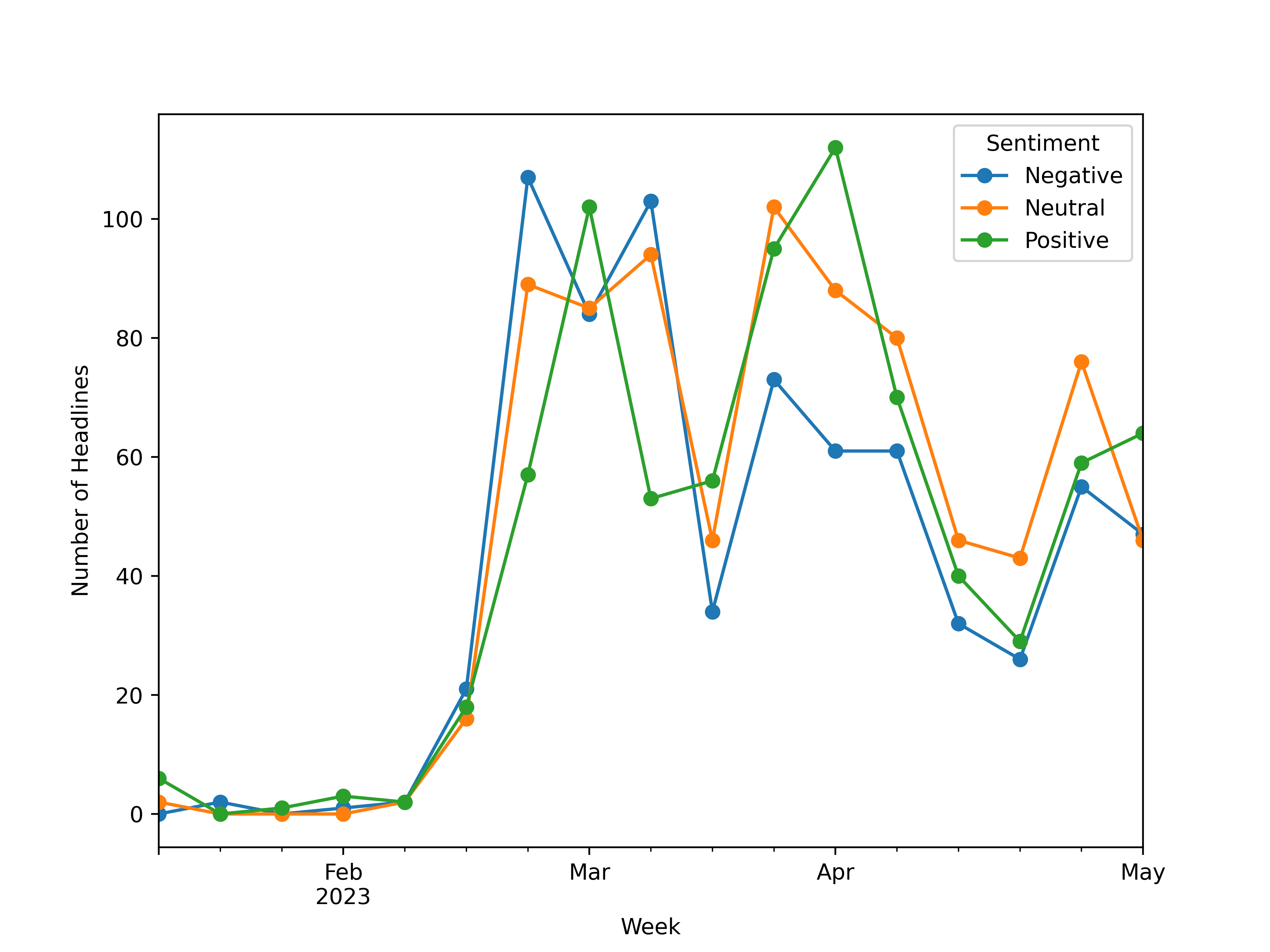
- Aggregate daily sentiment scores per forex pair and evaluate against market returns using Pearson correlation and directional accuracy.
- Report latency, token usage, and cost management for API-based sentiment analysis experiments.
Experimental results
Research questions
- RQ1Can ChatGPT—without fine-tuning—accurately classify sentiment in financial headlines relevant to forex?
- RQ2Do carefully engineered prompts enable ChatGPT to outperform FinBERT in financial sentiment tasks and in forecasting market movements?
- RQ3How does sentiment output (class vs. score) impact correlation with daily market returns and trading direction?
- RQ4What is the role of prompt design in zero-shot financial sentiment analysis using ChatGPT?
Key findings
- ChatGPT-based prompts achieved approximately 35% higher sentiment classification performance than FinBERT.
- ChatGPT demonstrated about 36% higher correlation with market returns compared to FinBERT.
- Prompts and prompt engineering significantly affect zero-shot ChatGPT performance in financial sentiment analysis.
- The study provides a publicly available, forex-focused annotated dataset to support further research.
- Using a daily aggregation of headline sentiment, the approach enables market-related evaluation via Pearson correlation and directional accuracy.
- The evaluation includes both traditional sentiment metrics and market-aligned metrics to assess practical trading relevance.
Read this paper
Open the full text in the Nubint reader and ask about any passage as you read.
Read this paper on NubintThis review was generated by AI from the original paper. Please check the paper before citing it.