
[Paper Review] Understanding Graph Databases: A Comprehensive Tutorial and Survey
This comprehensive tutorial and survey provides a foundational understanding of graph databases, covering graph theory, data modeling, and practical implementations using tools like Neo4j, NetworkX, and Cypher. It integrates graph algorithms, visualization techniques, and advanced applications such as community detection and graph neural networks (GNNs), offering researchers a unified resource for leveraging graph structures in data science and knowledge discovery.
This tutorial serves as a comprehensive guide for understanding graph databases, focusing on the fundamentals of graph theory while showcasing practical applications across various fields. It starts by introducing foundational concepts and delves into the structure of graphs through nodes and edges, covering different types such as undirected, directed, weighted, and unweighted graphs. Key graph properties, terminologies, and essential algorithms for network analysis are outlined, including Dijkstras shortest path algorithm and methods for calculating node centrality and graph connectivity. The tutorial highlights the advantages of graph databases over traditional relational databases, particularly in efficiently managing complex, interconnected data. It examines leading graph database systems such as Neo4j, Amazon Neptune, and ArangoDB, emphasizing their unique features for handling large datasets. Practical instructions on graph operations using NetworkX and Neo4j are provided, covering node and edge creation, attribute assignment, and advanced queries with Cypher. Additionally, the tutorial explores common graph visualization techniques using tools like Plotly and Neo4j Bloom, which enhance the interpretation and usability of graph data. It also delves into community detection algorithms, including the Louvain method, which facilitates clustering in large networks. Finally, the paper concludes with recommendations for researchers interested in exploring the vast potential of graph technologies.
Motivation & Objective
- To provide a unified, accessible introduction to graph databases and graph theory for researchers and practitioners.
- To bridge theoretical foundations of graph theory with practical implementations in data modeling and query execution.
- To demonstrate the use of graph databases like Neo4j and Amazon Neptune for managing complex, interconnected data.
- To explore advanced graph analytics techniques, including centrality measures, community detection, and graph neural networks.
- To guide researchers in adopting graph-based approaches for applications in social network analysis, biomedical research, and knowledge graph construction.
Proposed method
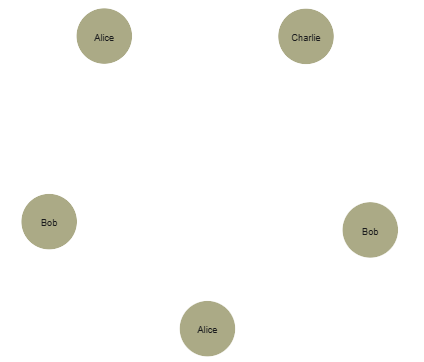
- Introduces core graph theory concepts: nodes, edges, and graph types (undirected, directed, weighted, unweighted).
- Explains fundamental graph properties: degree, path, adjacency matrix, and connectivity metrics.
- Applies key algorithms such as Dijkstra’s shortest path and centrality computation for network analysis.
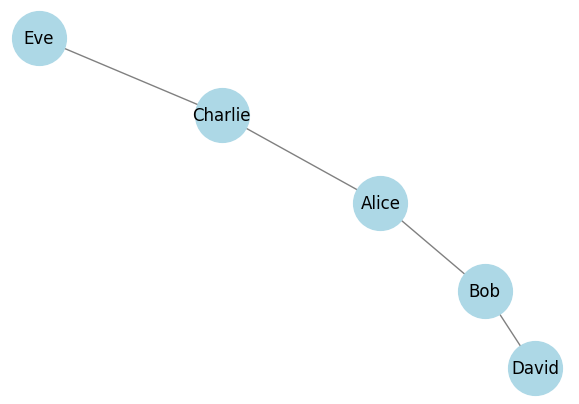
- Demonstrates implementation using NetworkX for Python and Cypher queries in Neo4j for node/edge creation and attribute assignment.
- Employs visualization tools like Plotly and Neo4j Bloom to enhance interpretability of graph structures.
- Applies community detection via the Louvain method and integrates graph neural networks (GNNs) using message-passing mechanisms and architectures like GCN and GAT.
Experimental results
Research questions
- RQ1How can graph theory be systematically applied to model complex, interconnected data in diverse domains?
- RQ2What are the key differences and use cases for undirected, directed, weighted, and unweighted graphs in real-world applications?
- RQ3How do graph databases like Neo4j and Amazon Neptune outperform traditional relational databases in managing highly connected data?
- RQ4What role do graph neural networks (GNNs) play in learning representations from graph-structured data, and how do architectures like GCN and GAT improve performance?
- RQ5What are the emerging trends in graph-based data science, including dynamic graph modeling and graph signal processing?
Key findings
- Graph databases significantly outperform relational databases in querying complex, highly connected data, especially in applications like fraud detection and social network analysis.
- The Louvain method effectively identifies communities in large-scale networks, enabling clustering and structural pattern discovery.
- GNNs using message-passing mechanisms achieve state-of-the-art performance in node classification, link prediction, and graph classification tasks.
- Graph Convolutional Networks (GCNs) improve performance in relational data tasks by aggregating features from neighboring nodes with learned weights.
- Graph Neural Architecture Search (GraphNAS) reduces manual design effort in GNN development through reinforcement learning optimization.
- Graph embedding techniques preserve structural and relational information, enabling effective use of graph data in downstream machine learning tasks.
Read this paper
Open the full text in the Nubint reader and ask about any passage as you read.
Read this paper on NubintThis review was generated by AI from the original paper. Please check the paper before citing it.