
[Paper Review] Understanding metric-related pitfalls in image analysis validation
A crowdsourced, taxonomy-based resource documenting metric pitfalls in image analysis validation, with a domain-agnostic framework to help researchers choose and apply metrics correctly.
Validation metrics are key for the reliable tracking of scientific progress and for bridging the current chasm between artificial intelligence (AI) research and its translation into practice. However, increasing evidence shows that particularly in image analysis, metrics are often chosen inadequately in relation to the underlying research problem. This could be attributed to a lack of accessibility of metric-related knowledge: While taking into account the individual strengths, weaknesses, and limitations of validation metrics is a critical prerequisite to making educated choices, the relevant knowledge is currently scattered and poorly accessible to individual researchers. Based on a multi-stage Delphi process conducted by a multidisciplinary expert consortium as well as extensive community feedback, the present work provides the first reliable and comprehensive common point of access to information on pitfalls related to validation metrics in image analysis. Focusing on biomedical image analysis but with the potential of transfer to other fields, the addressed pitfalls generalize across application domains and are categorized according to a newly created, domain-agnostic taxonomy. To facilitate comprehension, illustrations and specific examples accompany each pitfall. As a structured body of information accessible to researchers of all levels of expertise, this work enhances global comprehension of a key topic in image analysis validation.
Motivation & Objective
- Summarize why validation metrics are crucial for advancing image analysis and translation to practice.
- Catalog and categorize common pitfalls across problem categories (classification, segmentation, detection) to aid metric selection.
- Provide a domain-agnostic taxonomy and practical illustrations to illuminate metric limitations.
- Offer a single access point for researchers to understand metric properties, limitations, and pitfalls.
Proposed method
- Crowdsourcing via a multi-stage Delphi process with 62 international experts.
- Review of literature to identify 37 pitfall sources related to validation metrics.
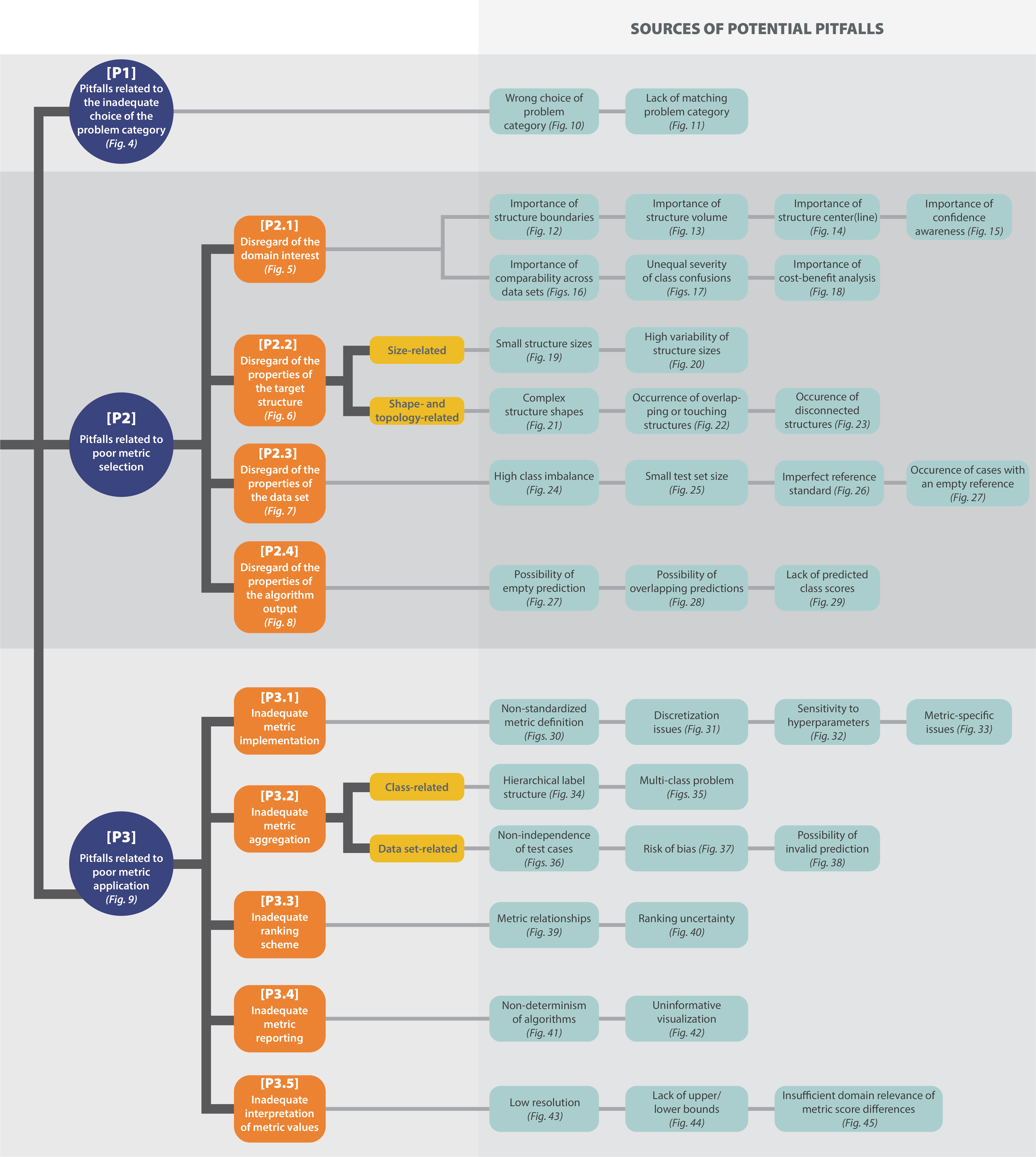
- Development of a domain-agnostic taxonomy categorizing pitfalls into three main categories (P1, P2, P3) and subcategories.
- Creation of metric-specific profiles and Extended Data materials to illustrate pitfalls with examples.
- Supplementary material (Suppl. Note 2) detailing individual pitfalls and examples for researchers.
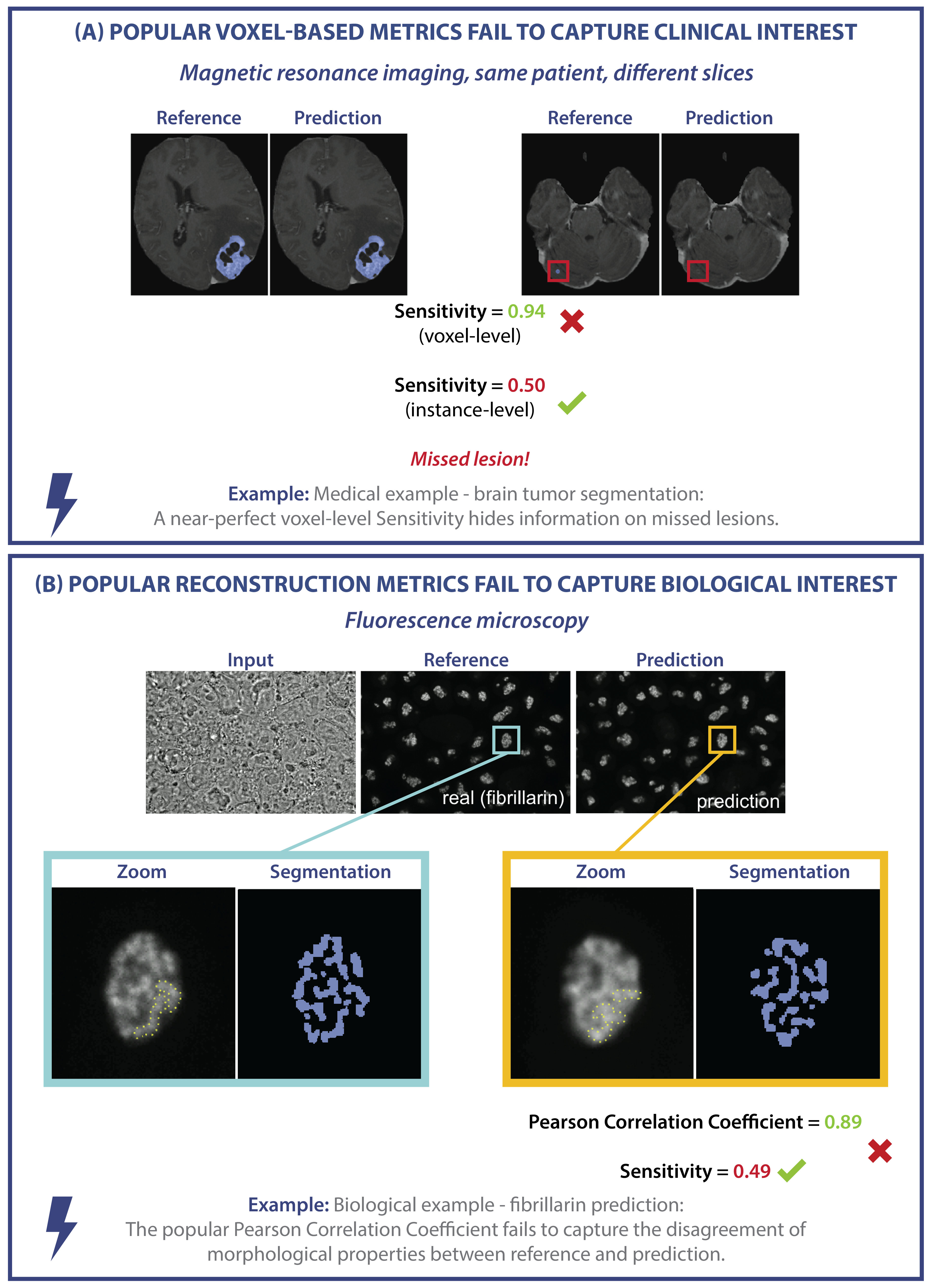
Experimental results
Research questions
- RQ1What are the common pitfalls in validation metrics for image analysis across biomedical applications?
- RQ2Can these pitfalls be organized into a domain-agnostic taxonomy to aid metric selection and application?
- RQ3How accessible is information on metric definitions, properties, and limitations to researchers?
- RQ4What guidance exists (in related work) to recommend metric choices under various circumstances?
Key findings
- Validation metrics information is largely inaccessible to researchers, hindering educated metric choice.
- A multidisciplinary Delphi process identified 37 distinct pitfall sources related to metric use in image analysis validation.
- A domain-agnostic taxonomy was created to categorize pitfalls into three main groups: inadequate problem category, poor metric selection, and poor metric application.
- Common practice often guides metric choices, but this practice is frequently poorly justified and can propagate flawed methodologies.
- The work provides a centralized resource, including metric profiles and visuals, to help researchers quickly assess potential pitfalls for specific metrics.
Read this paper
Open the full text in the Nubint reader and ask about any passage as you read.
Read this paper on NubintThis review was generated by AI from the original paper. Please check the paper before citing it.