
[Paper Review] Understanding Test-Time Augmentation
This paper provides the first theoretical analysis of Test-Time Augmentation (TTA), proving that TTA reduces expected error compared to a single model by leveraging data augmentation at inference. It establishes that TTA's error depends on output ambiguity and derives closed-form optimal weights for a generalized TTA framework.
Test-Time Augmentation (TTA) is a very powerful heuristic that takes advantage of data augmentation during testing to produce averaged output. Despite the experimental effectiveness of TTA, there is insufficient discussion of its theoretical aspects. In this paper, we aim to give theoretical guarantees for TTA and clarify its behavior.
Motivation & Objective
- To provide theoretical guarantees for Test-Time Augmentation (TTA), which has shown strong empirical performance but lacks theoretical foundation.
- To clarify the behavior of TTA by analyzing its expected error and conditions under which it improves generalization.
- To extend TTA to a generalized form and derive its optimal weighting scheme in closed form.
- To identify the key factor influencing TTA performance: the ambiguity of model outputs under data augmentations.
Proposed method
- Reformulates TTA as a function composition involving a base model and data augmentation transformations.
- Defines the augmented input space to formally capture the effect of data augmentations during inference.
- Proves that the expected error of TTA is bounded above by the average error of the original model, with strict improvement under certain assumptions.
- Introduces a generalized TTA framework with learnable or analytically derived weights for combining augmented predictions.
- Derives the closed-form optimal weights for the generalized TTA using empirical risk minimization over the augmented space.
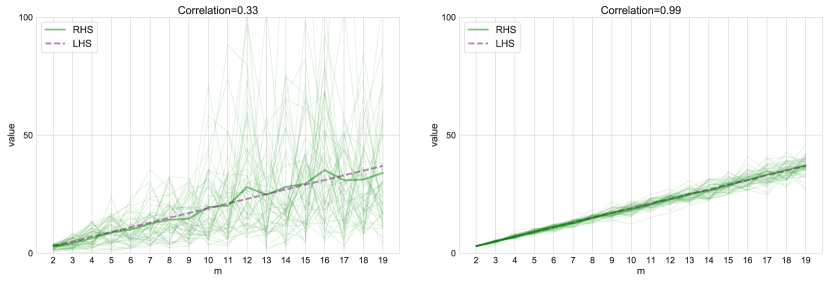
- Analyzes the dependence of TTA error on the ambiguity term, defined as the variance of predictions across augmentations.
Experimental results
Research questions
- RQ1Under what conditions does TTA strictly reduce expected error compared to a single model?
- RQ2How can the generalized TTA framework be formally constructed, and what are its optimal combination weights?
- RQ3What is the theoretical role of output ambiguity in determining TTA's performance gain?
- RQ4How does the sample size affect the theoretical benefit of TTA, and can this be formalized?
- RQ5Why does TTA show smaller gains on datasets like Flowers-102 compared to ImageNet, and can this be explained theoretically?
Key findings
- The expected error of TTA is always less than or equal to the average error of the original model, with strict improvement under mild regularity conditions.
- For the generalized TTA framework, the optimal combination weights are derived in closed form, enabling theoretically optimal averaging of augmented predictions.
- The error of TTA is directly dependent on the ambiguity of the model’s predictions across different augmentations, with higher ambiguity leading to higher error.
- TTA’s performance gain diminishes as training data size increases, consistent with empirical observations.
- The theoretical analysis supports the empirical finding that complex models benefit less from TTA than simpler models, due to lower ambiguity in predictions.
- The empirical risk minimization with data augmentation is a consistent estimator of the TTA error, justifying the use of augmentations during training for TTA compatibility.

Read this paper
Open the full text in the Nubint reader and ask about any passage as you read.
Read this paper on NubintThis review was generated by AI from the original paper. Please check the paper before citing it.