
[Paper Review] Unveiling the Power of Wavelets: A Wavelet-based Kolmogorov-Arnold Network for Hyperspectral Image Classification
The paper introduces Wav-KAN, a wavelet-based Kolmogorov-Arnold Network for hyperspectral image classification, and shows it outperforms Spline-KAN and MLP on Salinas and Indian Pines datasets, with strong results on Pavia.
Hyperspectral image classification is a crucial but challenging task due to the high dimensionality and complex spatial-spectral correlations inherent in hyperspectral data. This paper employs Wavelet-based Kolmogorov-Arnold Network (wav-kan) architecture tailored for efficient modeling of these intricate dependencies. Inspired by the Kolmogorov-Arnold representation theorem, Wav-KAN incorporates wavelet functions as learnable activation functions, enabling non-linear mapping of the input spectral signatures. The wavelet-based activation allows Wav-KAN to effectively capture multi-scale spatial and spectral patterns through dilations and translations. Experimental evaluation on three benchmark hyperspectral datasets (Salinas, Pavia, Indian Pines) demonstrates the superior performance of Wav-KAN compared to traditional multilayer perceptrons (MLPs) and the recently proposed Spline-based KAN (Spline-KAN) model. In this work we are: (1) conducting more experiments on additional hyperspectral datasets (Pavia University, WHU-Hi, and Urban Hyperspectral Image) to further validate the generalizability of Wav-KAN; (2) developing a multiresolution Wav-KAN architecture to capture scale-invariant features; (3) analyzing the effect of dimensional reduction techniques on classification performance; (4) exploring optimization methods for tuning the hyperparameters of KAN models; and (5) comparing Wav-KAN with other state-of-the-art models in hyperspectral image classification.
Motivation & Objective
- Motivate and address hyperspectral classification challenges due to high dimensionality and spatial-spectral correlations.
- Propose Wav-KAN, a wavelet-integrated Kolmogorov-Arnold network with learnable wavelet activations.
- Compare Wav-KAN to Spline-KAN and MLP across benchmark datasets.
- Analyze interpretability, efficiency, and parameter efficiency of the wavelet-based approach.
- Outline future work to validate generalizability and extend the architecture.
Proposed method
- Incorporate wavelet functions as learnable activation functions within the Kolmogorov-Arnold Network (KAN) framework to enable multiscale modeling.
- Leverage continuous/discrete wavelet transforms to capture multi-scale spatial-spectral patterns.
- Utilize the wavelet-based activations to achieve non-linear mappings with fewer parameters than spline-based or MLP baselines.
- Demonstrate computational efficiency and robustness due to wavelet scaling properties and reduced need for grid-based functions.
- Provide comparative evaluation against Spline-KAN and MLP on three benchmark hyperspectral datasets.
Experimental results
Research questions
- RQ1How does Wav-KAN perform relative to Spline-KAN and MLP across standard hyperspectral datasets?
- RQ2Can wavelet-based activations better capture multi-scale spatial-spectral dependencies in hyperspectral data?
- RQ3What is the impact of wavelet design on accuracy, robustness, and training efficiency?
- RQ4How does Wav-KAN generalize across different hyperspectral scenes (Indian Pines, Salinas, Pavia)?
Key findings
- Wav-KAN achieves an average OA of 92.62% and Kappa of 0.9157 across datasets, outperforming Spline-KAN (89.85% OA, 0.8793) and MLP (77.69% OA, 0.7119).
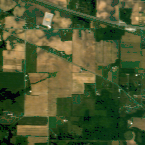
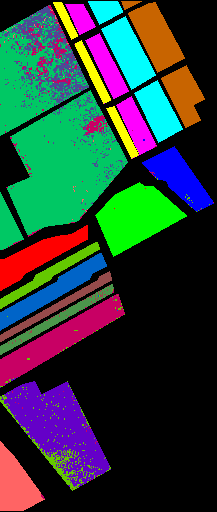
- On Salinas, Wav-KAN attains OA 0.9341 and Kappa 0.9264, outperforming Spline-KAN (0.9261, 0.9178) and MLP (0.8655, 0.8499).
- On Pavia, MLP slightly outperforms the others (OA 0.9910, Kappa 0.9873) but Wav-KAN remains highly competitive (OA 0.9901, Kappa 0.9860) and Spline-KAN follows (0.9863, 0.9806).
- On Indian Pines, Wav-KAN significantly outperforms others (OA 0.8554, Kappa 0.8348 vs Spline-KAN 0.7731/0.7395 and MLP 0.3513/0.2984).
- The results indicate Wav-KAN's effectiveness in modeling complex spectral-spatial dependencies with fewer parameters and improved robustness compared to baselines.
- Spline-KAN also shows strong performance on Salinas, highlighting the value of theory-driven kernels in hyperspectral classification.
Read this paper
Open the full text in the Nubint reader and ask about any passage as you read.
Read this paper on NubintThis review was generated by AI from the original paper. Please check the paper before citing it.