
[Paper Review] VisionGPT: Vision-Language Understanding Agent Using Generalized Multimodal Framework
VisionGPT is a vision-language understanding agent that leverages large language models (LLMs) as a central controller to orchestrate state-of-the-art vision foundation models, enabling automated, multi-step reasoning for complex visual tasks. It achieves end-to-end execution of text-conditioned image understanding, generation, and editing by decomposing user requests into action plans, selecting appropriate models, and integrating their outputs, demonstrating strong performance across diverse vision-language benchmarks.
With the emergence of large language models (LLMs) and vision foundation models, how to combine the intelligence and capacity of these open-sourced or API-available models to achieve open-world visual perception remains an open question. In this paper, we introduce VisionGPT to consolidate and automate the integration of state-of-the-art foundation models, thereby facilitating vision-language understanding and the development of vision-oriented AI. VisionGPT builds upon a generalized multimodal framework that distinguishes itself through three key features: (1) utilizing LLMs (e.g., LLaMA-2) as the pivot to break down users' requests into detailed action proposals to call suitable foundation models; (2) integrating multi-source outputs from foundation models automatically and generating comprehensive responses for users; (3) adaptable to a wide range of applications such as text-conditioned image understanding/generation/editing and visual question answering. This paper outlines the architecture and capabilities of VisionGPT, demonstrating its potential to revolutionize the field of computer vision through enhanced efficiency, versatility, and generalization, and performance. Our code and models will be made publicly available. Keywords: VisionGPT, Open-world visual perception, Vision-language understanding, Large language model, and Foundation model
Motivation & Objective
- Address the challenge of open-world visual perception by unifying diverse, off-the-shelf vision foundation models and LLMs into a single, automated agent.
- Enable end-to-end, user-request-driven visual perception without requiring manual pipeline construction or model coordination.
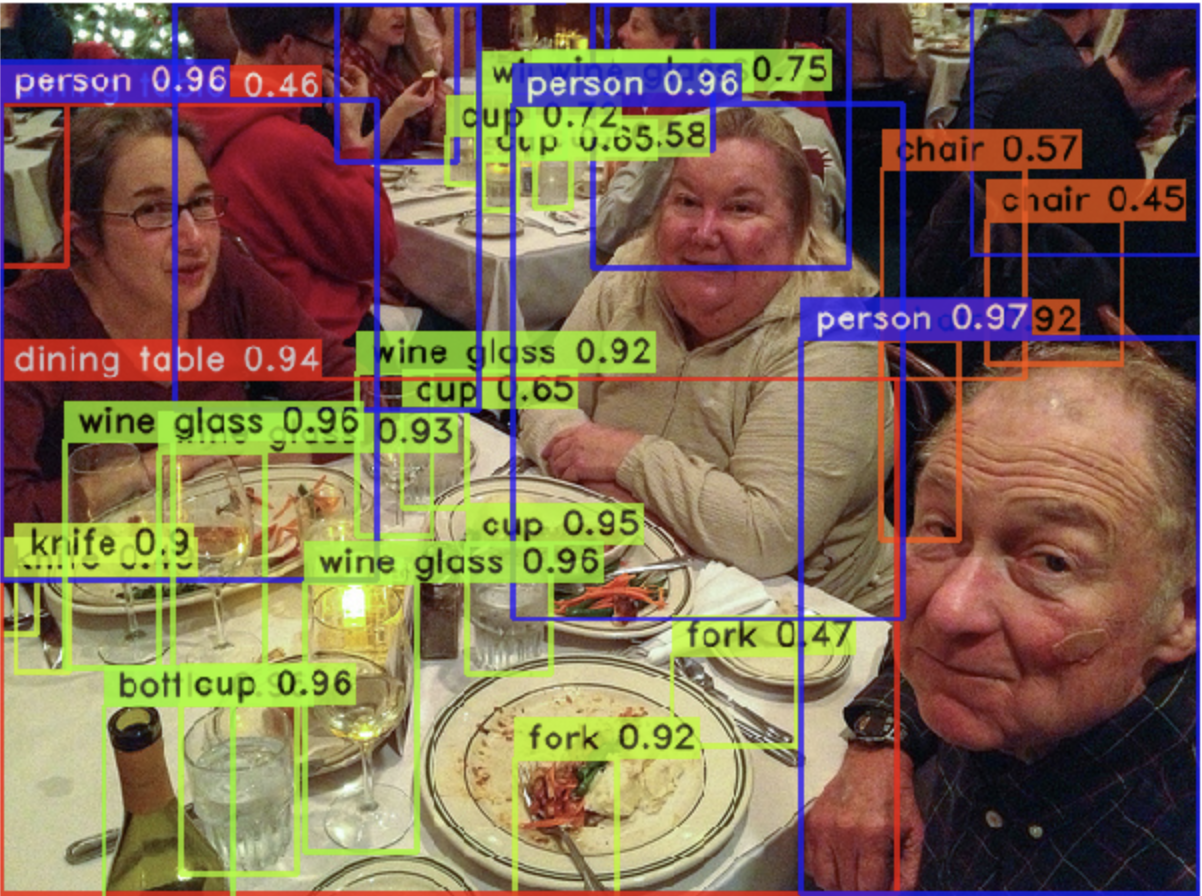
- Overcome the limitations of single-model approaches by dynamically composing multiple specialized models (e.g., YOLO for detection, SAM for segmentation) for complex tasks.
- Facilitate versatile, generalizable vision-language understanding across diverse applications such as image editing, object highlighting, and anomaly detection.
Proposed method
- Uses a large language model (e.g., LLaMA-2) as a central pivot to interpret user requests and decompose them into detailed, actionable proposals.
- Automatically selects the most suitable vision foundation models (e.g., YOLO, SAM, DALL-E, Stable Diffusion) based on the action proposals derived from the LLM.
- Executes selected models in a coordinated pipeline, where outputs from multiple models are post-processed and fused to form a coherent response.
- Supports dynamic model composition, enabling the system to adapt to new models and tasks without architectural re-design.
- Employs a four-stage workflow: (1) LLM-based request understanding, (2) foundation model selection, (3) distributed execution, and (4) output integration and refinement.
- Integrates multimodal reasoning by aligning LLM-generated action plans with vision model capabilities, ensuring semantic consistency and task accuracy.

Experimental results
Research questions
- RQ1Can a unified agent architecture effectively orchestrate multiple specialized vision foundation models and LLMs to solve complex, user-defined vision-language tasks?
- RQ2How well can an LLM-driven agent automate the decomposition of natural language requests into actionable steps involving multiple vision models?
- RQ3To what extent can the system generalize across diverse vision-language tasks such as object detection, segmentation, image editing, and generation?
- RQ4How does the integration of multiple models improve performance and robustness compared to single-model baselines in open-world visual perception?
Key findings
- VisionGPT successfully automates the entire workflow from user request to final output, including request interpretation, model selection, execution, and result integration.
- The system achieves accurate object highlighting and segmentation in complex scenes, even when object names are not explicitly specified in the prompt.
- VisionGPT demonstrates strong performance in text-conditioned image editing and generation, such as replacing objects, covering components, or generating new scenes based on textual descriptions.
- The framework enables efficient collaboration between models like YOLO and SAM, reducing computation by focusing only on relevant regions of interest.
- The agent maintains high alignment with user intent across diverse inputs, including ambiguous or open-ended requests.
- The modular design allows seamless integration of new vision foundation models and LLMs, ensuring adaptability to future advancements.
Read this paper
Open the full text in the Nubint reader and ask about any passage as you read.
Read this paper on NubintThis review was generated by AI from the original paper. Please check the paper before citing it.