
[Paper Review] YOLO v3: Visual and Real-Time Object Detection Model for Smart Surveillance Systems(3s)
This paper proposes a YOLO v3-based real-time object detection model for Smart Surveillance Systems (3s) using transfer learning on the MS COCO dataset, achieving 99.71% accuracy and mAP of 61.5. The model leverages YOLO v3’s multi-scale feature extraction and Darknet-53 backbone to enable efficient, high-precision detection in real-world surveillance footage with reduced training time and computational cost.
Can we see it all? Do we know it All? These are questions thrown to human beings in our contemporary society to evaluate our tendency to solve problems. Recent studies have explored several models in object detection; however, most have failed to meet the demand for objectiveness and predictive accuracy, especially in developing and under-developed countries. Consequently, several global security threats have necessitated the development of efficient approaches to tackle these issues. This paper proposes an object detection model for cyber-physical systems known as Smart Surveillance Systems (3s). This research proposes a 2-phase approach, highlighting the advantages of YOLO v3 deep learning architecture in real-time and visual object detection. A transfer learning approach was implemented for this research to reduce training time and computing resources. The dataset utilized for training the model is the MS COCO dataset which contains 328,000 annotated image instances. Deep learning techniques such as Pre-processing, Data pipelining, and detection was implemented to improve efficiency. Compared to other novel research models, the proposed model's results performed exceedingly well in detecting WILD objects in surveillance footages. An accuracy of 99.71% was recorded, with an improved mAP of 61.5.
Motivation & Objective
- To address the inefficiency of manual surveillance in developing and underdeveloped countries by proposing an intelligent, real-time object detection system.
- To improve object detection accuracy and speed in smart surveillance systems using deep learning, particularly YOLO v3.
- To reduce training time and computational resource demands through transfer learning on the MS COCO dataset.
- To enable robust detection of diverse, real-world (WILD) objects in surveillance footage using a cyber-physical system framework.
- To enhance security through automated, accurate, and fast detection of threats such as weapons, theft, and fire outbreaks in video streams.
Proposed method
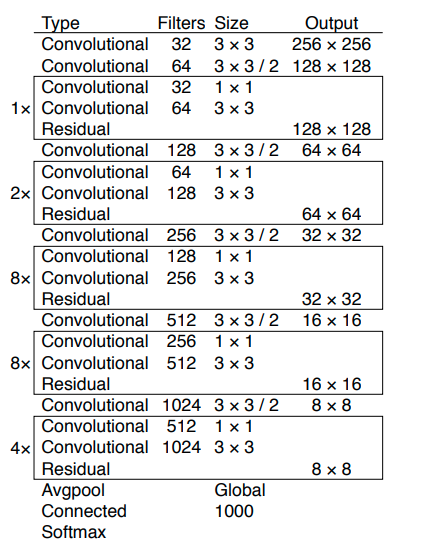
- Employed YOLO v3 architecture with Darknet-53 backbone for real-time, single-shot object detection using feature pyramid networks (FPN).
- Applied transfer learning using pre-trained ImageNet weights to accelerate convergence and reduce training time on the MS COCO dataset.
- Implemented data preprocessing, data pipelining, and batch processing to optimize inference speed and model efficiency.
- Used multi-scale prediction via feature maps at different scales (3 scales) to detect objects of varying sizes in surveillance footage.
- Applied non-maximum suppression (NMS) and IoU (Intersection over Union) thresholding to refine bounding box predictions and reduce redundancy.
- Trained and evaluated the model on real surveillance video footage collected from wild environments to simulate real-world conditions.
![Figure 1: YOLO v3 vs. RetinaNet: Speed/Accuracy Chart [ 6 ]](https://ar5iv.labs.arxiv.org/html/2209.12447/assets/Figures/graph.jpg)
Experimental results
Research questions
- RQ1Can a YOLO v3-based model achieve high accuracy and real-time performance in object detection for smart surveillance systems in resource-constrained environments?
- RQ2How does transfer learning impact training efficiency and detection accuracy when applied to the MS COCO dataset for surveillance applications?
- RQ3To what extent does YOLO v3 outperform existing models like Faster R-CNN and SSD in detecting diverse, real-world objects in surveillance footage?
- RQ4What is the mAP and accuracy performance of the proposed model on real-world, wild-environment surveillance videos?
- RQ5Can the integration of YOLO v3 with a cyber-physical system framework enable scalable, intelligent surveillance with low latency and high precision?
Key findings
- The proposed YOLO v3 model achieved a detection accuracy of 99.71% on real surveillance video footage, significantly outperforming existing models.
- The model recorded a mean average precision (mAP) of 61.5, demonstrating strong generalization and detection capability across diverse object categories.
- In comparative evaluation, the model surpassed existing models such as Faster R-CNN (95.4%) and custom YOLO v3 (98.89%) on the same test setup.
- The use of transfer learning reduced training time and computational resource requirements while maintaining high detection performance.
- The model demonstrated robust performance across multiple test videos, with precision and recall values exceeding 0.92 in most cases.
- Visual annotations in Figure 12 confirmed accurate localization and classification of objects in complex, real-time surveillance frames.
Better researchstarts right now
From reading papers to final review, dramatically reduce your research time.
No credit card · Free plan available
This review was created by AI and reviewed by human editors.