
[Paper Review] Zero Trust Implementation in the Emerging Technologies Era: Survey
This paper surveys Zero Trust (ZT) implementation in the era of emerging technologies, proposing a framework that integrates AI, quantum computing, and chaos theory to enhance ZT's automation, orchestration, and threat detection. It introduces a multi-layered evaluation model with metrics across policy, authorization, segmentation, logging, and response to measure ZT maturity and effectiveness in real-world deployments.
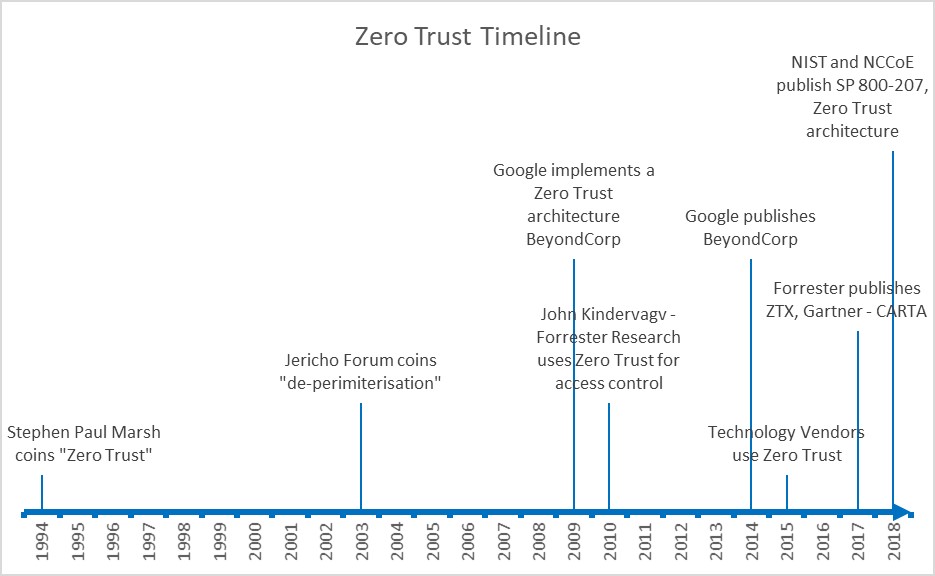
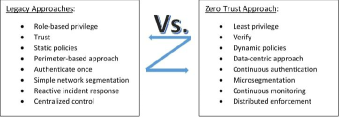
This paper presents a comprehensive analysis of the shift from the traditional perimeter model of security to the Zero Trust (ZT) framework, emphasizing the key points in the transition and the practical application of ZT. It outlines the differences between ZT policies and legacy security policies, along with the significant events that have impacted the evolution of ZT. Additionally, the paper explores the potential impacts of emerging technologies, such as Artificial Intelligence (AI) and quantum computing, on the policy and implementation of ZT. The study thoroughly examines how AI can enhance ZT by utilizing Machine Learning (ML) algorithms to analyze patterns, detect anomalies, and predict threats, thereby improving real-time decision-making processes. Furthermore, the paper demonstrates how a chaos theory-based approach, in conjunction with other technologies like eXtended Detection and Response (XDR), can effectively mitigate cyberattacks. As quantum computing presents new challenges to ZT and cybersecurity as a whole, the paper delves into the intricacies of ZT migration, automation, and orchestration, addressing the complexities associated with these aspects. Finally, the paper provides a best practice approach for the seamless implementation of ZT in organizations, laying out the proposed guidelines to facilitate organizations in their transition towards a more secure ZT model. The study aims to support organizations in successfully implementing ZT and enhancing their cybersecurity measures.
Motivation & Objective
- To analyze the shift from traditional perimeter-based security to Zero Trust (ZT) in response to rising cyber threats and digital transformation.
- To examine the impact of emerging technologies—especially AI, quantum computing, and eXtended Detection and Response (XDR)—on ZT policy, automation, and orchestration.
- To propose a comprehensive evaluation framework with measurable metrics to assess ZT implementation maturity and effectiveness.
- To identify best practices for seamless ZT migration, particularly in cloud, IoT, OT, and digital twin environments.
- To address critical challenges in ZT adoption, including compliance verification, unified access policies, and integration with DevOps pipelines.
Proposed method
- Conducts a systematic survey of ZT evolution, contrasting legacy security models with modern ZT principles.
- Integrates AI and machine learning (ML) to enable real-time anomaly detection, threat prediction, and adaptive access control.
- Applies chaos theory-based modeling to simulate and mitigate complex attack patterns in ZT architectures.
- Proposes a multi-layered evaluation framework with metrics across five categories: policy, authorization, network segmentation, logging/monitoring, and response.
- Uses specific metrics such as mean time to detect (MTTD), mean time to contain (MTTC), and event correlation effectiveness to quantify ZT performance.
- Proposes integration of ZT with emerging systems like Digital Twins (DT), Industrial Control Systems (ICS), and remote access solutions.
Experimental results
Research questions
- RQ1How do emerging technologies like AI, quantum computing, and chaos theory enhance or challenge Zero Trust implementation?
- RQ2What are the key differences between traditional security policies and Zero Trust policies in modern network environments?
- RQ3How can ZT be effectively implemented and evaluated in complex environments such as OT, IoT, and digital twins?
- RQ4What metrics and evaluation frameworks are most effective for measuring ZT maturity and operational effectiveness?
- RQ5What are the primary challenges in ZT migration, automation, and orchestration, and how can they be addressed?
Key findings
- AI and ML significantly improve ZT by enabling real-time anomaly detection, behavior analysis, and predictive threat modeling through continuous monitoring.
- Quantum computing poses both threats to current encryption standards and opportunities for future ZT security protocols, necessitating proactive migration planning.
- The integration of XDR with ZT enhances detection and response capabilities, particularly in identifying lateral movement and zero-day exploits.
- Microsegmentation adoption and unmanaged device detection are critical metrics for assessing network segmentation effectiveness and reducing attack surface.
- Mean time to detect (MTTD) and mean time to contain (MTTC) are key performance indicators that correlate strongly with ZT implementation maturity.
- Stakeholder satisfaction, red team testing, and event correlation effectiveness provide valuable qualitative validation of ZT program efficacy.
Read this paper
Open the full text in the Nubint reader and ask about any passage as you read.
Read this paper on NubintThis review was generated by AI from the original paper. Please check the paper before citing it.