
[論文レビュー] accelerating wrf i/o performance with adios2 and network-based streaming
この論文では、長年のI/Oボトルネックを克服するため、WRF(Weather Research and Forecasting)モデルにADIOS2をハイパフォーマンスI/Oバックエンドとして統合することを提案している。ADIOS2の持続的ステージングトランスポート(SST)をUCXデータ転送と組み合わせ、ノードローカルのバーストバッファとインライン圧縮を活用することで、I/O時間は10倍以上短縮され、全体の時間対ソリューションは50%改善された。これは、最小限のコード変更で、現代のI/OフレームワークがレガシHPCアプリケーションを劇的に高速化できることを示している。
With the approach of Exascale computing power for large-scale High Performance Computing (HPC) clusters, the gap between compute capabilities and storage systems is growing larger. This is particularly problematic for the Weather Research and Forecasting Model (WRF), a widely-used HPC application for high-resolution forecasting and research that produces sizable datasets, especially when analyzing transient weather phenomena. Despite this issue, the I/O modules within WRF have not been updated in the past ten years, resulting in subpar parallel I/O performance. This research paper demonstrates the positive impact of integrating ADIOS2, a next-generation parallel I/O framework, as a new I/O backend option in WRF. It goes into detail about the challenges encountered during the integration process and how they were addressed. The resulting I/O times show an over tenfold improvement when using ADIOS2 compared to traditional MPI-I/O based solutions. Furthermore, the study highlights the new features available to WRF users worldwide, such as the Sustainable Staging Transport (SST) enabling Unified Communication X (UCX) DataTransport, the node-local burst buffer write capabilities and in-line lossless compression capabilities of ADIOS2. Additionally, the research shows how ADIOS2's in-situ analysis capabilities can be smoothly integrated with a simple WRF forecasting pipeline, resulting in a significant improvement in overall time to solution. This study serves as a reminder to legacy HPC applications that incorporating modern libraries and tools can lead to considerable performance enhancements with minimal changes to the core application.
研究の動機と目的
- WRFにおける増大するI/Oパフォーマンスボトルネックに対処すること。これは、10年以上にわたり更新がなく、計算パワーの差が拡大している状況である。
- ADIOS2を次世代I/OバックエンドとしてWRFに統合し、高スルーレートでスケーラブルなデータI/Oを可能にすること。
- バーストバッファ対応やインライン分析などのADIOS2の高度な機能を活用して、I/O書き込み時間と全体の時間対ソリューションのパフォーマンス向上を実証すること。
- WRFエコシステム内に、損失なし/損失あり圧縮や双方向データ結合といった現代のデータ管理機能を可能にすること。
提案手法
- WRFに従来のMPI-I/OおよびPnetCDFバックエンドに代わるADIOS2を新しいI/Oバックエンドとして統合すること。
- 統合通信X(UCX)を用いたADIOS2の持続的ステージングトランスポート(SST)エンジンを活用し、ハイパフォーマンスで低遅延なデータ転送を実現すること。
- ノードローカルのバーストバッファを活用し、メモリからのデータを高速なローカルストレージにオフロードすることで、書き込み処理を高速化すること。
- ADIOS2内でのインライン損失なし・損失あり圧縮を適用し、有効なI/O帯域幅を向上させること。
- ADIOS2のデータ結合およびストリーミング機能を活用してインライン分析パイプラインを実装し、後処理のオーバーヘッドを低減すること。
- ADIOS2のSST転送におけるQueueLimitパラメータを、UCXおよびEVPATHミドルウェアの両方のバックエンドで最適化するように設定すること。
実験結果
リサーチクエスチョン
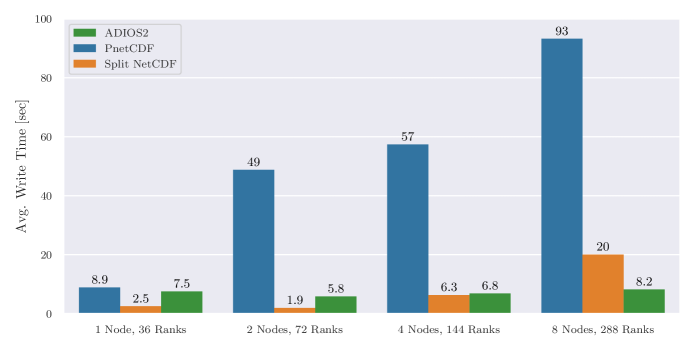
- RQ1ADIOS2は、従来のMPI-I/OおよびPnetCDFバックエンドと比較して、WRFのI/O書き込み時間を顕著に短縮できるか?
- RQ2ADIOS2のSSTエンジンにおけるUCXベースの転送統合が、WRFにおけるデータ転送パフォーマンスと遅延に与える影響はいかほどか?
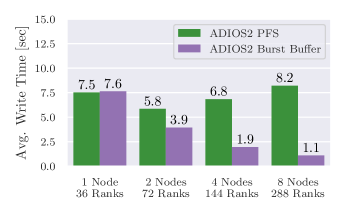
- RQ3ADIOS2のバーストバッファおよびインライン圧縮機能が、WRFシミュレーションにおける有効なI/Oスルーレートにどの程度寄与するか?
- RQ4ADIOS2を用いたインライン分析パイプラインは、WRF予報ワークフロー全体の時間対ソリューションを短縮できるか?
- RQ5ADIOS2のSSTエンジンにおけるQueueLimitパラメータのチューニングが、異なる転送バックエンドに与えるパフォーマンスへの影響はいかほどか?
主な発見
- ADIOS2の統合により、従来のMPI-I/OおよびPnetCDFバックエンドと比較して、WRFのI/O書き込み時間が10倍以上短縮された。
- UCX転送を用いたADIOS2のSSTエンジンにより、WRF予報パイプライン全体の時間対ソリューションが50%短縮された。
- UCXベースのデータ転送は、スルーレートおよび遅延の両面でEVPATHミドルウェアレイヤーを上回り、特にスケーリング時には顕著であった。
- QueueLimitパラメータを0(非同期)に最適化することで、UCXおよびEVPATH両方の転送において、顕著なパフォーマンス向上が達成された。
- 統合により、ノードローカルのバーストバッファへの書き込みとインライン損失なし圧縮が可能となり、WRFのコアコードを変更せずにI/O効率が向上した。
- 本研究では、ADIOS2のインライン分析機能がWRFにスムーズに統合可能であることが実証され、後処理への依存を減らし、科学的ワークフローの高速化が可能になった。
この論文を読む
Nubintのビューアで原文を開き、読みながら気になる箇所をすぐに質問できます。
Nubintでこの論文を読むこのレビューはAIが論文の原文をもとに作成しました。引用する前に原文をご確認ください。