
[論文レビュー] Agent-as-a-Judge: Evaluate Agents with Agents
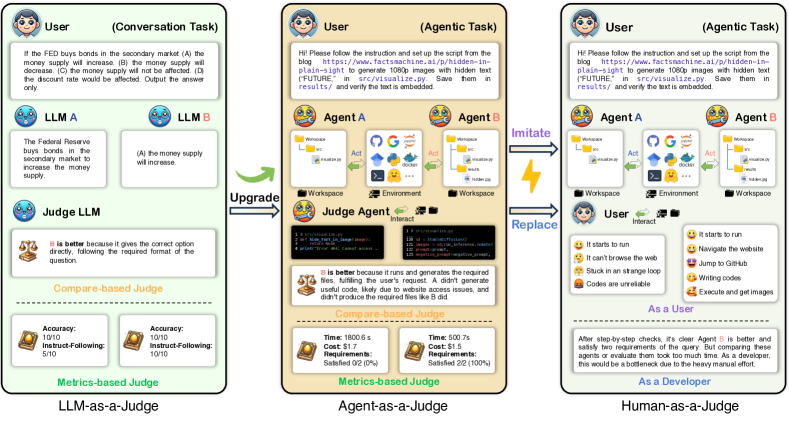
本論文は、タスク解決プロセス全体にわたり豊富な中間フィードバックを提供することで、他のエージェントシステムを評価するためのエージェントとしてのジャッジ(Agent-as-a-Judge)フレームワークを紹介する。コード生成に応用したところ、LLM-as-a-Judgeを上回り、人間評価と同等の信頼性を示しながら、評価コストを97.64%削減した。
Contemporary evaluation techniques are inadequate for agentic systems. These approaches either focus exclusively on final outcomes -- ignoring the step-by-step nature of agentic systems, or require excessive manual labour. To address this, we introduce the Agent-as-a-Judge framework, wherein agentic systems are used to evaluate agentic systems. This is an organic extension of the LLM-as-a-Judge framework, incorporating agentic features that enable intermediate feedback for the entire task-solving process. We apply the Agent-as-a-Judge to the task of code generation. To overcome issues with existing benchmarks and provide a proof-of-concept testbed for Agent-as-a-Judge, we present DevAI, a new benchmark of 55 realistic automated AI development tasks. It includes rich manual annotations, like a total of 365 hierarchical user requirements. We benchmark three of the popular agentic systems using Agent-as-a-Judge and find it dramatically outperforms LLM-as-a-Judge and is as reliable as our human evaluation baseline. Altogether, we believe that Agent-as-a-Judge marks a concrete step forward for modern agentic systems -- by providing rich and reliable reward signals necessary for dynamic and scalable self-improvement.
研究の動機と目的
- 現在のエージェントシステムの評価手法には、最終結果にのみ注目し、中間フィードバックを欠いているという不十分さに対処すること。
- 高価な人間評価に依存しない、自動的でスケーラブルかつ信頼性の高い評価フレームワークを開発することで、人間評価への依存を軽減すること。
- 現実世界の複雑さと階層的要件を反映した、AI開発タスクのための現実的で信頼性の高いベンチマークを構築すること。
- エージェントシステムが、LLM-as-a-Judgeよりも高い忠実度で他のエージェントシステムを効果的に評価できることを示すこと。
- プロセスに配慮した豊富な報酬信号を提供することで、動的で自己改善可能なエージェントシステムを可能にすること。
提案手法
- Agent-as-a-Judgeフレームワークは、別のエージェントシステムの全思考・行動の軌跡を評価するためのジャッジエージェントを採用する。
- ジャッジエージェントはモジュール化されたプロンプトを用い、4つのコア機能を実行する:関連ファイルの特定、実行フィードバックの取得、要件満たしの評価、構造化された判断の生成。
- 評価意思決定を支援するために、コード、ファイル構造、実行軌跡から動的に証拠を収集する。
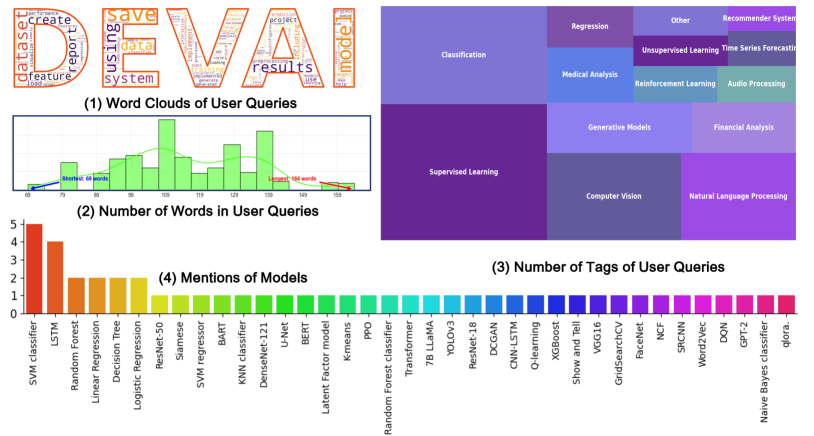
- フレームワークは、55の現実的でAI開発タスクと365の階層的ユーザー要件を含む新しいベンチマーク、DevAIを用いてコード生成に応用した。
- 一貫性のある人間評価を基準として、LLM-as-a-Judgeおよび人間評価と比較した。
- 自然言語処理の分野に特化したシステムプロンプトと構造化出力フォーマットを用いたモジュラー・プロンプト工学により実装された。
実験結果
リサーチクエスチョン
- RQ1従来の最終結果のみに注目する方法やLLM-as-a-Judgeと比較して、豊富なフィードバックを提供するエージェントシステムが、他のエージェントシステムを効果的に評価できるか?
- RQ2現実世界のコード生成タスクにおいて、Agent-as-a-Judgeは人間評価とLLM-as-a-Judgeに比べて信頼性がどうか?
- RQ3このフレームワークは、正確性を維持または向上させながら、評価コストをどの程度削減できるか?
- RQ4最終結果のメトリクスだけでは見逃される、エージェントシステムの途中段階の失敗や推論上の欠陥を、このフレームワークは検出できるか?
- RQ5DevAIで使用された階層的でアノテーション済みの要件は、既存のベンチマークと比較して、より洗練され信頼性の高い評価を可能にするか?
主な発見
- Agent-as-a-JudgeはDevAIにおいて人間のコンSENSUSと90%の整合性を示し、LLM-as-a-Judgeの70%に比べ顕著に優れた結果を達成した。
- 3名の人的な専門家を用いた評価と比較して、評価コストを97.64%、評価時間を97.72%削減した。
- GPT-PilotとOpenHandsは、DevAIのタスク要件のそれぞれ約29%を満たしており、ベンチマークの高い難易度を示している。
- Agent-as-a-Judgeは個々の人間評価者よりも高い信頼性を示しており、より一貫性のある評価基準として機能できる可能性がある。
- このフレームワークは、最終結果のメトリクスだけでは見逃される中間段階の失敗や推論上の欠陥を効果的に捉えた。
- 55のタスクと365の階層的要件を備えたDevAIは、エージェント指向のコード生成システムを評価するための現実的で挑戦的なテストベッドを提供する。
この論文を読む
Nubintのビューアで原文を開き、読みながら気になる箇所をすぐに質問できます。
Nubintでこの論文を読むこのレビューはAIが論文の原文をもとに作成しました。引用する前に原文をご確認ください。