
[論文レビュー] Calibrated Language Models Must Hallucinate
論文は、適格化された言語モデルは理想的な学習データがあっても見えない事実の割合に関連する下限で恣意的な事実をハルシネーションしなければならないことを証明し、訓練後の緩和策と事実性対して系統的ハルシネーションとの関係を含めて論じる。
Recent language models generate false but plausible-sounding text with surprising frequency. Such "hallucinations" are an obstacle to the usability of language-based AI systems and can harm people who rely upon their outputs. This work shows that there is an inherent statistical lower-bound on the rate that pretrained language models hallucinate certain types of facts, having nothing to do with the transformer LM architecture or data quality. For "arbitrary" facts whose veracity cannot be determined from the training data, we show that hallucinations must occur at a certain rate for language models that satisfy a statistical calibration condition appropriate for generative language models. Specifically, if the maximum probability of any fact is bounded, we show that the probability of generating a hallucination is close to the fraction of facts that occur exactly once in the training data (a "Good-Turing" estimate), even assuming ideal training data without errors. One conclusion is that models pretrained to be sufficiently good predictors (i.e., calibrated) may require post-training to mitigate hallucinations on the type of arbitrary facts that tend to appear once in the training set. However, our analysis also suggests that there is no statistical reason that pretraining will lead to hallucination on facts that tend to appear more than once in the training data (like references to publications such as articles and books, whose hallucinations have been particularly notable and problematic) or on systematic facts (like arithmetic calculations). Therefore, different architectures and learning algorithms may mitigate these latter types of hallucinations.
研究の動機と目的
- 生成モデルに対する意味的適格化の下で統計的観点からハルシネーションが発生する理由を動機づける。
- オープンドメインの事実や任意のファクトアイテムに適した生成的適格化フレームワークを定義する。
- 未観測の事実の下限と適格化品質に関連するハルシネーション率の下限を導く。
- 任意の事実タイプ(任意と体系的)およびポスト訓練の緩和策に対する含意を議論する。
提案手法
- 言語を、言語分布から独立同分布にサンプリングされた訓練データから生成される文書の分布としてモデル化する。
- ファクトアイテムを、1文書あたり1つの事実という単純化で任意の情報の断片として定義する。
- Good-Turing(モノファクト)推定量を用いて未観測事実の欠落質量を下界化する。
- 誤適格を測定する適応ビニングを用いた生成的適格化の概念を導入する。
- モノファクト推定と適格化項に関する確率的な下限をハルシネーション率に対して証明する。
実験結果
リサーチクエスチョン
- RQ1適格化された言語モデルが任意の事実をハルシネーションしなければならない最小の割合とは何か?
- RQ2未観測の事実の欠落質量は、意味的適格化の下でハルシネーション率とどのように関連するか?
- RQ3適格化品質は導かれるハルシネーションの下限にどのような影響を与えるか?
- RQ4境界は複数の事実タイプや世界分布の規則性条件にも適用されるか?
- RQ5訓練後の緩和策とアーキテクチャ変更による緩和のインプリケーションは何か?
主な発見
- 適格化された予測子は、訓練データにおける未観測事実の割合に結びつくレートで任意の事実をハルシネーションしなければならない。
- モノファクト(Good-Turing)推定は、未観測の欠落質量の下界および正則性仮定の下でのハルシネーション率の下界として機能する。
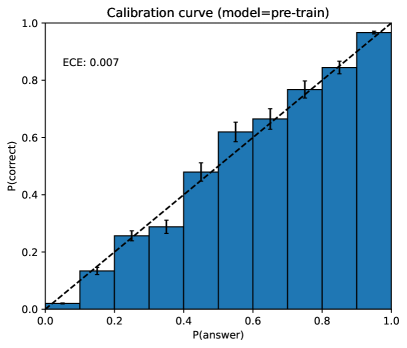
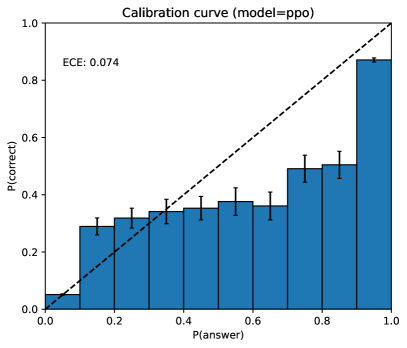
- ポスト訓練の適格化を改善すると、任意の事実のハルシネーション率が上昇するコストが生じる可能性がある。
- 体系的な事実と参照については、統計的にはハルシネーションが必須ではなく、アーキテクチャ変更や学習方法の変更で緩和できる可能性が示唆される。
- 理想化された静的設定(訓練データの誤りがない場合)でもこの結果は成り立ち、予測精度、適格化、事実生成の間の根本的な緊張を強調する。
この論文を読む
Nubintのビューアで原文を開き、読みながら気になる箇所をすぐに質問できます。
Nubintでこの論文を読むこのレビューはAIが論文の原文をもとに作成しました。引用する前に原文をご確認ください。