
[論文レビュー] Learn Global and Optimize Local: A Data-Driven Methodology for Last-Mile Routing
本論文は、歴史的配達データからグローバルなゾーン順序を学習し、ゾーン内でのストップ順序を最適化することで、現実のドライバー行動とより整合性をもたせるデータ駆動型で階層的なルーティング手法を提案する。移動時間と歴史的ゾーン遷移を重み付きコスト行列に組み合わせることで、高いルート予測精度(AUC 0.991)を達成し、Last-Mile Routing Research ChallengeにおいてベースラインTSPモデルを上回る性能を示した。
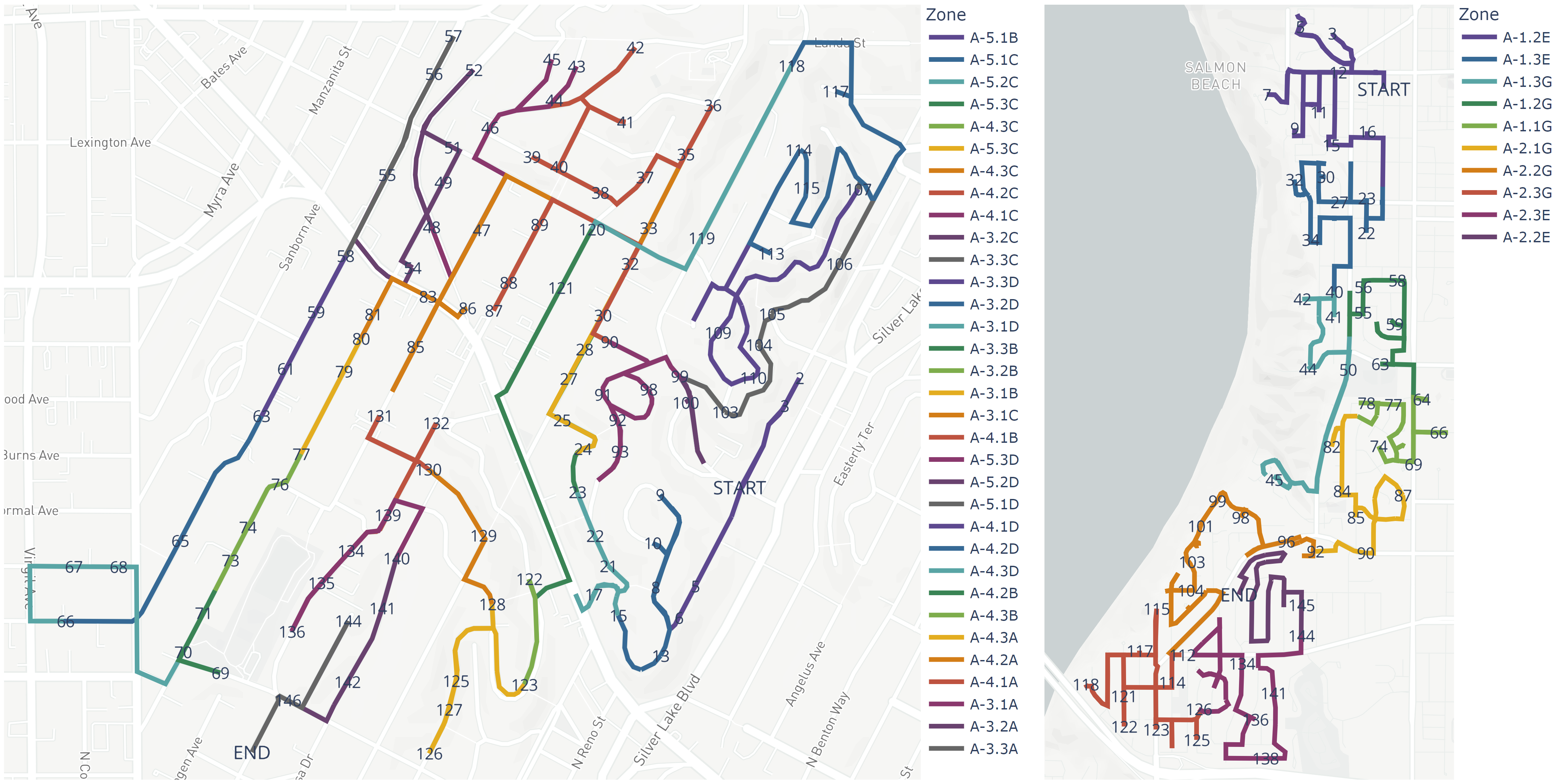
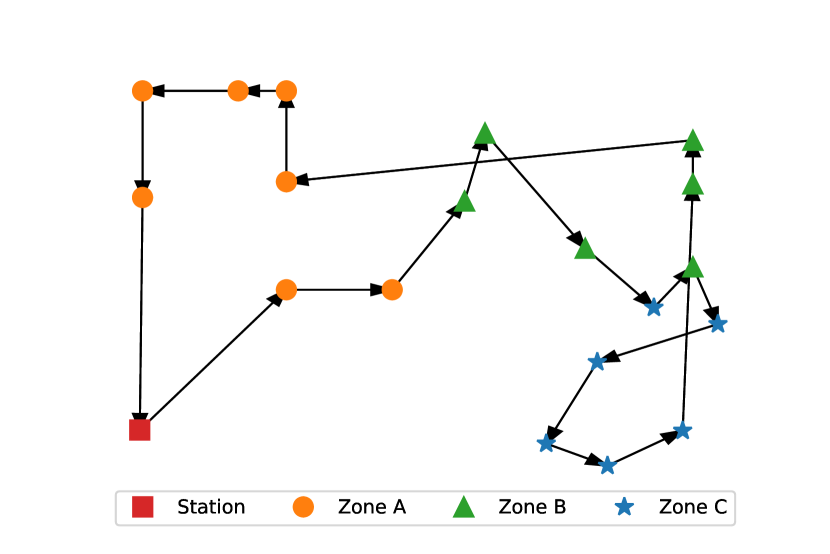
In last-mile routing, the task of finding a route is often framed as a Traveling Salesman Problem to minimize travel time and associated cost. However, solutions stemming from this approach do not match the realized paths as drivers deviate due to navigational considerations and preferences. To prescribe routes that incorporate this tacit knowledge, a data-driven model is proposed that aligns well with the hierarchical structure of delivery data wherein each stop belongs to a zone - a geographical area. First, on the global level, a zone sequence is established as a result of a minimization over a cost matrix which is a weighted combination of historical information and distances (travel times) between zones. Subsequently, within zones, sequences of stops are determined, such that, integrated with the predetermined zone sequence, a full solution is obtained. The methodology is particularly promising as it propels itself within the top-tier of submissions to the Last-Mile Routing Research Challenge, while it maintains an elegant decomposition that ensures a feasible implementation into practice. The concurrence between prescribed and realized routes underpins the adequateness of a hierarchical breakdown of the problem and the fact that drivers make a series of locally optimal decisions when navigating. Furthermore, experimenting with the balance between historical information and distance exposes that historic information is pivotal in deciding a starting zone of a route. The experiments also reveal that at the end of a route, historical information can best be discarded, making the time it takes to return to the station the primary concern.
研究の動機と目的
- 理論的最適ルートと実際のドライバーの逸脱行動の間のギャップを埋める。
- ドライバーの暗黙知や好みを組み込んだスケーラブルで実用的なルーティング手法を開発する。
- ストップレベルではなくゾーンレベルでの歴史的ルーティングデータを活用することで、ルート予測精度を向上させる。
- TSPをグローバル(ゾーン)とローカル(ゾーン内)最適化に階層的に分解することで、現実世界の実行可能性とパフォーマンスが向上することを示す。
- 毎日の実現ルートを用いてリアルタイムで更新可能なフレームワークを提供する。
提案手法
- 移動時間と歴史的ゾーン遷移頻度を組み合わせたコスト行列上でTSPを適用することで、ゾーンの最適な順序を決定する2段階プロセスとしてラストマイルルーティングをモデル化する。
- 距離(移動時間)と歴史的遷移回数を、調整可能な重みパラメータ(最適値は約0.9)を用いて組み合わせた重み付きコスト行列を構築する。
- 各ゾーンに対して別個のTSP(またはOTSP)を解き、ゾーン内でのストップ順序を最適化してローカル最適性を確保する。
- ゾーンレベルのデータを用いて遷移確率を学習することで、ストップレベルのモデリングに比べてデータスパarsityを低減する。
- ステーションからゾーン、およびゾーンからステーションへの遷移に異なる重みを適用し、ドライバーがルート終了時の帰還時間を優先することを反映する。
- 新しい毎日のルートデータで履歴遷移回数行列を更新することで、リアルタイムでの再トレーニングを可能にする。
実験結果
リサーチクエスチョン
- RQ1どのようにして歴史的配達データを活用することで、標準的なTSP定式化よりも正確にドライバーのルートを予測できるか?
- RQ2ゾーンレベルとゾーン内最適化に分けるラストマイルルーティングの階層的分解は、現実のドライバー行動とどれほど整合性をもたせるか?
- RQ3ゾーン順序予測のためのコスト行列において、移動時間と歴史的遷移頻度の最適なバランスは何か?
- RQ4ルートの開始時と終了時にドライバーの好みが異なる場合、コスト行列の各要素への重み付けにどのような影響を与えるか?
- RQ5毎日の実現ルートを用いて、リアルタイムでモデルを更新することで予測精度を維持できるか?
主な発見
- 提案手法はルート予測においてAUC 0.991を達成し、ベースラインTSPモデルを著しく上回り、Last-Mile Routing Research Challengeの上位グループにランクインした。
- 移動時間と歴史的ゾーン遷移の重み付き組み合わせ(最適重みは約0.9)が最良のパフォーマンスを示し、距離とドライバーの好みの間の強いトレードオフが示された。
- ゾーン間遷移では移動時間をより重視するように重みを設定すると、モデルの性能が最も高くなる。これは、ドライバーがルート開始の決定を時間ではなく順序に重きを置いていることを示している。
- ルートの終了時に、歴史的情報の重要性は低下し、ステーションへの帰還時間を最小化することがルート選択の主な要因となる。
- 重みパラメータの誤設定に対してもモデルの性能は安定しており、広い範囲の値で安定した性能を示した。
- 残りの学習ギャップはわずか0.009 AUCであり、5,112件のトレーニングルートでのみ、ドライバー行動の予測可能な構造の大部分を捉えられていた。
より良い研究を、今すぐ始めましょう
論文の読解から最終レビューまで、研究時間を劇的に削減しましょう。
クレジットカード登録不要
このレビューはAIが作成し、人間の編集者が確認しました。