
[論文レビュー] Standby efficiency and thermocline degradation of a packed bed thermal energy storage: An experimental study
本実験的研究では、空気を熱交換媒体として用いたラボスケールの充填床熱蓄熱(PBTES)システムにおける待機効率および熱層界面の劣化を調査した。結果から、下から上への充電では、上から下への充電と比較して22時間の待機後、エントロピー生成が2倍に増加し、エクジルギー効率が18%低くなることが判明した。これは自然対流の強化に起因する。
The waste heat potential from industrial processes is huge and if it can be utilized it may contribute significantly to the mitigation of climate change. A packed bed thermal energy storage system is a low-cost storage technology that can be employed to enable the utilization of waste heat from industrial processes. This system can be used to store excess heat and release this energy when it is needed at a later time. To ensure the efficient operation of a packed bed thermal energy storage its characteristics in standby mode need to be studied in great detail. In the present study, the standby efficiency and thermocline degradation of a lab-scale packed bed thermal energy storage in standby mode is experimentally investigated for different flow directions of the heat transfer fluid during the preceding charging period. Results show that, for long standby periods, the standby efficiency is significantly affected by the flow direction. The maximum entropy generation rate for a 22-hour standby process with the flow direction of the heat transfer fluid from bottom to top in the preceding charging process is twice as high as for the same process with the reverse flow direction. Energy and exergy efficiencies are lower for the process with reverse flow direction by 5% and 18% respectively.
研究の動機と目的
- 充填床熱蓄熱(PBTES)システムにおける待機効率および熱層界面の劣化を実験的に評価すること。
- 充電時の熱交換媒体(HTF)の流れの方向が長期待機性能に与える影響を評価すること。
- 長期間の待機期間中の自然対流および不可逆性に起因するエネルギー損失およびエクジルギー損失を定量すること。
- 産業廃熱回収応用におけるPBTESの経済的・システム設計最適化のためのデータを提供すること。
提案手法
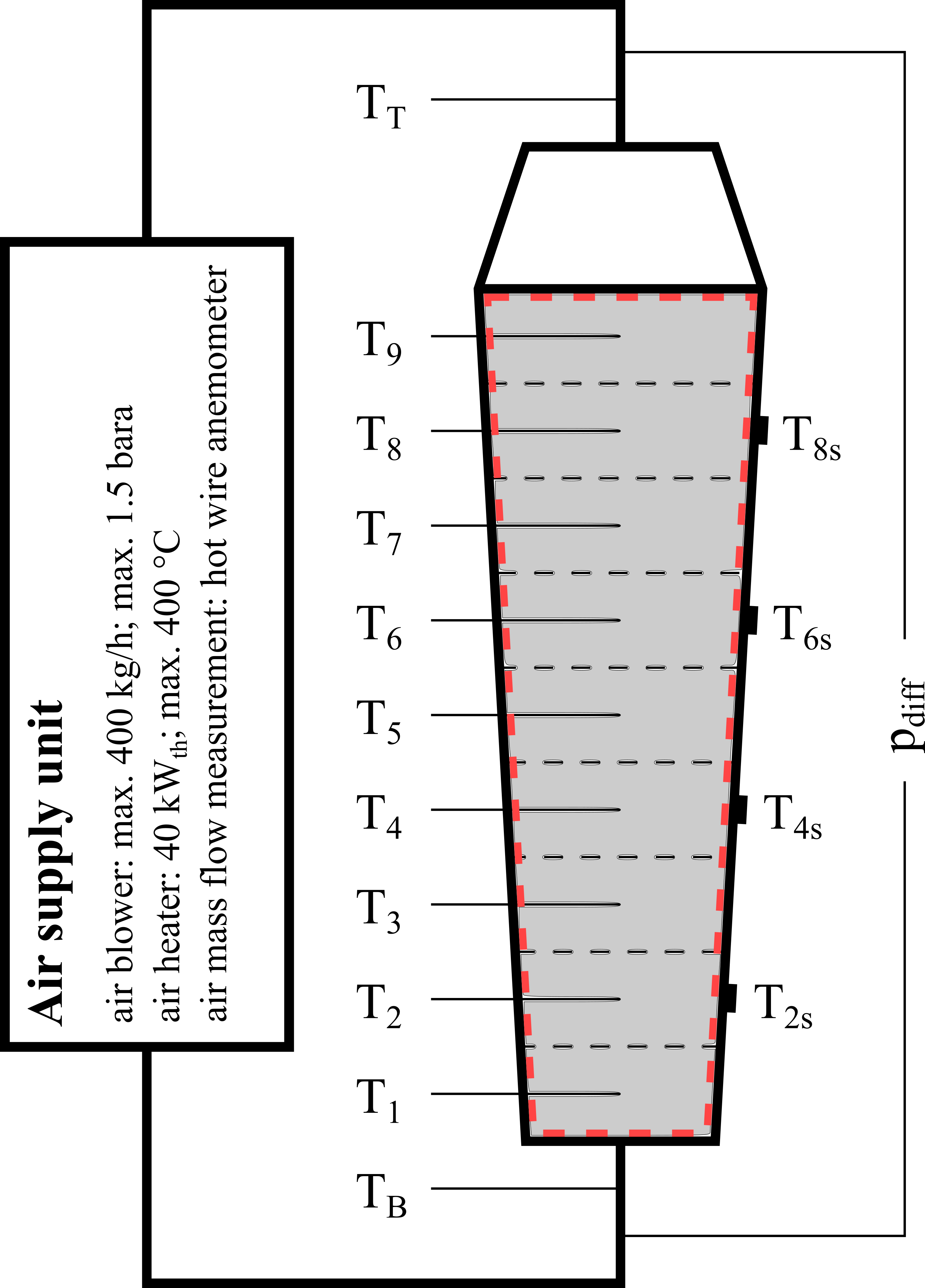
- LDスラグを蓄熱媒体として用い、空気をHTFとして使用したラボスケールのPBTESで実験を実施した。
- 下から上へ(FWD)および上から下へ(REV)の2通りの流れ方向で充電サイクルを実施した。
- 充填床全体の温度分布を22時間の待機期間中に測定し、熱層界面の劣化を評価した。
- 第二法則解析を適用して、蓄えられたエネルギーおよび回収されたエネルギー/エクジルギーに基づき、エネルギー効率およびエクジルギー効率を計算した。
- エントロピー生成率を不可逆性および熱力学的損失を評価する主な指標として用いた。
- 実験データを処理し、FWDおよびREV充電設定間の待機性能を比較した。

実験結果
リサーチクエスチョン
- RQ1充電時の熱交換媒体の流れの方向が、充填床熱蓄熱における待機効率にどのように影響を与えるか?
- RQ2PBTESシステムにおいて、長時間の待機期間中に熱層界面の劣化はどの程度進行するか?
- RQ3異なる充電流れ方向におけるエネルギー効率およびエクジルギー効率は、待機時間の経過とともにどのように変化するか?
- RQ4自然対流は待機期間中にエントロピー生成およびエクジルギー損失にどの程度寄与するか?
- RQ5充電時の流れの方向が待機性能に顕著に影響を与えるようになる臨界時間閾値は何か?
主な発見
- 22時間の待機期間において、FWD(下から上への充電)ではREV(上から下への充電)と比較して最大エントロピー生成率が2倍に上昇した。
- 22時間の待機後、FWDではエネルギー効率が5%低く、エクジルギー効率が18%低かった。
- 22時間の待機後、FWDではエクジルギー効率が45%に低下し、REVでは55%に低下した。これはFWD設定で顕著なエクジルギー損失が生じていることを示している。
- 7時間未満の待機時間では、流れの方向が効率にほとんど影響しない。これは自然対流がまだ完全に発達していないためである。
- FWDでは約7時間で自然対流が完全に発達し、熱層界面の劣化が加速された。
- 結果から、充電方向が長期性能に顕著に影響することが示され、特に長期間の待機中にエクジルギー損失を最小限に抑えるために上から下への充電が優れていることが明らかになった。
この論文を読む
Nubintのビューアで原文を開き、読みながら気になる箇所をすぐに質問できます。
Nubintでこの論文を読むこのレビューはAIが論文の原文をもとに作成しました。引用する前に原文をご確認ください。