
[논문 리뷰] Calibrated Language Models Must Hallucinate
논문은 보정된 언어 모델이 실제 훈련 데이터의 이상적일지라도 보지 못한 사실의 비율과 관련된 하한선에 의해 임의의 사실을 허상해야 한다고 증명하고, 사후 학습 완화 및 사실 기반 vs. 체계적 환각에 대한 함의를 논의한다.
Recent language models generate false but plausible-sounding text with surprising frequency. Such "hallucinations" are an obstacle to the usability of language-based AI systems and can harm people who rely upon their outputs. This work shows that there is an inherent statistical lower-bound on the rate that pretrained language models hallucinate certain types of facts, having nothing to do with the transformer LM architecture or data quality. For "arbitrary" facts whose veracity cannot be determined from the training data, we show that hallucinations must occur at a certain rate for language models that satisfy a statistical calibration condition appropriate for generative language models. Specifically, if the maximum probability of any fact is bounded, we show that the probability of generating a hallucination is close to the fraction of facts that occur exactly once in the training data (a "Good-Turing" estimate), even assuming ideal training data without errors. One conclusion is that models pretrained to be sufficiently good predictors (i.e., calibrated) may require post-training to mitigate hallucinations on the type of arbitrary facts that tend to appear once in the training set. However, our analysis also suggests that there is no statistical reason that pretraining will lead to hallucination on facts that tend to appear more than once in the training data (like references to publications such as articles and books, whose hallucinations have been particularly notable and problematic) or on systematic facts (like arithmetic calculations). Therefore, different architectures and learning algorithms may mitigate these latter types of hallucinations.
연구 동기 및 목표
- 생성 모델의 의미적 보정하에서 통계적 관점으로 환각이 왜 발생하는지 동기를 제시한다.
- 개방 도메인 사실과 임의의 사실 소스에 적합한 생성 보정 프레임워크를 정의한다.
- 보지 못한 사실과 보정 품질과의 관계에서 환각률의 하한을 도출한다.
- 임의의 사실과 체계적 사실 등 서로 다른 사실 유형에 대한 함의와 사후 학습 보완 방법을 논의한다.
제안 방법
- 언어를 언어 분포에서 i.i.d.로 뽑힌 훈련 데이터로부터 생성된 문서의 분포로 모델링한다.
- 사실 소스(factoids)를 문서당 하나의 사실 단순화로 임의의 정보 조각으로 정의한다.
- 관찰되지 않은 사실의 누락 질량에 대한 하한을 바운드하기 위해 Good-Turing(단일 사실) 추정기를 사용한다.
- 적응적 구간화로 보정이 필요한 정도를 측정하는 생성 보정 개념을 도입한다.
- mono-fact 추정치와 보정 항목에 의해 환각률에 대한 확률적 하한을 증명한다.
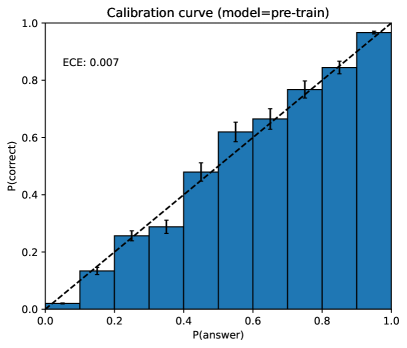
실험 결과
연구 질문
- RQ1보정된 언어 모델이 임의의 사실을 환각해야 하는 최소 비율은 얼마인가?
- RQ2의미적 보정하에서 관찰되지 않은 사실의 누락 질량이 환각률과 어떤 관련이 있는가?
- RQ3보정 품질이 도출된 환각의 하한에 어떤 영향을 미치는가?
- RQ4세계 분포의 다중 사실 유형 및 규칙성 조건에 대해 이 하한이 확장되는가?
- RQ5사후 학습을 통한 완화 대 아키텍처적 변화에 의한 완화에 대한 시사점은 무엇인가?
주요 결과
- 보정된 예측기는 학습 데이터에서 관찰되지 않은 사실의 분수에 연관된 비율로 임의의 사실에 대해 환각해야 한다.
- mono-fact(Good-Turing) 추정치가 보이지 않는 사실의 누락 질량에 대한 하한으로 작용하며, 따라서 규칙성 가정하에서 환각률의 하한이 된다.
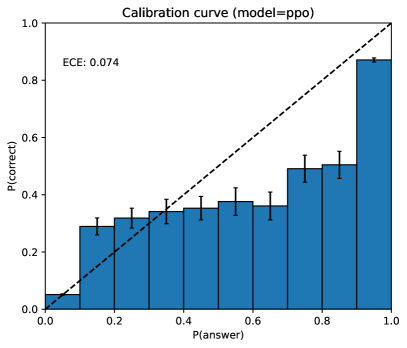
- 보정 비용이 존재한다: 사후 학습 보정을 개선하면 임의의 사실에 대한 환각률이 증가할 수 있다.
- 체계적 사실과 참조에 대해서는 환각에 대한 통계적 필연성이 없으며, 아키텍처적 또는 학습 변화로의 완화 가능성을 시사한다.
- 훈련 데이터 오류가 없는 이상화된 정적 설정에서도 결과가 성립하며, 예측 정확도, 보정, 그리고 사실 생성 간의 근본적인 긴장을 부각한다.
이 논문 읽기
누빈트 뷰어에서 원문을 열고, 읽으면서 궁금한 곳을 바로 물어보세요.
누빈트에서 이 논문 읽기이 리뷰는 AI가 논문 원문을 바탕으로 만들었습니다. 인용하기 전에 원문을 확인해 주세요.