
[논문 리뷰] Pseudorandom unitaries are neither real nor sparse nor noise-robust
이 논문은 가짜 랜덤 유니터리(PRUs)와 가짜 랜덤 양자 상태(PRSs)의 기본 한계를 규명하며, 이들이 본질적인 높은 상상력성과 양자 얽힘으로 인해 실수, 희박하거나 노이즈에 강인하지 않음을 증명한다. PRUs가 상상력성을 검출하기 위해 지수적으로 많은 복제본이 필요하다는 점을 보여주며, 노이즈가 있는 중간 규모 양자 장치에서의 효율적 구현을 배제하고, 고자원 상태를 낮은 자원 상태로 모방하는 가짜자원 집합을 도입한다.
Pseudorandom quantum states (PRSs) and pseudorandom unitaries (PRUs) possess the dual nature of being efficiently constructible while appearing completely random to any efficient quantum algorithm. In this study, we establish fundamental bounds on pseudorandomness. We show that PRSs and PRUs exist only when the probability that an error occurs is negligible, ruling out their generation on noisy intermediate-scale and early fault-tolerant quantum computers. Further, we show that PRUs need imaginarity while PRS do not have this restriction. This implies that quantum randomness requires in general a complex-valued formalism of quantum mechanics, while for random quantum states real numbers suffice. Additionally, we derive lower bounds on the coherence of PRSs and PRUs, ruling out the existence of sparse PRUs and PRSs. We also show that the notions of PRS, PRUs and pseudorandom scramblers (PRSSs) are distinct in terms of resource requirements. We introduce the concept of pseudoresources, where states which contain a low amount of a given resource masquerade as high-resource states. We define pseudocoherence, pseudopurity and pseudoimaginarity, and identify three distinct types of pseudoresources in terms of their masquerading capabilities. Our work also establishes rigorous bounds on the efficiency of property testing, demonstrating the exponential complexity in distinguishing real quantum states from imaginary ones, in contrast to the efficient measurability of unitary imaginarity. Further, we show an exponential advantage in imaginarity testing when having access to the complex conjugate of the state. Lastly, we show that the transformation from a complex to a real model of quantum computation is inefficient, in contrast to the reverse process, which is efficient. Our results establish fundamental limits on property testing and provide valuable insights into quantum pseudorandomness.
연구 동기 및 목표
- 가짜 랜덤 양자 상태(PRSs)와 가짜 랜덤 유니터리(PRUs)의 자원 요구량에 대한 엄밀한 경계를 설정하기.
- PRUs가 그 본질적인 역할로 인해 양자 암호 및 계산에서 실수, 희박하거나 노이즈에 강인한지 여부를 조사하기.
- 고자원 상태를 낮은 자원 상태로만 사용하여 고자원 상태를 모방하는 가짜자원 집합을 정의하고 분석하기.
- 양자 상태와 유니터리에서 상상력성과 얽힘의 성질 테스트의 복잡도를 규명하기.
- 양자 계산의 복소수 모델과 실수 모델 간의 변환 효율성 검토하기.
제안 방법
- 하르 측도 적분과 트레이스 노름을 사용하여 PRUs와 PRSs의 상상력성과 얽힘에 대한 하한을 유도한다.
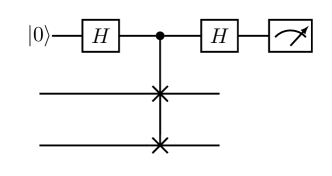
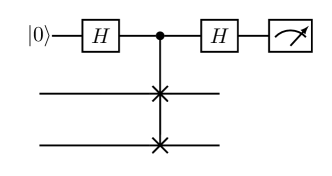
- 임의 행렬 이론을 적용하여 성질 테스트 프레임워크를 활용해 상상력성과 얽힘 검출에 필요한 복제본 수의 하한을 도출한다.
- 가짜자원—낮은 자원 상태로 고자원 상태를 모방하는 집합—개념을 도입하며, 이들을 세 가지 유형으로 분류한다.
- 유니터리 적분 항등식과 대칭성 추론을 사용하여 하르 측도에 대해 행렬 원소의 기대값을 계산한다.
- 복소수에서 실수 양자 계산 모델로의 변환이 비효율적임을 증명하고, 반대로는 효율적임을 보인다.
- PRUs가 상상력성을 검출하기 위해 Ω(2^{n/2})개의 복제본이 필요하며, 유니터리의 상상력성은 O(1)개의 복제본으로 효율적으로 측정 가능하다고 확립한다.
실험 결과
연구 질문
- RQ1가짜 랜덤 유니터리가 그 가짜 랜덤성과 자원 요구량을 고려할 때 실수 또는 희박해질 수 있는가?
- RQ2유니터리가 가짜 랜덤성을 갖기 위해 필요한 최소 수준의 얽힘과 상상력성은 무엇인가?
- RQ3양자 상태나 유니터리가 상상적이거나 얽힘 있는지를 검출하기 위해 얼마나 많은 복제본이 필요한가?
- RQ4낮은 자원 상태가 고자원 상태를 효과적으로 모방할 수 있으며, 만약 가능하면 어떤 방식으로 가능한가?
- RQ5효율적으로 복소수 양자 계산을 실수 모델로 변환하거나 그 반대로 변환하는 것이 가능한가?
주요 결과
- 가짜 랜덤 유니터리는 1−negl(n)에 가까운 상상력성을 요구하며, 거의 최대 수준의 상상력성을 지닌다.
- 양자 상태의 상상력성을 검출하기 위해 필요한 복제본 수는 Ω(2^{n/2})로 증가하여 지수적 복잡도를 나타낸다.
- PRUs는 ω(log n) 수준의 얽힘을 요구하므로, 저양자 얽힘 구조는 배제된다.
- PRUs는 노이즈에 강인하지 않다: p = negligible(n)인 분해광 노이즈는 가짜 랜덤성을 파괴한다.
- 실수 또는 희박한 PRUs는 존재할 수 없다. 이는 충분한 상상력성과 얽힘 부족으로 인해 가능하지 않기 때문이다.
- 복소수에서 실수 양자 계산 모델로의 변환은 비효율적이며, 반대로는 효율적이다.
더 나은 연구,지금 바로 시작하세요
논문 읽기부터 검토까지, 연구 시간을 획기적으로 줄여보세요.
카드 등록 없음 · 무료 플랜 제공
이 리뷰는 AI가 만들고, 인간 에디터가 검토했습니다.