
[논문 리뷰] Standby efficiency and thermocline degradation of a packed bed thermal energy storage: An experimental study
이 실험적 연구는 공기 열매체를 사용한 실험실 규모의 다공질 매체 열에너지 저장(PBTES) 시스템에서의 대기 중 효율성과 열구배의 열화를 조사한다. 결과적으로, 하부에서 상부로 충전하는 경우 상부에서 하부로 충전하는 것보다 22시간의 대기 중에서 엔트로피 생성이 두 배이며, 18% 낮은 외부 에너지 효율성을 보이며, 자연대류가 강화되어 발생한다.
The waste heat potential from industrial processes is huge and if it can be utilized it may contribute significantly to the mitigation of climate change. A packed bed thermal energy storage system is a low-cost storage technology that can be employed to enable the utilization of waste heat from industrial processes. This system can be used to store excess heat and release this energy when it is needed at a later time. To ensure the efficient operation of a packed bed thermal energy storage its characteristics in standby mode need to be studied in great detail. In the present study, the standby efficiency and thermocline degradation of a lab-scale packed bed thermal energy storage in standby mode is experimentally investigated for different flow directions of the heat transfer fluid during the preceding charging period. Results show that, for long standby periods, the standby efficiency is significantly affected by the flow direction. The maximum entropy generation rate for a 22-hour standby process with the flow direction of the heat transfer fluid from bottom to top in the preceding charging process is twice as high as for the same process with the reverse flow direction. Energy and exergy efficiencies are lower for the process with reverse flow direction by 5% and 18% respectively.
연구 동기 및 목표
- 다공질 매체 열에너지 저장(PBTES) 시스템에서의 대기 중 효율성과 열구배 열화를 실험적으로 평가하기 위해.
- 장기적인 대기 중 성능에 미치는 충전 중 열매체(HTF)의 유동 방향 영향을 평가하기 위해.
- 장기적인 대기 중 기간 동안 자연대류와 비가역성으로 인한 에너지 및 외부 에너지 손실을 정량화하기 위해.
- 산업 폐열 회수 적용 분야에서 PBTES의 경제성 및 시스템 설계 최적화를 위한 자료를 제공하기 위해.
제안 방법
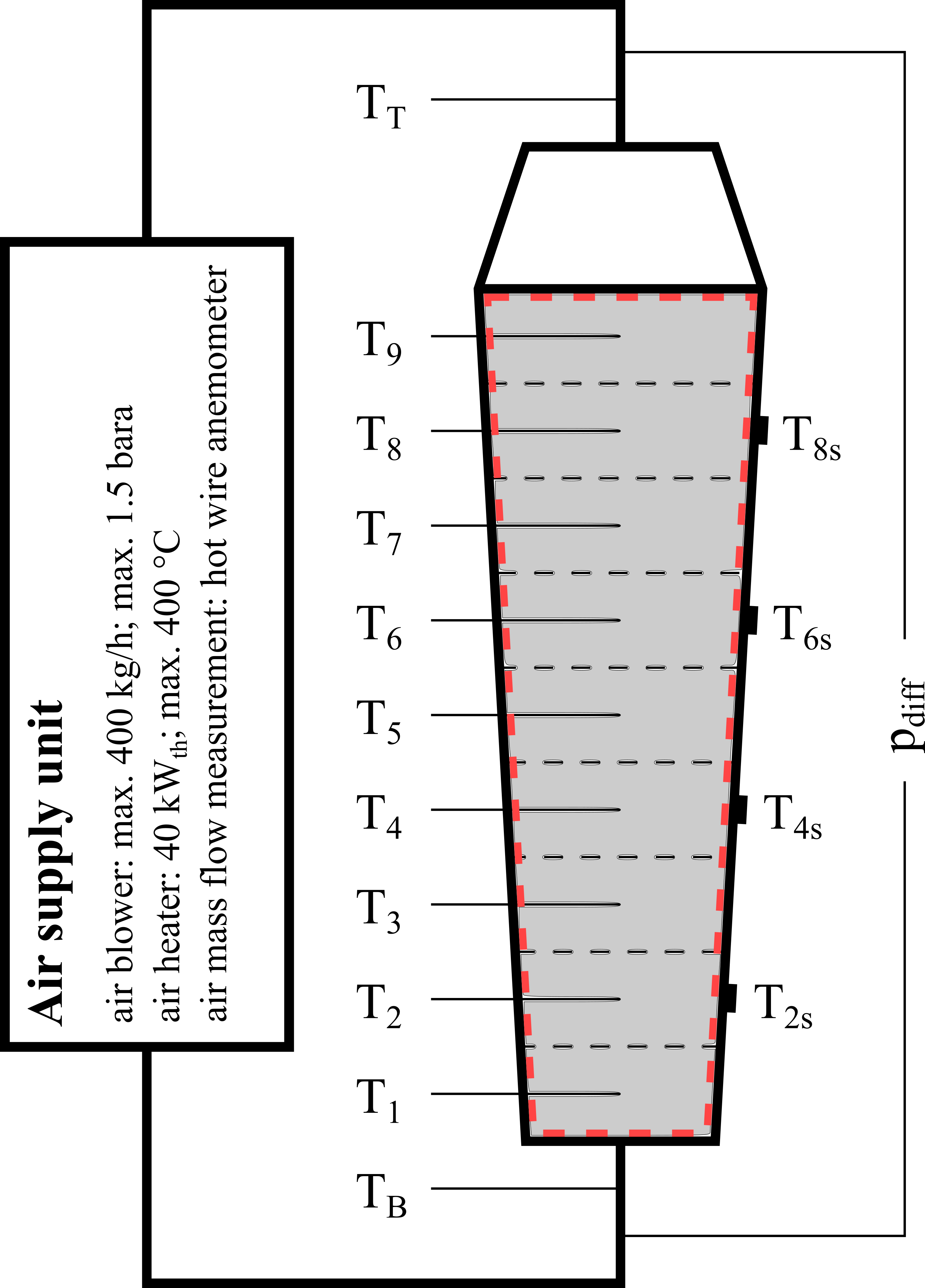
- LD 슬래그를 저장 매체로, 공기를 열매체로 사용한 실험실 규모의 PBTES에서 실험을 수행하였다.
- 하부에서 상부로(하부-상부, FWD)와 상부에서 하부로(상부-하부, REV)의 두 가지 유동 방향으로 충전 사이클을 수행하였다.
- 열구배 열화를 평가하기 위해 22시간의 대기 중 동안 다공질 매체 전반의 온도 프로파일을 측정하였다.
- 저장 및 회수된 에너지/외부 에너지 기반으로 에너지 및 외부 에너지 효율을 계산하기 위해 제2법칙 분석을 적용하였다.
- 비가역성과 열역학적 손실 평가의 핵심 지표로 엔트로피 생성률을 사용하였다.
- 실험 데이터를 처리하여 FWD 및 REV 충전 구성을 기반으로 한 대기 중 성능을 비교하였다.

실험 결과
연구 질문
- RQ1충전 중 열매체의 유동 방향이 다공질 매체 열에너지 저장 시스템에서의 대기 중 효율성에 어떤 영향을 미치는가?
- RQ2PBTES 시스템에서 장기적인 대기 중 기간 동안 열구배 열화의 정도는 어느 정도인가?
- RQ3다른 충전 유동 방향에 따라 대기 중 지속 시간에 따라 에너지 및 외부 에너지 효율은 어떻게 변하는가?
- RQ4자연대류가 대기 중 동안 엔트로피 생성과 외부 에너지 손실에 어느 정도 기여하는가?
- RQ5충전 중 유동 방향이 대기 중 성능에 상당한 영향을 미치기 시작하는 임계 시간 기준은 언제인가?
주요 결과
- 22시간의 대기 중 기간 동안, 하부-상부 충전(FWD)의 최대 엔트로피 생성률은 상부-하부 충전(REV) 대비 두 배이다.
- 22시간의 대기 중 후, 에너지 효율은 FWD 케이스에서 REV 케이스 대비 5% 낮고, 외부 에너지 효율은 18% 낮다.
- 22시간의 대기 중 후, FWD 케이스의 외부 에너지 효율은 45%로 떨어지고, REV 케이스는 55%로 나타나, FWD 구성에서의 상당한 외부 에너지 손실이 확인된다.
- 7시간 이하의 대기 중 기간 동안, 자연대류가 아직 완전히 발달하지 않아 유동 방향의 영향은 효율에 미미한 영향을 미친다.
- FWD 케이스에서는 약 7시간 내로 완전한 자연대류가 발생하여 열구배 열화가 가속화된다.
- 결과적으로, 충전 방향이 장기 성능에 상당한 영향을 미치며, 특히 장기적인 대기 중 동안 외부 에너지 손실을 최소화하기 위해 상부-하부 충전이 더 우수하다는 것이 입증되었다.
이 논문 읽기
누빈트 뷰어에서 원문을 열고, 읽으면서 궁금한 곳을 바로 물어보세요.
누빈트에서 이 논문 읽기이 리뷰는 AI가 논문 원문을 바탕으로 만들었습니다. 인용하기 전에 원문을 확인해 주세요.