
[Paper Review] A Quantum Algorithm for Shapley Value Estimation
This paper proposes a novel quantum algorithm that efficiently estimates Shapley values for quantum circuits by reducing the problem to estimating the mean of a binomial distribution in polynomial time. The method achieves this with only O(n log n) controlled-NOT gates and O(log n) additional qubits, offering an exponential speedup over classical methods that require O(2^n) evaluations.
In the classical context, the cooperative game theory concept of the Shapley value has been adapted for post hoc explanations of machine learning models. However, this approach does not easily translate to eXplainable Quantum ML (XQML). Finding Shapley values can be highly computationally complex. We propose quantum algorithms which can extract Shapley values within some confidence interval. Our results perform in polynomial time. We demonstrate the validity of each approach under specific examples of cooperative voting games.
Motivation & Objective
- To address the challenge of explainability in quantum AI, where measuring quantum states collapses superpositions, making traditional post-hoc explanations infeasible.
- To overcome the exponential classical complexity of Shapley value computation, which is NP-hard and intractable for large input sets.
- To develop a native quantum solution for approximating Shapley values that is scalable and compatible with existing quantum circuit architectures.
- To provide a framework that enables global evaluation of input factor contributions in quantum circuits with provable error bounds.
Proposed method
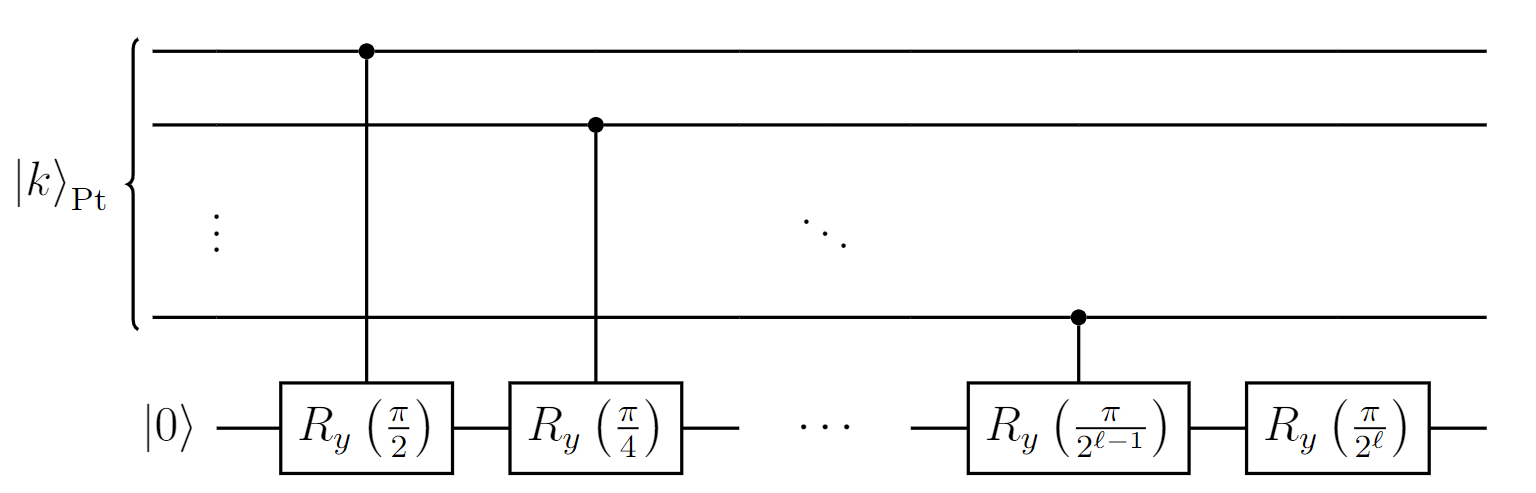
- The algorithm maps the Shapley value estimation problem to the task of estimating the expected value of a binomially distributed random variable using amplitude estimation.
- It constructs a quantum circuit that encodes the contribution of each input factor to the output via controlled operations and entanglement.
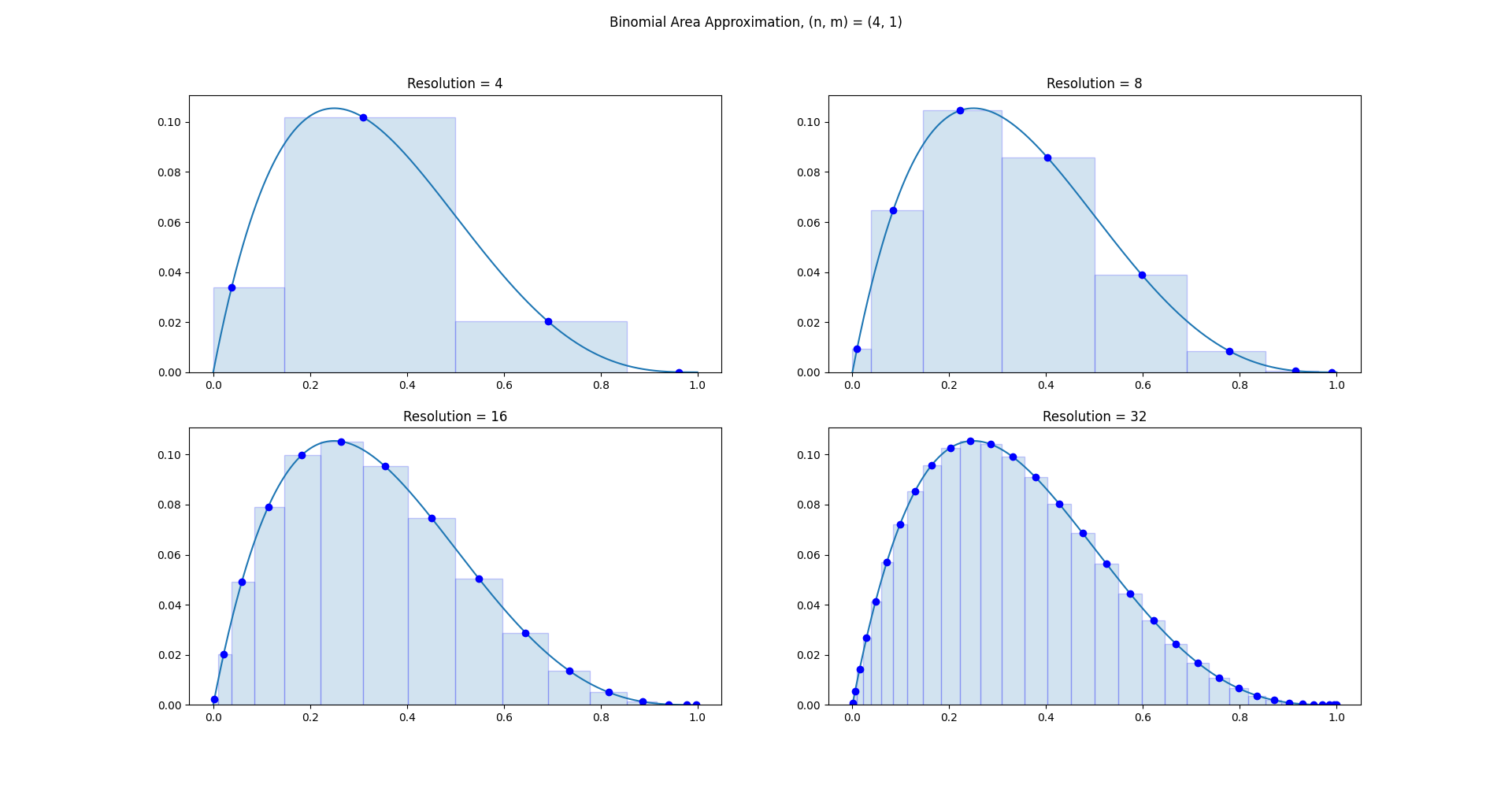
- The method uses a recursive partitioning scheme to bound the error in each step, ensuring convergence with a geometric decay rate.
- Error is analyzed using upper bounds on the sum of absolute errors (SUE) across levels of recursion, with a proven decay factor of 3/4 per iteration.
- The framework introduces a flexible, modular design that adds only O(n log n) CNOT gates and O(log n) qubits to the original circuit.
- The algorithm leverages quantum amplitude estimation to estimate the mean of a binomial distribution with high confidence and reduced circuit depth.
Experimental results
Research questions
- RQ1Can Shapley values for quantum circuits be estimated in polynomial time using quantum algorithms?
- RQ2How can the exponential classical complexity of Shapley value computation be overcome in the context of quantum machine learning?
- RQ3What is the error behavior of a recursive quantum estimation method for Shapley values, and can it be bounded?
- RQ4Can a quantum algorithm achieve accurate Shapley value estimation with minimal overhead in circuit depth and qubit count?
Key findings
- The algorithm reduces the complexity of Shapley value estimation from O(2^n) classical evaluations to polynomial time using quantum amplitude estimation.
- The error in the estimation decays geometrically, with a proven upper bound of 3/4 per recursion level, ensuring rapid convergence.
- The method adds only O(n log n) CNOT gates and O(log n) additional qubits to the original quantum circuit, making it scalable.
- The framework provides a provable upper bound on the initial error, which is equal to the maximum value of the binomial function b_{n,m}(x) at x = m/n.
- The algorithm is applicable to non-superadditive games, extending its utility beyond classical assumptions in cooperative game theory.
- The approach enables efficient post-hoc explainability for quantum AI models, particularly in regulated environments like those governed by GDPR.
Read this paper
Open the full text in the Nubint reader and ask about any passage as you read.
Read this paper on NubintThis review was generated by AI from the original paper. Please check the paper before citing it.