
[Paper Review] An RTL Implementation of the Data Encryption Standard (DES)
This paper presents a hardware-level RTL implementation of the Data Encryption Standard (DES) using VHDL, targeting FPGA deployment for efficient and secure encryption. It demonstrates a functional DES design on a Virtex-7 FPGA, achieving a maximum frequency of 246 MHz with 139 flip-flops and 244 LUTs, while also including a simplified SDES variant for educational purposes to illustrate block cipher principles.
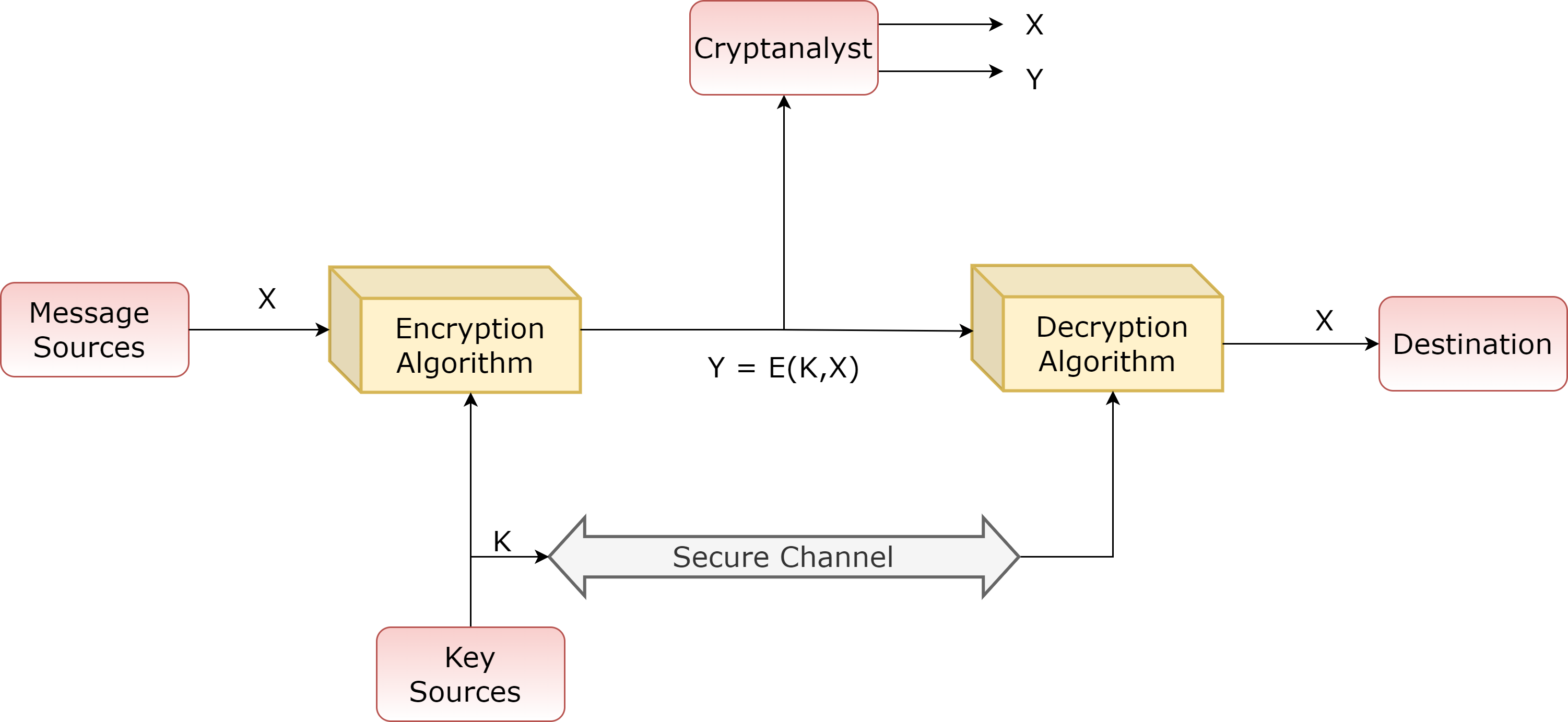
Data Encryption Standard (DES) is based on the Feistel block cipher, developed in 1971 by IBM cryptography researcher Horst Feistel. DES uses 16 rounds of the Feistel structure. But with the changes in recent years, the internet is starting to be used more to connect devices to each other. These devices can range from powerful computing devices, such as desktop computers and tablets, to resource constrained devices, When it comes to these constrained devices, using a different key for each round cryptography algorithms fail to provide necessary security and performance.
Motivation & Objective
- To implement a secure and efficient hardware realization of the Data Encryption Standard (DES) using RTL design for FPGA deployment.
- To provide a simplified educational version of DES (SDES) to help students understand block cipher structure and cryptanalytic techniques.
- To evaluate the performance and resource utilization of the DES design on a modern FPGA platform (Virtex-7).
- To demonstrate the feasibility of using DES in resource-constrained environments through optimized RTL synthesis.
Proposed method
- The DES algorithm was implemented in VHDL using a 16-round Feistel structure with 56-bit key scheduling and standard S-box substitutions.
- The design uses a datapath architecture with parallel processing of 64-bit blocks and modular components for permutation, expansion, and XOR operations.
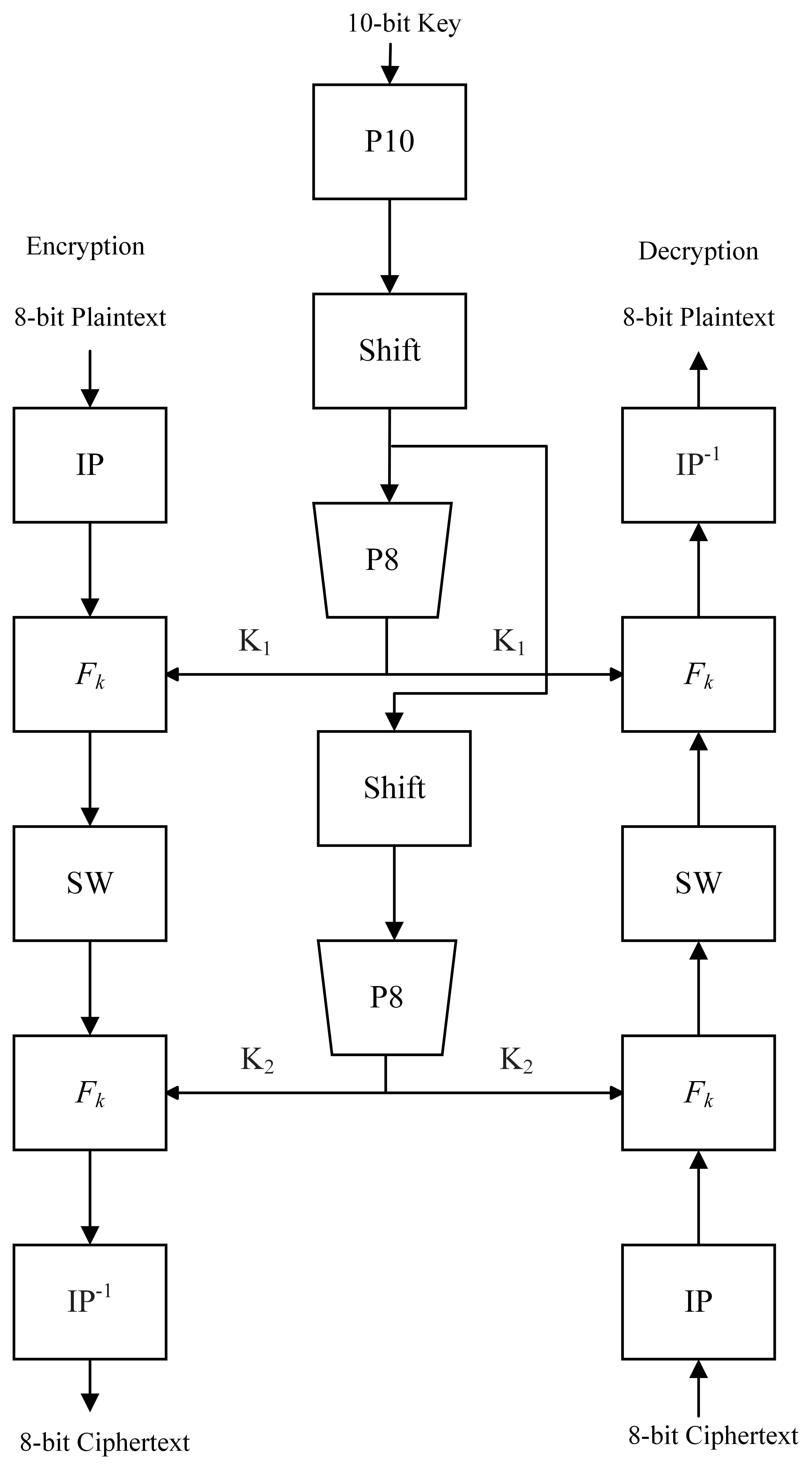
- S-DES was implemented as a pedagogical variant using 10-bit keys and 8-bit blocks to enable manual encryption/decryption and cryptanalysis exercises.
- The RTL design was synthesized and simulated on a Virtex-7 FPGA device using Xilinx Vivado tools.
- Resource utilization and timing analysis were performed to evaluate area, power, and maximum operating frequency.
- The implementation supports standard DES modes of operation, including ECB, CBC, CFB, OFB, and CTR, as defined by NIST.
Experimental results
Research questions
- RQ1How can a full DES algorithm be effectively implemented in RTL for FPGA deployment with optimal performance and resource usage?
- RQ2To what extent does the SDES variant serve as a practical educational tool for teaching block cipher design and cryptanalysis?
- RQ3What are the actual resource and performance metrics (frequency, LUTs, flip-flops) of a DES implementation on a modern FPGA like Virtex-7?
- RQ4How does the RTL design handle key scheduling and round function transformations in a hardware-optimized way?
- RQ5Can the proposed DES implementation maintain security and correctness across multiple modes of operation (e.g., CBC, CTR) in a hardware context?
Key findings
- The DES implementation achieved a maximum operating frequency of 246 MHz on the Virtex-7 FPGA, indicating high-speed performance suitable for real-time applications.
- The design utilized 244 LUTs and 139 flip-flops, demonstrating moderate resource consumption for a full DES block cipher in hardware.
- Dynamic power consumption was measured at 8 mW under the operating conditions, indicating low power efficiency for embedded applications.
- The SDES variant was successfully implemented and validated, confirming its utility for teaching DES principles and cryptanalytic techniques.
- The RTL design correctly implemented all standard DES modes of operation, including ECB, CBC, CFB, OFB, and CTR, as per NIST specifications.
- The implementation confirmed that DES remains viable in hardware for constrained environments when optimized, despite its 56-bit key length being considered cryptographically weak today.
Read this paper
Open the full text in the Nubint reader and ask about any passage as you read.
Read this paper on NubintThis review was generated by AI from the original paper. Please check the paper before citing it.