
[Paper Review] Enhancing Q&A with Domain-Specific Fine-Tuning and Iterative Reasoning: A Comparative Study
The paper evaluates domain-specific fine-tuning of embedding and generative models, plus iterative reasoning (OODA) in RAG-based Q&A on FinanceBench, showing substantial accuracy gains, especially with OODA.
This paper investigates the impact of domain-specific model fine-tuning and of reasoning mechanisms on the performance of question-answering (Q&A) systems powered by large language models (LLMs) and Retrieval-Augmented Generation (RAG). Using the FinanceBench SEC financial filings dataset, we observe that, for RAG, combining a fine-tuned embedding model with a fine-tuned LLM achieves better accuracy than generic models, with relatively greater gains attributable to fine-tuned embedding models. Additionally, employing reasoning iterations on top of RAG delivers an even bigger jump in performance, enabling the Q&A systems to get closer to human-expert quality. We discuss the implications of such findings, propose a structured technical design space capturing major technical components of Q&A AI, and provide recommendations for making high-impact technical choices for such components. We plan to follow up on this work with actionable guides for AI teams and further investigations into the impact of domain-specific augmentation in RAG and into agentic AI capabilities such as advanced planning and reasoning.
Motivation & Objective
- Motivate domain-specific adaptation for QA systems using LLMs and RAG in a high-stakes domain (finance).
- Quantify gains from fine-tuning embedding retrievers and LLM generators, and from iterative reasoning (OODA) in QA accuracy.
- Propose a structured design-space framework for key QA components to guide engineering decisions.
- Provide empirical results on a FinanceBench financial dataset to ground recommendations.
Proposed method
- Define a baseline RAG workflow (retriever, augmenter, generator).
- Investigate fine-tuning of embedding retrievers and of LLM generators, plus full fine-tuning of both.
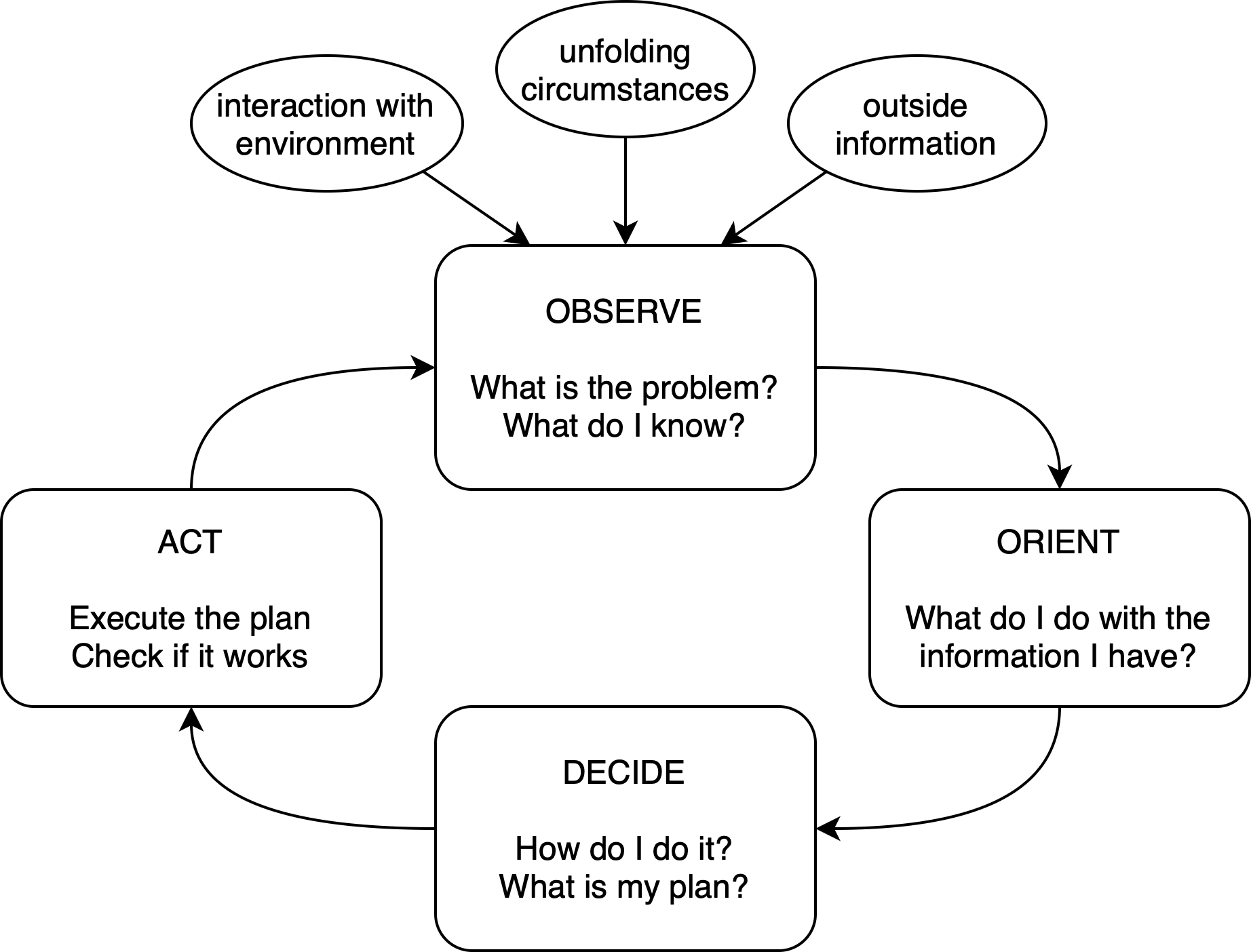
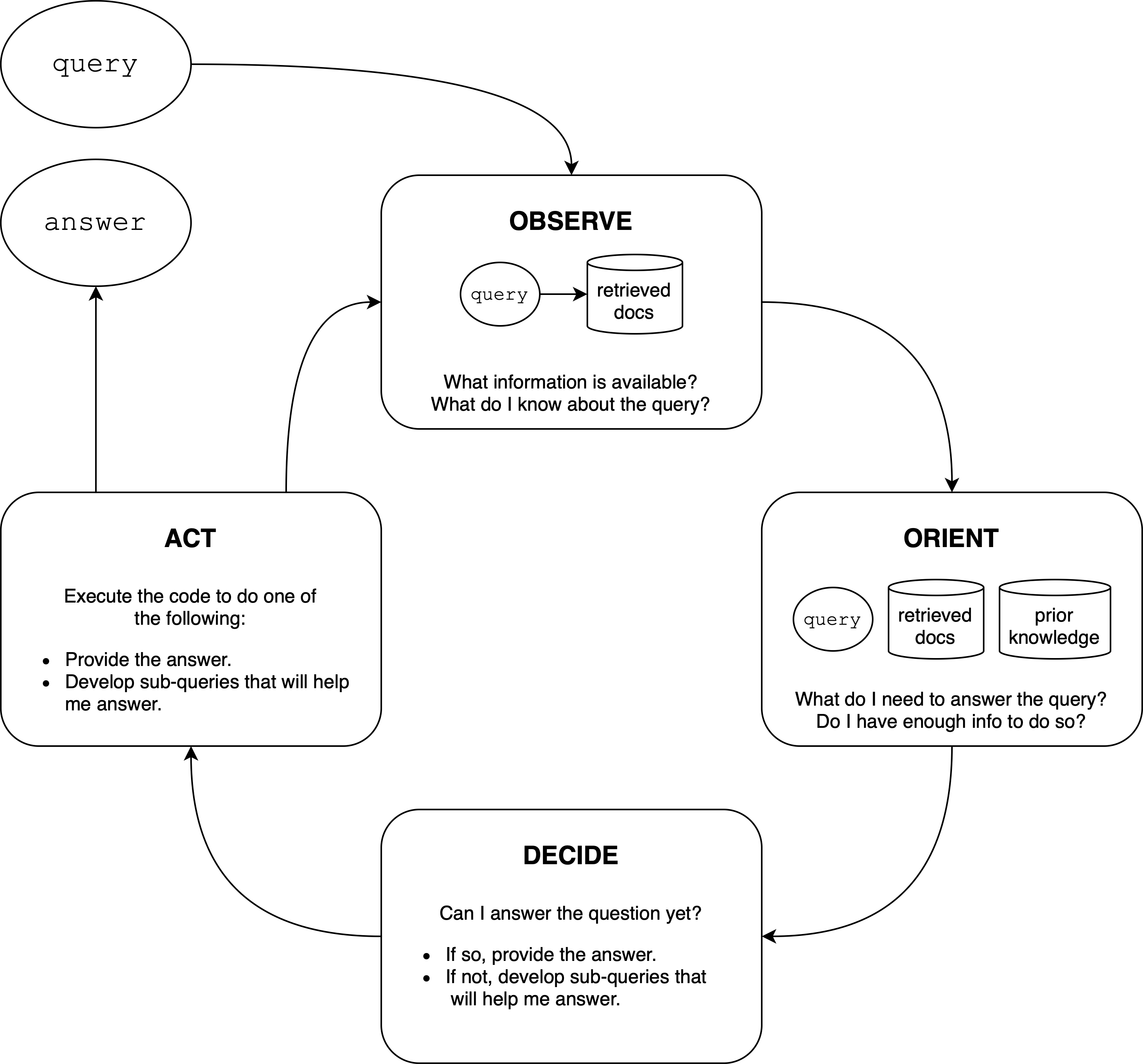
- Incorporate an iterative OODA reasoning loop with RAG for multi-step question answering.
- Evaluate configurations on FinanceBench using automated retrieval metrics and human-annotated correctness.
- Present a design-space map of major QA components and their configurations.
Experimental results
Research questions
- RQ1How do domain-specific fine-tuning of embedding retrievers and LLM generators affect QA accuracy in a RAG-based system?
- RQ2What is the impact of incorporating iterative reasoning (OODA) on QA accuracy in domain-specific tasks?
- RQ3Which components in the QA design space yield the largest performance gains in a finance-domain QA task?
Key findings
- Fine-tuning the retrieval component gives notable accuracy gains over generic RAG, with up to 20 percentage points improvement on FinanceBench.
- Fine-tuning the generator also yields gains, but to a lesser extent than fine-tuning the retriever.
- Full fine-tuning (retriever + generator) improves over generic RAG, though gains vary by metric.
- Introducing OODA iterative reasoning with RAG substantially boosts performance, achieving up to 50 percentage points higher accuracy than generic RAG on FinanceBench.
- On FinanceBench, the OODA-enabled configuration outperformed the fully fine-tuned RAG by 20–25 percentage points in some metrics.
- The study advocates prioritizing domain-specific embedding fine-tuning and using iterative reasoning to enhance domain QA systems.
Read this paper
Open the full text in the Nubint reader and ask about any passage as you read.
Read this paper on NubintThis review was generated by AI from the original paper. Please check the paper before citing it.