
[Paper Review] FAIR Enough: How Can We Develop and Assess a FAIR-Compliant Dataset for Large Language Models' Training?
The paper proposes a framework to integrate FAIR data principles into the LLM training lifecycle and validates it with a case study creating a FAIR-compliant bias-detection dataset, including a detailed evaluation of models and debiasing effects.
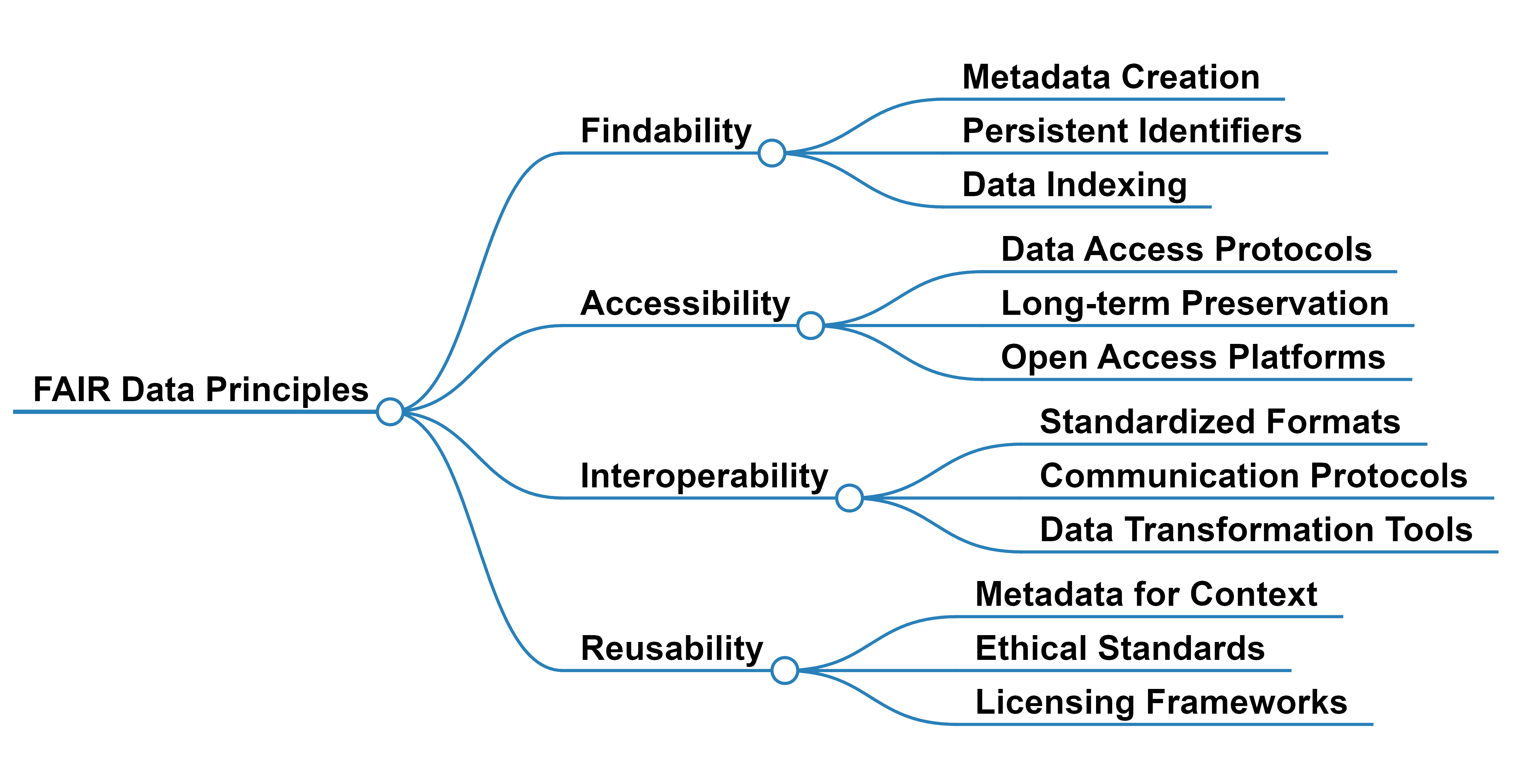
The rapid evolution of Large Language Models (LLMs) highlights the necessity for ethical considerations and data integrity in AI development, particularly emphasizing the role of FAIR (Findable, Accessible, Interoperable, Reusable) data principles. While these principles are crucial for ethical data stewardship, their specific application in the context of LLM training data remains an under-explored area. This research gap is the focus of our study, which begins with an examination of existing literature to underline the importance of FAIR principles in managing data for LLM training. Building upon this, we propose a novel framework designed to integrate FAIR principles into the LLM development lifecycle. A contribution of our work is the development of a comprehensive checklist intended to guide researchers and developers in applying FAIR data principles consistently across the model development process. The utility and effectiveness of our framework are validated through a case study on creating a FAIR-compliant dataset aimed at detecting and mitigating biases in LLMs. We present this framework to the community as a tool to foster the creation of technologically advanced, ethically grounded, and socially responsible AI models.
Motivation & Objective
- Exploit FAIR data principles to improve ethical data stewardship in LLM training.
- Develop a lifecycle framework that embeds FAIR principles at each stage of LLM development.
- Create and validate a FAIR-compliant dataset aimed at identifying and mitigating biases in LLMs.
- Provide a practical checklist and references to tools to implement FAIR for LLM datasets.
Proposed method
- Review FAIR data principles and their relevance to AI and LLMs.
- Propose a lifecycle framework that integrates FAIR principles into data collection, model training, evaluation, and deployment for LLMs.
- Construct a case study dataset from diverse sources to detect and reduce linguistic biases, with metadata and interoperability features.
- Train and evaluate multiple LLMs on bias-sensitive tasks using standardized formats and model cards.
- Assess debiasing effects using a post-debiasing evaluation to study trade-offs between bias reduction and task performance.
Experimental results
Research questions
- RQ1How can FAIR data principles be embedded throughout the LLM training lifecycle?
- RQ2What practical benefits does a FAIR-compliant dataset provide for bias detection and mitigation in LLMs?
- RQ3What is the impact of debiasing on model performance across multiple tasks?
- RQ4How can datasets and models be documented to maximize findability, accessibility, interoperability, and reusability?
Key findings
- A comprehensive FAIR-aligned framework and a practical checklist are proposed for LLM data management.
- A case study demonstrates creation of a FAIR-compliant bias-focused dataset with metadata, interoperability formats, and long-term accessibility.
- Models trained on the FAIR dataset show high initial performance across tasks (example metrics provided in Table 5).
- Debiasing with LLama 2B and related processes reduces toxicity and bias scores but may reduce some classification performance on debiased data, illustrating a trade-off.
- The study emphasizes transparency, model cards, and public availability to support reproducibility and reusability of models and datasets.
Read this paper
Open the full text in the Nubint reader and ask about any passage as you read.
Read this paper on NubintThis review was generated by AI from the original paper. Please check the paper before citing it.