
[Paper Review] How Knowledge Workers Think Generative AI Will (Not) Transform Their Industries
Qualitative study of seven knowledge industries showing knowledge workers view generative AI primarily as an effort-saving tool for menial tasks, requiring human review, and highlighting social forces like deskilling, dehumanization, disconnection, and disinformation.
Generative AI is expected to have transformative effects in multiple knowledge industries. To better understand how knowledge workers expect generative AI may affect their industries in the future, we conducted participatory research workshops for seven different industries, with a total of 54 participants across three US cities. We describe participants' expectations of generative AI's impact, including a dominant narrative that cut across the groups' discourse: participants largely envision generative AI as a tool to perform menial work, under human review. Participants do not generally anticipate the disruptive changes to knowledge industries currently projected in common media and academic narratives. Participants do however envision generative AI may amplify four social forces currently shaping their industries: deskilling, dehumanization, disconnection, and disinformation. We describe these forces, and then we provide additional detail regarding attitudes in specific knowledge industries. We conclude with a discussion of implications and research challenges for the HCI community.
Motivation & Objective
- Explore knowledge workers' expectations of how generative AI will affect their industries in the future.
- Identify common narratives and industry-specific perspectives on AI-enabled work changes.
- Examine social forces—deskilling, dehumanization, disconnection, disinformation—shaping views on AI deployment.
- Discuss implications and research challenges for human–computer interaction (HCI) communities.
Proposed method
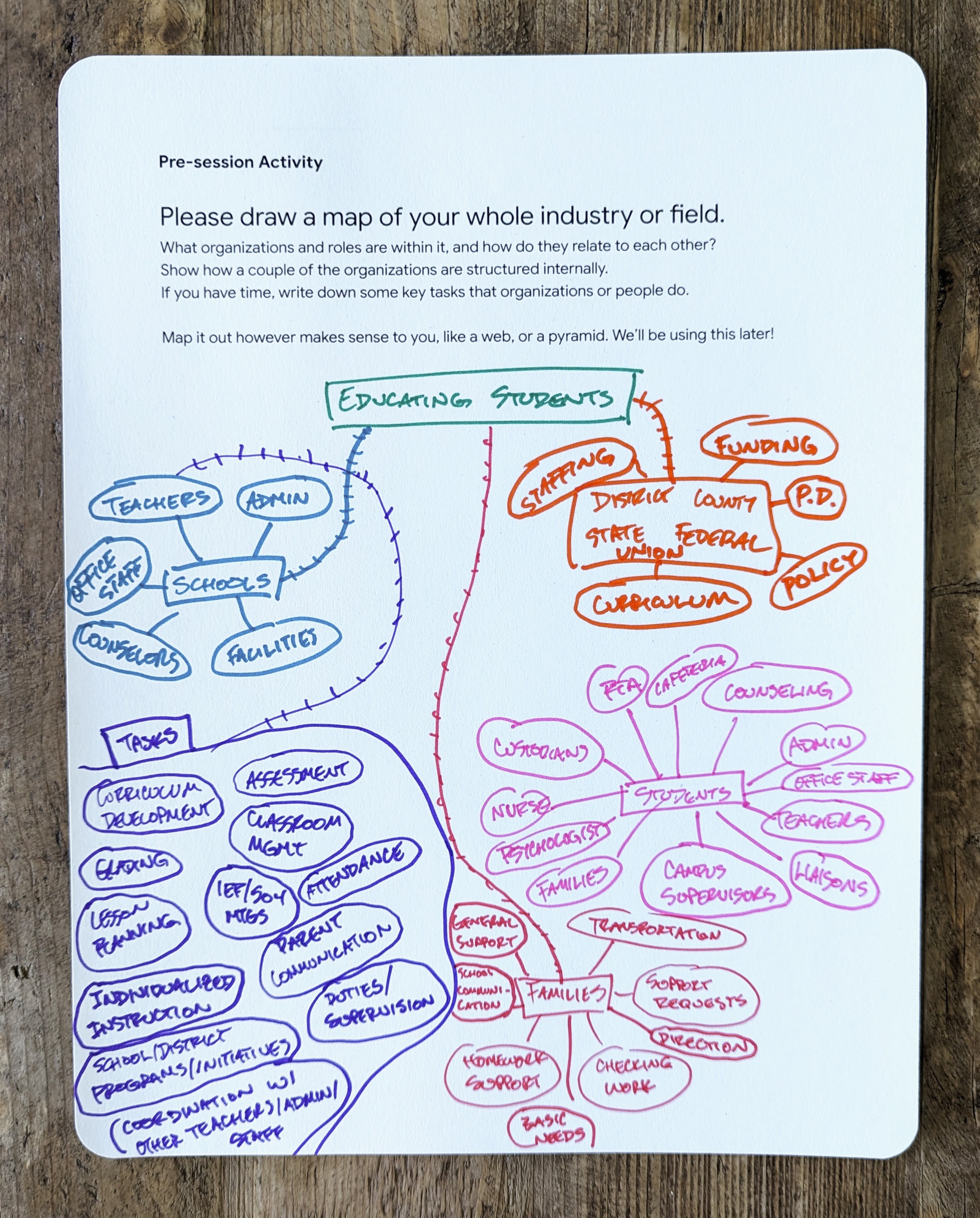
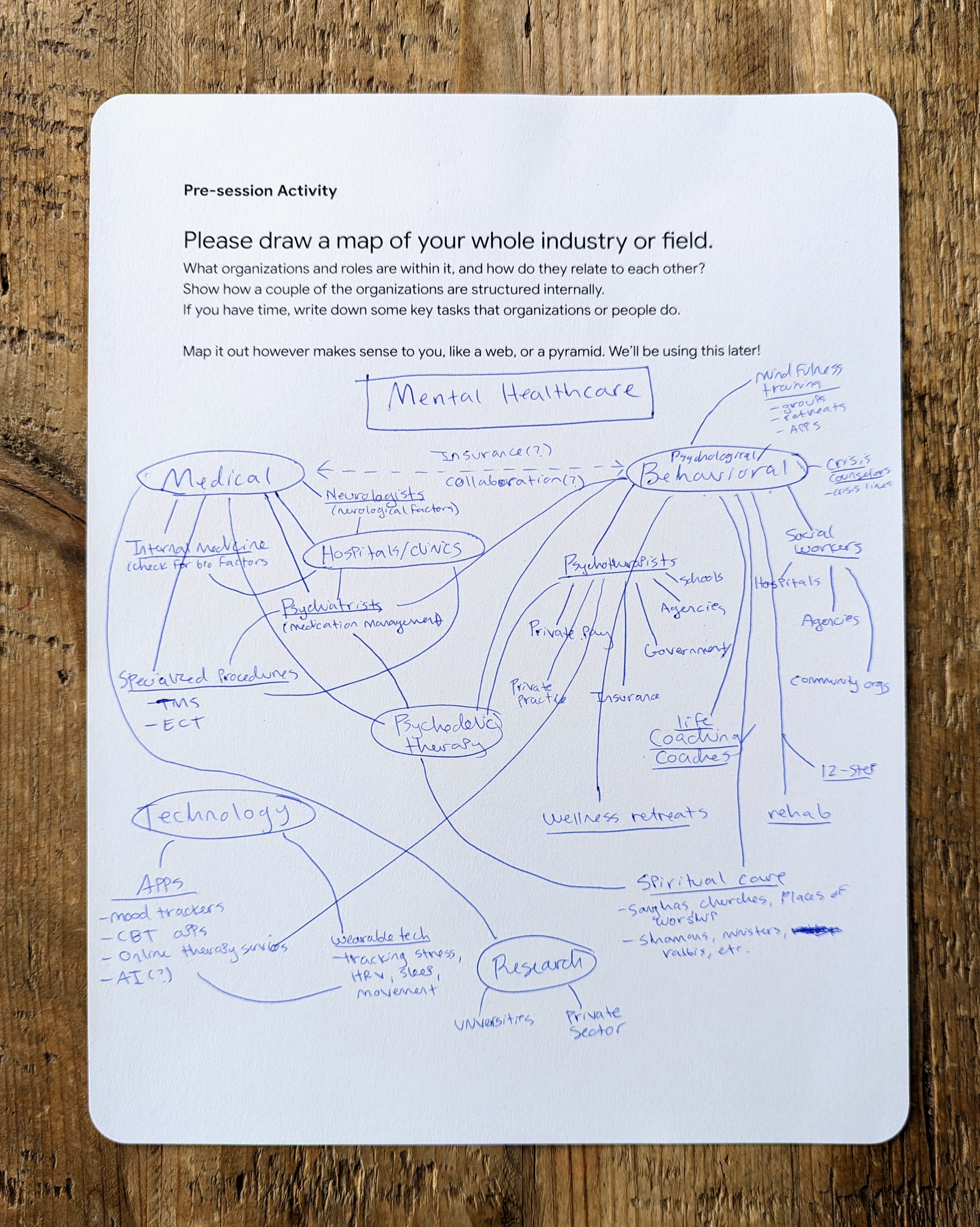
- Three-hour participatory research workshops conducted with 54 participants across seven knowledge industries (advertising, business communications, education, journalism, law, mental health, software development).
- Industry maps, change cards, and policy provocations used to surface use cases, concerns, and governance ideas.
- Reflexive thematic analysis of transcribed sessions and artifacts (industry maps, change cards, policies) to identify themes.
Experimental results
Research questions
- RQ1How do knowledge workers expect generative AI to affect their industries and tasks in the future?
- RQ2What are the dominant narratives and industry-specific perspectives on AI-enabled work?
- RQ3What social forces accompany AI deployment in knowledge work and how might they shape outcomes?
- RQ4What governance structures or oversight mechanisms do workers see as appropriate for AI use?
Key findings
- Participants largely envision generative AI as an effort-saving tool for menial, routine tasks, with human review remaining essential.
- There is limited expectation of broad, transformative disruption across industries, contrasting sensationalist narratives.
- A dominant cross-industry narrative emerges: AI handles tedious outputs while humans provide oversight and decision-making, preventing full automation.
- Four social forces—deskilling, dehumanization, disconnection, and disinformation—are anticipated to accompany AI deployment in knowledge work.
- Industry-specific nuances emerge, with concerns about accuracy, brand/copyright constraints, and the need for professional validation of AI-generated work.
- Existing governance and review practices within industries are viewed as adaptable to include AI oversight rather than replacing professional judgment.
Better researchstarts right now
From reading papers to final review, dramatically reduce your research time.
No credit card · Free plan available
This review was created by AI and reviewed by human editors.