
[Paper Review] Mapper of the IGM spin temperature: instrument overview
The paper describes the design, calibration formalism, and electromagnetic characterization of MIST, a ground-based, single-antenna global 21 cm experiment operating from 25–105 MHz without a metal ground plane, including simulations of soil effects and initial field measurements.
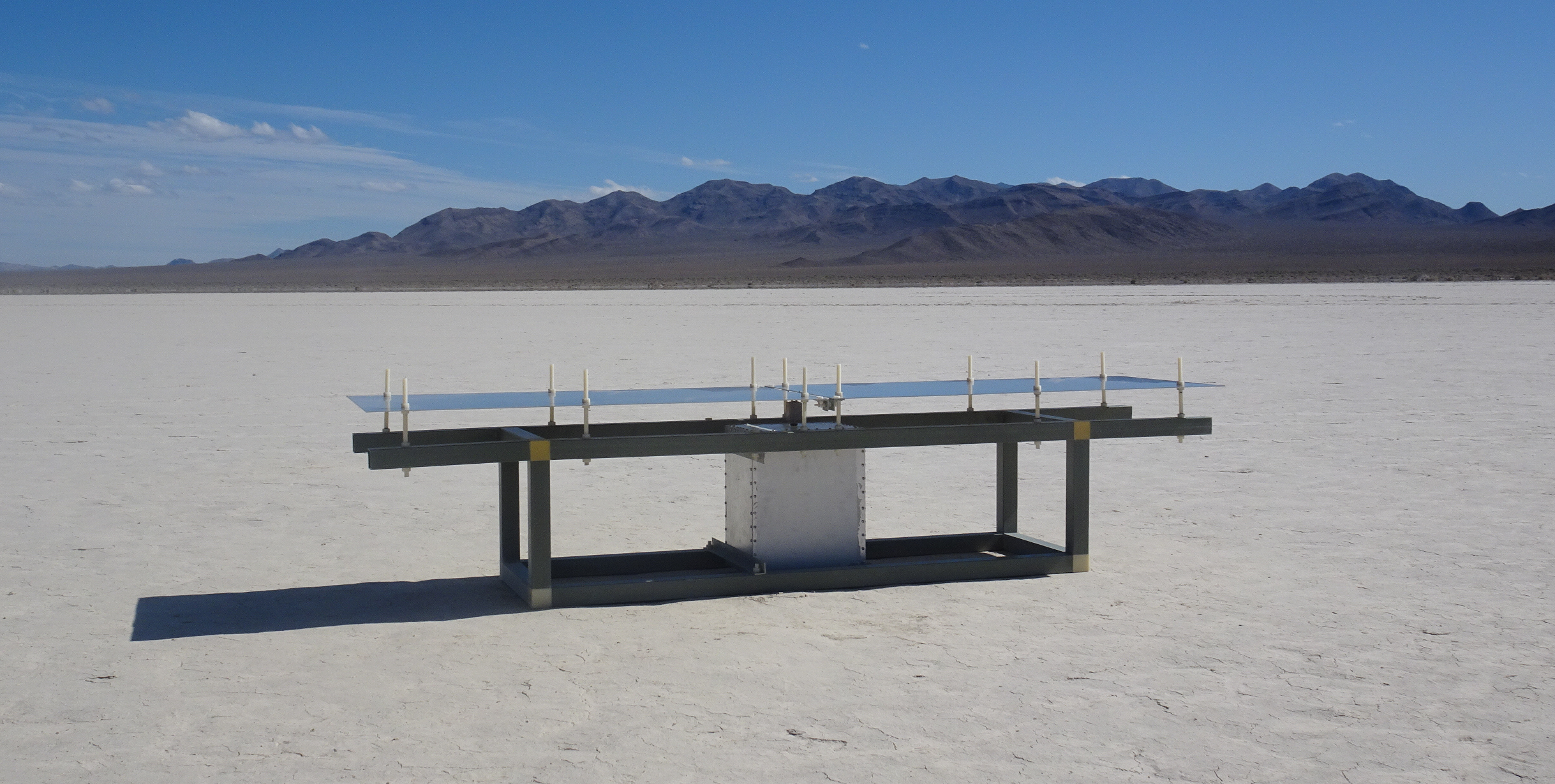
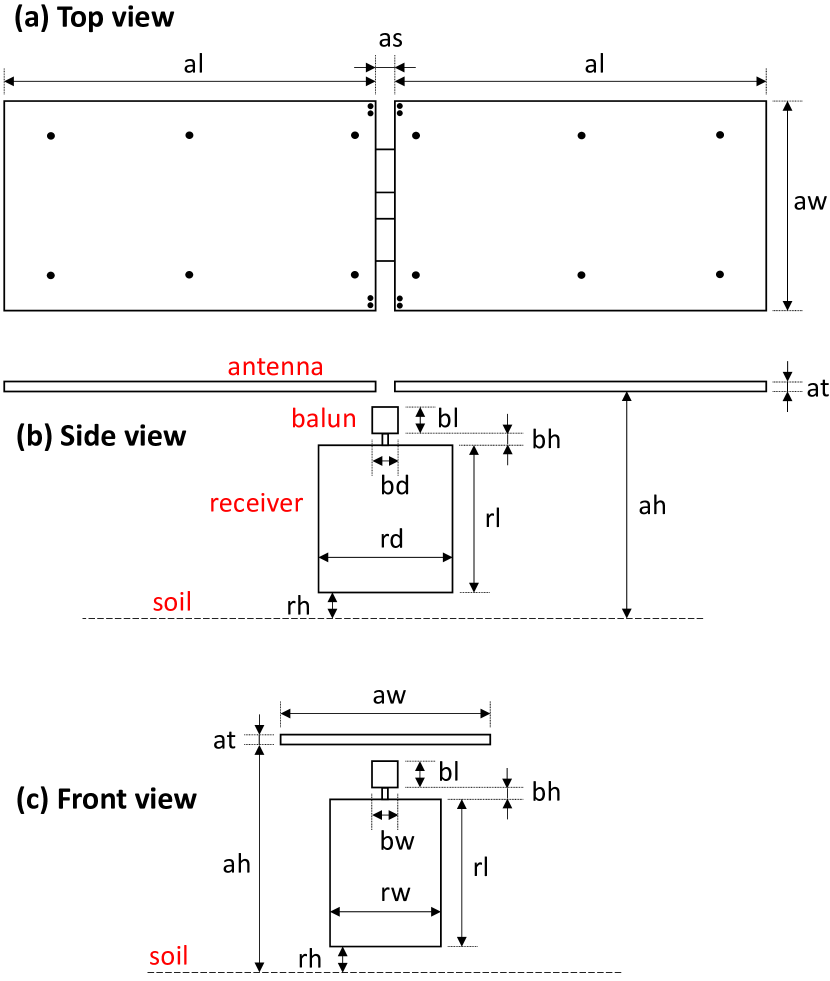
The observation of the global 21 cm signal produced by neutral hydrogen gas in the intergalactic medium (IGM) during the Dark Ages, Cosmic Dawn, and Epoch of Reionization requires measurements with extremely well-calibrated wideband radiometers. We describe the design and characterization of the Mapper of the IGM Spin Temperature (MIST), which is a new ground-based, single-antenna, global 21 cm experiment. The design of MIST was guided by the objectives of avoiding systematics from an antenna ground plane and cables around the antenna, as well as maximizing the instrument's on-sky efficiency and portability for operations at remote sites. We have built two MIST instruments, which observe in the range 25-105 MHz. For the 21 cm signal, this frequency range approximately corresponds to redshifts 55.5 > z > 12.5, encompassing the Dark Ages and Cosmic Dawn. The MIST antenna is a horizontal blade dipole of 2.42 m in length, 60 cm in width, and 52 cm in height above the ground. This antenna operates without a metal ground plane. The instruments run on 12 V batteries and have a maximum power consumption of 17 W. The batteries and electronics are contained in a single receiver box located under the antenna. We present the characterization of the instruments using electromagnetic simulations and lab measurements. We also show sample sky measurements from recent observations at remote sites in California, Nevada, and the Canadian High Arctic. These measurements indicate that the instruments perform as expected. Detailed analyses of the sky measurements are left for future work.
Motivation & Objective
- Describe the MIST instrument design and its goals for global 21 cm measurements across the Dark Ages and Cosmic Dawn.
- Present a calibration framework linking sky temperature, antenna and receiver parameters, and stray/loss factors.
- Characterize the MIST antenna, balun, and receiver through electromagnetic simulations and lab measurements.
- Explore the impact of soil properties on antenna performance and quantify radiation efficiency and beam directivity.
- Provide initial field measurements from remote sites to validate instrument behavior and readiness for data analysis.
Proposed method
- Single-antenna, single-polarization radiometer design with a horizontal blade dipole, 2.42 m long and 0.60 m wide, 52 cm above soil, no metal ground plane.
- Electromagnetic simulations with FEKO to predict radiation efficiency, beam directivity, beam efficiency, and reflection coefficient for various soil models.
- Calibration formalism linking T_S, T_A, and receiver parameters, including equations for sky temperature (Eq. 2), antenna temperature (Eq. 3), sky temperature extraction (Eq. 4), and receiver calibration (Eqs. 6–7).
- Soil modeling with nine FEKO soil configurations (nominal, 1L_xx, 2L_xx) to assess conductivity and permittivity effects on antenna performance (Table 2).
- Assessment of antenna performance through radiation efficiency, beam directivity, beam efficiency, and reflection coefficient across 25–125 MHz (with 25–105 MHz sky observations).
- Field deployments in Deep Springs Valley (CA), Death Valley (NV), and McGill Arctic Research Station (CA) with initial sky measurements.
Experimental results
Research questions
- RQ1How does a ground-based, single-antenna global 21 cm instrument perform without a metal ground plane across 25–105 MHz?
- RQ2How do soil electrical properties (conductivity and relative permittivity) influence radiation efficiency, beam directivity, and beam efficiency for MIST?
- RQ3Can calibration formalism reliably extract sky temperature given receiver and balun characteristics and antenna impedance?
- RQ4Do field measurements at remote sites validate instrument performance and guide systematic error assessment for global 21 cm detection?
- RQ5What are the expected signal recovery implications given the derived beam properties and soil-dependent effects?
Key findings
- Radiation efficiency for nominal soil is 99.93%–99.99% across 25–125 MHz, with soil properties causing up to ~0.08% changes relative to nominal.
- Beam directivity peaks at zenith and ranges from ~0.6 to ~5.1 across 25–125 MHz, with higher values at zenith and broader beams in the H-plane.
- Beam efficiency rises with frequency from 9%–15% at 25 MHz to 54%–74% at 125 MHz, and shows soil-model dependent ripple in two-layer soils.
- Reflection coefficient at the dipole port exhibits a resonant minimum near 52 MHz and reaches ~0 dB near 25 MHz and ~-4 dB near 90–95 MHz for some soil models, indicating strong soil influence on matching.
- Antenna performance and ground interactions depend significantly on soil models, underpinning the need for accurate soil-aware calibration and modeling.
Read this paper
Open the full text in the Nubint reader and ask about any passage as you read.
Read this paper on NubintThis review was generated by AI from the original paper. Please check the paper before citing it.