
[Paper Review] Neural Architecture Search using Particle Swarm and Ant Colony Optimization
The paper compares PSO and ACO as swarm intelligence methods within OpenNAS to automatically generate CNN architectures for image classification, finding PSO generally yields higher accuracies than ACO on CIFAR-10 and Fashion-MNIST datasets.
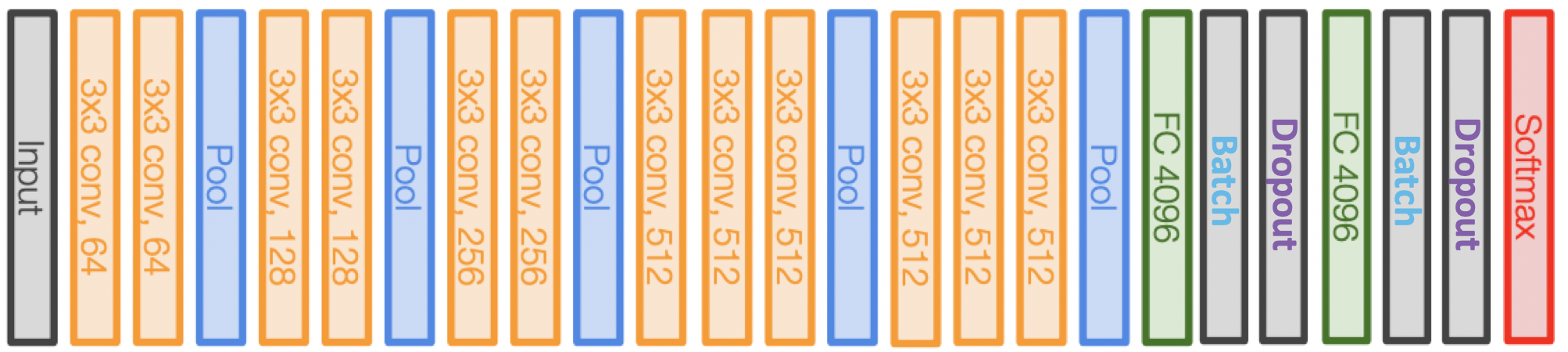
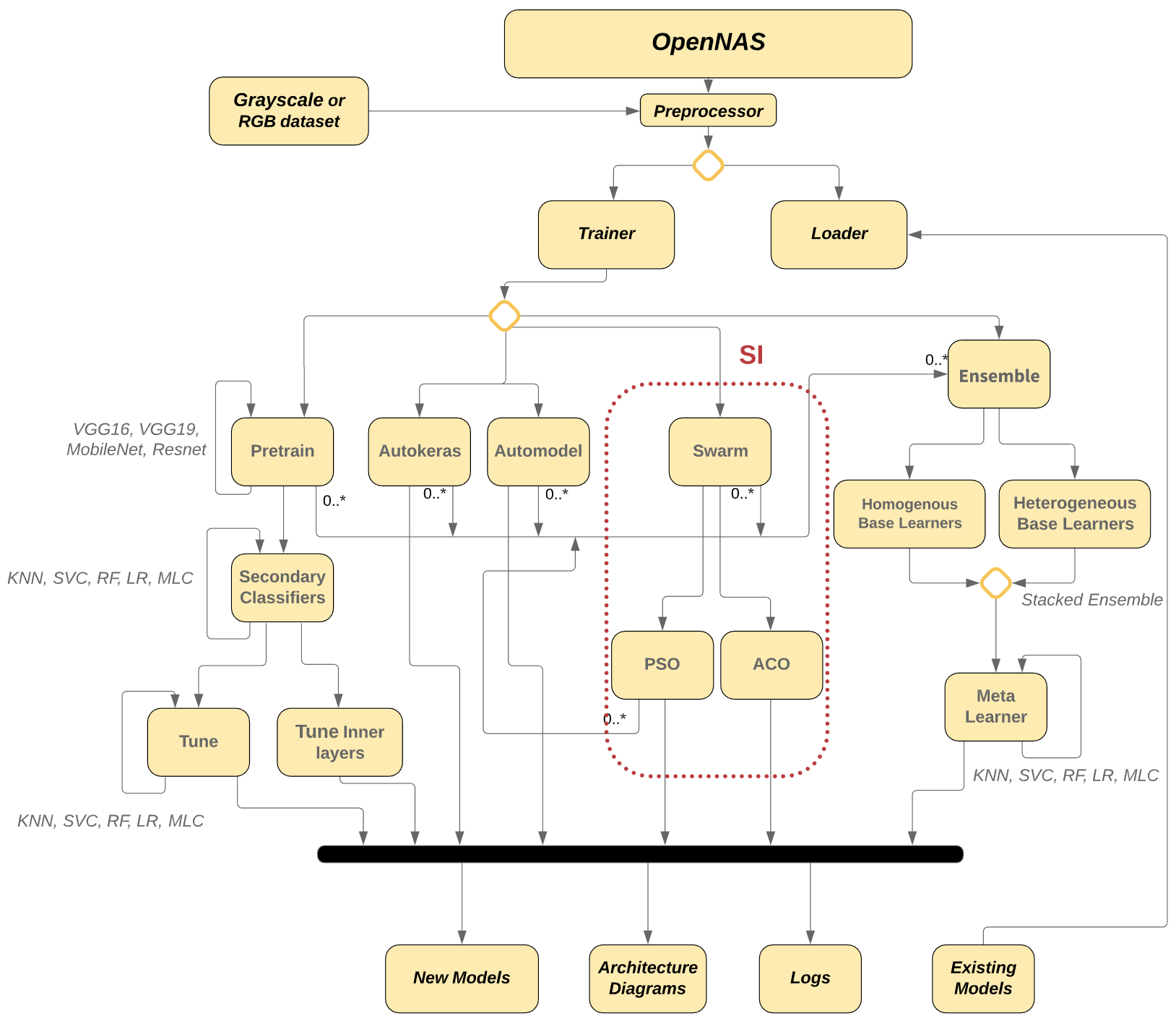
Neural network models have a number of hyperparameters that must be chosen along with their architecture. This can be a heavy burden on a novice user, choosing which architecture and what values to assign to parameters. In most cases, default hyperparameters and architectures are used. Significant improvements to model accuracy can be achieved through the evaluation of multiple architectures. A process known as Neural Architecture Search (NAS) may be applied to automatically evaluate a large number of such architectures. A system integrating open source tools for Neural Architecture Search (OpenNAS), in the classification of images, has been developed as part of this research. OpenNAS takes any dataset of grayscale, or RBG images, and generates Convolutional Neural Network (CNN) architectures based on a range of metaheuristics using either an AutoKeras, a transfer learning or a Swarm Intelligence (SI) approach. Particle Swarm Optimization (PSO) and Ant Colony Optimization (ACO) are used as the SI algorithms. Furthermore, models developed through such metaheuristics may be combined using stacking ensembles. In the context of this paper, we focus on training and optimizing CNNs using the Swarm Intelligence (SI) components of OpenNAS. Two major types of SI algorithms, namely PSO and ACO, are compared to see which is more effective in generating higher model accuracies. It is shown, with our experimental design, that the PSO algorithm performs better than ACO. The performance improvement of PSO is most notable with a more complex dataset. As a baseline, the performance of fine-tuned pre-trained models is also evaluated.
Motivation & Objective
- Automate CNN architecture search to reduce manual hyperparameter tuning and trial-and-error design.
- Evaluate swarm intelligence approaches (PSO and ACO) within an OpenNAS framework for image classification.
- Assess performance against fine-tuned pre-trained models on standard datasets (CIFAR-10, Fashion-MNIST).
- Provide configurable OpenNAS pipeline integrating transfer learning and ensemble techniques.
- Offer guidance on how swarm settings influence model accuracy and training time.
Proposed method
- OpenNAS system integrates PSO and ACO as search strategies to generate CNN architectures.
- PSO and ACO configurations define layer types, hyperparameters, and search depth to explore architecture space.
- Models are trained for a fixed number of epochs with cross-entropy loss to evaluate fitness.
- Experiments use grayscale/RGB image datasets (CIFAR-10 and Fashion-MNIST) and compare against pre-trained baselines.
- Fine-tuning and transfer learning are used as complementary approaches within the OpenNAS framework.
- The environment uses Python-based libraries (psoCNN, DeepSwarm, AutoKeras) and standard DL frameworks (TensorFlow, Keras).
Experimental results
Research questions
- RQ1Are PSO-generated CNN architectures able to achieve higher classification accuracy than ACO-generated architectures in NAS tasks?
- RQ2How do PSO and ACO compare in terms of accuracy, reproducibility (StDev), and run time across CIFAR-10 and Fashion-MNIST datasets?
- RQ3What is the impact of swarm settings (population, iterations/epochs, depth) on model performance and training time?
- RQ4How does OpenNAS performance with SI methods compare to fine-tuned pre-trained networks and existing NAS approaches like DeepSwarm?
- RQ5Can the OpenNAS ensemble/transfer learning components complement SI-based search to improve results?
Key findings
- PSO-derived models generally achieve higher mean accuracy than ACO-derived models on the tested datasets.
- On CIFAR-10, PSO achieved mean accuracies around 85.3% versus 82.2% for ACO under the reported configurations.
- On Fashion-MNIST, PSO and ACO both reach accuracies above 93%, with PSO often showing marginal advantages.
- PSO results demonstrated higher accuracy improvements on more complex data (CIFAR-10) compared to Fashion-MNIST.
- ACO results show that increasing the number of ants can modestly increase accuracy but drastically increases run time, making configuration crucial.
- OpenNAS PSO-based models achieved competitive or superior accuracy compared with DeepSwarm and were comparable to or better than some pre-trained baselines.
Read this paper
Open the full text in the Nubint reader and ask about any passage as you read.
Read this paper on NubintThis review was generated by AI from the original paper. Please check the paper before citing it.