
[Paper Review] Physics Briefing Book
The Physics Briefing Book (CERN-ESU-004, 2020) serves as a comprehensive input document for the European Strategy for Particle Physics 2020, synthesizing current research and future directions across key domains including electroweak physics, strong interactions, flavour physics, neutrino physics, dark matter, and beyond-Standard Model theories. It outlines strategic priorities, experimental and theoretical challenges, and accelerator and detector R&D needs to guide Europe’s high-energy physics roadmap.
The European Particle Physics Strategy Update (EPPSU) process takes a bottom-up approach, whereby the community is first invited to submit proposals (also called inputs) for projects that it would like to see realised in the near-term, mid-term and longer-term future. National inputs as well as inputs from National Laboratories are also an important element of the process. All these inputs are then reviewed by the Physics Preparatory Group (PPG), whose role is to organize a Symposium around the submitted ideas and to prepare a community discussion on the importance and merits of the various proposals. The results of these discussions are then concisely summarised in this Briefing Book, prepared by the Conveners, assisted by Scientific Secretaries, and with further contributions provided by the Contributors listed on the title page. This constitutes the basis for the considerations of the European Strategy Group (ESG), consisting of scientific delegates from CERN Member States, Associate Member States, directors of major European laboratories, representatives of various European organizations as well as invitees from outside the European Community. The ESG has the mission to formulate the European Strategy Update for the consideration and approval of the CERN Council.
Motivation & Objective
- To provide a coordinated, science-driven input to the European Strategy for Particle Physics 2020, aligning research priorities across Europe.
- To assess the current state of particle physics research in key areas including electroweak, QCD, flavour, neutrino physics, and beyond-Standard Model theories.
- To identify critical scientific challenges and opportunities in high-energy physics, including future collider projects and experimental facilities.
- To guide the development of future experimental and theoretical programs, including the High-Luminosity LHC, FCC, and e+e− colliders.
- To strengthen international collaboration and infrastructure planning in particle physics across Europe and beyond.
Proposed method
- Compilation of expert contributions from 140+ researchers across 15 European and international institutions, organized into thematic working groups.
- Systematic review of theoretical frameworks, experimental results, and future experimental programs in electroweak, QCD, flavour, neutrino, and dark sector physics.
- Integration of input from major international projects such as LHC, DUNE, KM3NeT, EIC, FCC, ILC, and neutrino beam facilities.
- Use of structured scientific briefings and technical assessments to evaluate the physics potential of proposed future facilities.
- Incorporation of inputs from national and international communities, including INFN, CERN, Fermilab, and European research infrastructures.
- Synthesis of accelerator science, detector R&D, computing, and education initiatives to support long-term physics goals.
Experimental results
Research questions
- RQ1What are the key physics opportunities and challenges in electroweak precision measurements and Higgs boson properties at the HL-LHC and future e+e− colliders?
- RQ2How can future deep inelastic scattering experiments at the LHC and EIC improve our understanding of parton distributions and the spin structure of the proton?
- RQ3What are the prospects for discovering new physics in flavour physics, particularly in rare decays and CP violation beyond the Standard Model?
- RQ4What are the most promising experimental approaches to determine the neutrino mass hierarchy, absolute mass scale, and nature (Dirac vs. Majorana)?
- RQ5How can future facilities such as FCC, ILC, and CLIC address the most pressing questions in high-energy physics and the nature of dark matter?
Key findings
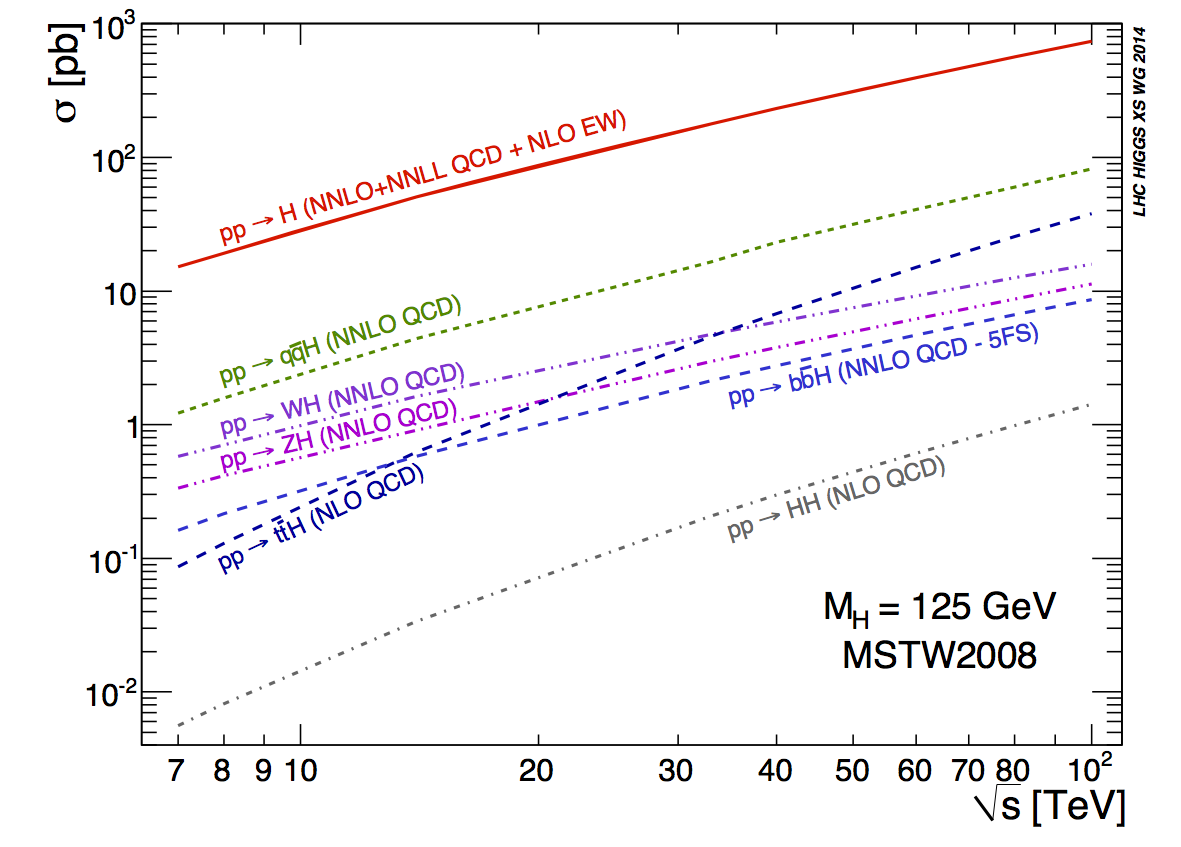
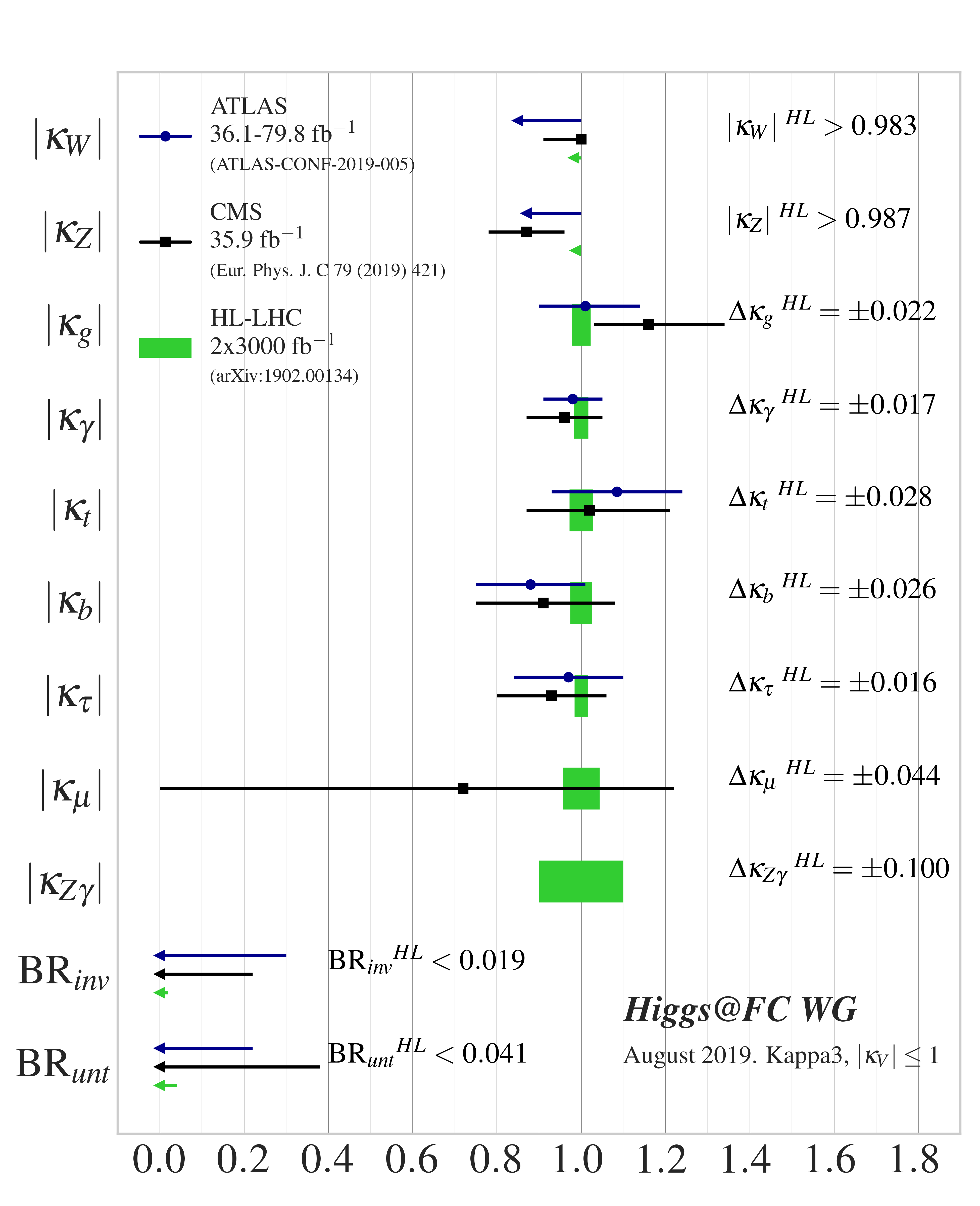
- The High-Luminosity LHC (HL-LHC) is expected to deliver unprecedented precision in Higgs boson couplings and top quark properties, enabling sensitive tests of the Standard Model and new physics.
- Future e+e− colliders such as FCC-ee and CLIC are projected to achieve sub-per mille precision in electroweak parameters, crucial for probing new physics at the TeV scale.
- The EIC and LHeC proposals are identified as essential for advancing the understanding of nucleon structure and the spin of the proton through deep inelastic scattering.
- The discovery of a non-zero neutrino magnetic moment or a Majorana nature of neutrinos would signal physics beyond the Standard Model, with future experiments like nuSTORM and DUNE aiming for high-precision measurements.
- The development of the Future Circular Collider (FCC) is highlighted as a cornerstone for pushing the energy frontier, with FCC-hh capable of reaching 100 TeV center-of-mass energy.
- The integration of quantum computing, advanced Monte Carlo generators, and AI-driven data analysis is identified as essential for handling the complexity of future HEP experiments.
Read this paper
Open the full text in the Nubint reader and ask about any passage as you read.
Read this paper on NubintThis review was generated by AI from the original paper. Please check the paper before citing it.