
[Paper Review] Rethinking Large Language Models in Mental Health Applications
This paper critiques the use of generative LLMs for mental health tasks, highlighting instability, potential for hallucinations, and the distinction between explainability and interpretability, while advocating human-centered, auditable, and inherently interpretable approaches.
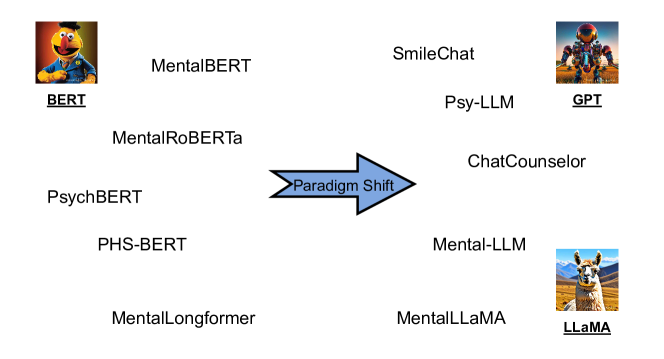
Large Language Models (LLMs) have become valuable assets in mental health, showing promise in both classification tasks and counseling applications. This paper offers a perspective on using LLMs in mental health applications. It discusses the instability of generative models for prediction and the potential for generating hallucinatory outputs, underscoring the need for ongoing audits and evaluations to maintain their reliability and dependability. The paper also distinguishes between the often interchangeable terms ``explainability'' and ``interpretability'', advocating for developing inherently interpretable methods instead of relying on potentially hallucinated self-explanations generated by LLMs. Despite the advancements in LLMs, human counselors' empathetic understanding, nuanced interpretation, and contextual awareness remain irreplaceable in the sensitive and complex realm of mental health counseling. The use of LLMs should be approached with a judicious and considerate mindset, viewing them as tools that complement human expertise rather than seeking to replace it.
Motivation & Objective
- Assess the current state and challenges of using generative LLMs in mental health applications.
- Highlight instability and hallucination risks in generation-based predictions and explanations.
- Clarify the difference between interpretability and explainability in mental health AI.
- Argue for human-centered use of LLMs as tools to complement, not replace, clinicians.
Proposed method
- Review recent developments in LLM-based mental health applications including early prediction, explanations, and counseling.
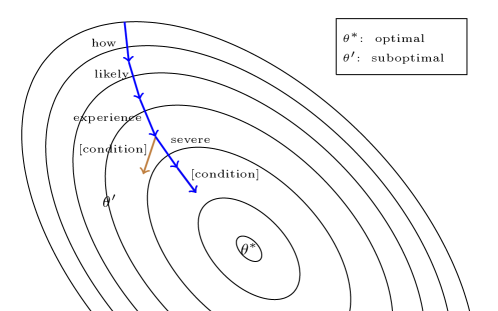
- Discuss instability of generation-as-prediction and meta-optimization as potential explanatory frameworks.
- Evaluate interpretability versus explainability and the faithfulness of LLM-generated explanations.
- Propose auditing, safety, and ethical guidelines for deploying LLMs in mental health contexts.
- Synthesize implications for counseling chatbots and human-centered design.
Experimental results
Research questions
- RQ1What are the main limitations and risks of using generative LLMs for mental health prediction and counseling?
- RQ2How do interpretability and explainability differ in the context of LLMs applied to mental health, and what faithfulness issues arise?
- RQ3What safeguards, audits, and ethical considerations are needed to responsibly deploy LLMs in mental health settings?
Key findings
- LLMs can show instability in generation-based predictions with small prompt changes.
- LLM-generated explanations may be unfaithful and do not guarantee true interpretability.
- Specialized, task-driven discriminative models can outperform generation-based approaches in mental health classification.
- Some LLMs explicitly restrict high-stakes use, reflecting ethical and practical concerns.
- Humans provide empathetic understanding and contextual sensitivity that LLMs currently cannot replace in mental health counseling.
- Auditing for reliability, bias, and input sensitivity is essential for responsible use.
Read this paper
Open the full text in the Nubint reader and ask about any passage as you read.
Read this paper on NubintThis review was generated by AI from the original paper. Please check the paper before citing it.