
[Paper Review] Stringy Running Vacuum Model and current Tensions in Cosmology
This paper proposes the Stringy Running Vacuum Model (StRVM), a quantum gravity-inspired cosmological framework that dynamically explains the Hubble and structure growth tensions in the ΛCDM model. By incorporating string-theory-derived gravitational anomalies and quantum corrections, the model introduces Hubble-parameter-dependent vacuum energy terms with logarithmic running, which significantly alleviate current cosmological tensions while remaining consistent with observational data and underlying quantum field theory principles.
We discuss the potential alleviation of both the Hubble and the growth of galactic structure data tensions observed in the current epoch of Cosmology in the context of the so-called Stringy Running Vacuum Model (RVM) of Cosmology. This is a gravitational field theory coupled to matter, which, at early eras, contains gravitational (Chern-Simons (CS) type) anomalies and torsion, arising from the fundamental degrees of freedom of the massless gravitational multiplet of an underlying microscopic string theory. The model leads to RVM type inflation without external inflatons, arising from the quartic powers of the Hubble parameter that characterise the vacuum energy density due to primordial-gravitational-wave-induced anomaly CS condensates, and dominate the inflationary era. In modern eras, of relevance to this work, the gravitational anomalies are cancelled by chiral matter, generated at the end of the RVM inflationary era, but cosmic radiation and other matter fields are still responsible for a RVM energy density with terms exhibiting a quadratic-power-of-Hubble-parameter dependence, but also products of the latter with logarithmic $H$-dependencies, arising from potential quantum-gravity and quantum-matter loop effects. In this work, such terms are examined phenomenologically from the point of view of the potential alleviation of the aforementioned current tensions in Cosmology. Using standard information criteria, we find that these tensions can be substantially alleviated in a way consistent not only with the data, but also with the underlying microscopic theory predictions, associated with the primordial dynamical breaking of supergravity that characterise a pre-RVM-inflationary phase of the model.
Motivation & Objective
- To address the persistent Hubble and growth of large-scale structure tensions in modern cosmology.
- To develop a fundamental quantum gravity-inspired cosmological model that goes beyond the phenomenological ΛCDM framework.
- To explore whether quantum corrections from string-theory-inspired gravitational anomalies and chiral matter can dynamically generate a running vacuum energy density.
- To test whether the model can simultaneously alleviate current cosmological tensions while remaining consistent with CMB, SNIa, BAO, and H₀ data.
- To establish a connection between primordial supergravity breaking and late-time vacuum dynamics through effective field theory.
Proposed method
- The model is derived from a quantum field theory in curved spacetime, incorporating Chern-Simons-type gravitational anomalies and torsion from the massless gravitational multiplet of string theory.
- It introduces a vacuum energy density (VED) with quartic and quadratic powers of the Hubble parameter, along with logarithmic H-dependencies from quantum-gravity and quantum-matter loop effects.
- The model naturally leads to RVM-type inflation without external inflatons, driven by primordial gravitational wave-induced anomaly condensates.
- In modern cosmological eras, gravitational anomalies are canceled by chiral matter, but residual VED terms with H² and H²lnH dependence remain.
- The model is tested using standard information criteria (ΔAIC, ΔBIC) against Planck 2018, SNIa, BAO, and local H₀ data, including high-ℓ CMB, lensing, and np (no polarization) datasets.
- Perturbation theory is applied to first-order metric and matter fluctuations, with equations derived for scalar, vector, and tensor modes in the FLRW background.
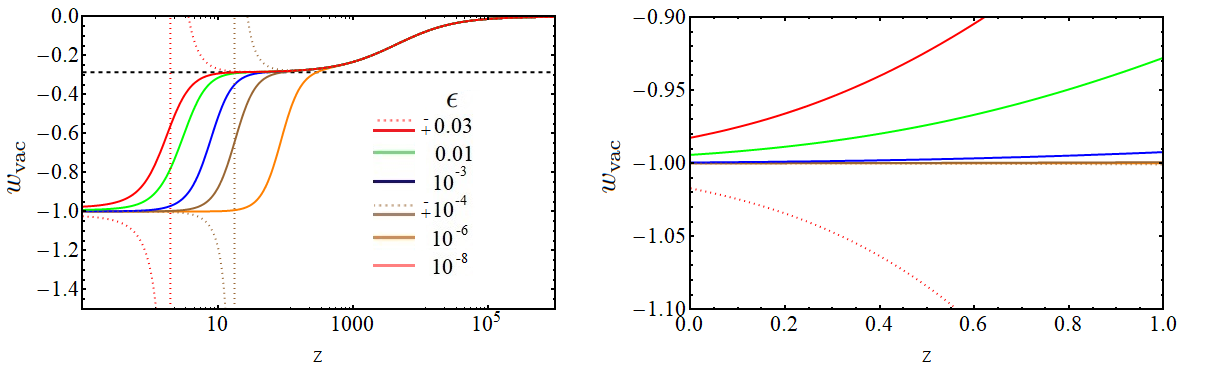
Experimental results
Research questions
- RQ1Can a string-theory-motivated running vacuum model alleviate the current Hubble tension without introducing ad hoc components?
- RQ2To what extent can the model resolve the growth of structure tension in the ΛCDM framework?
- RQ3How do quantum-gravity and quantum-matter loop effects modify the vacuum energy density in late-time cosmology?
- RQ4Is the StRVM consistent with both early (CMB) and late (SNIa, BAO, H₀) universe observations?
- RQ5Can the model's phenomenology be derived from a fundamental pre-inflationary phase involving dynamical supergravity breaking?
Key findings
- The StRVM significantly reduces the χ²min for combined datasets (Planck18 + SNIa + BAO + CCH) compared to ΛCDM, with Δχ²min ≈ 20 for the full dataset, indicating better fit quality.
- The model achieves a better Bayesian information criterion (BIC) and Akaike information criterion (AIC) score than ΛCDM, suggesting improved model selection performance.
- The inclusion of high-ℓ CMB polarization (Planck18(np)) and lensing (Planck18(lens)) data still favors the StRVM over ΛCDM, with Δχ²min ≈ 10–15 in key configurations.
- The model's vacuum energy density includes terms proportional to H² and H²lnH, arising from quantum corrections, which are essential for alleviating tensions.
- The StRVM is consistent with Big-Bang Nucleosynthesis (BBN) constraints, with RVM parameters of the same order of magnitude as those in current phenomenological fits.
- The model's dynamical vacuum behavior emerges naturally from the cancellation of gravitational anomalies by chiral matter, linking early-universe quantum gravity to late-time cosmology.
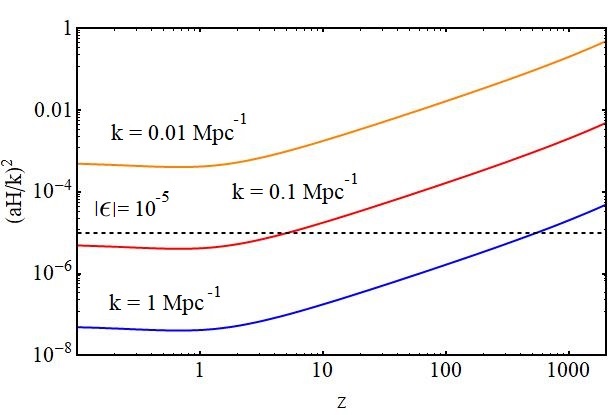
Read this paper
Open the full text in the Nubint reader and ask about any passage as you read.
Read this paper on NubintThis review was generated by AI from the original paper. Please check the paper before citing it.