
[Paper Review] The Near Infrared Imager and Slitless Spectrograph for the James Webb Space Telescope -- I. Instrument Overview and in-Flight Performance
This paper presents the in-flight performance of the Near Infrared Imager and Slitless Spectrograph (NIRISS) on the James Webb Space Telescope, demonstrating all four observing modes—imaging, wide-field slitless spectroscopy, single-object slitless spectroscopy, and aperture masking interferometry—exceeding pre-flight predictions. Key results include the first space-based detection of a stellar companion using aperture masking interferometry, with a 1.8 mag contrast companion detected at 150 mas around CPD-66-562, and improved sensitivity across all modes, especially in the short-wavelength near-infrared.
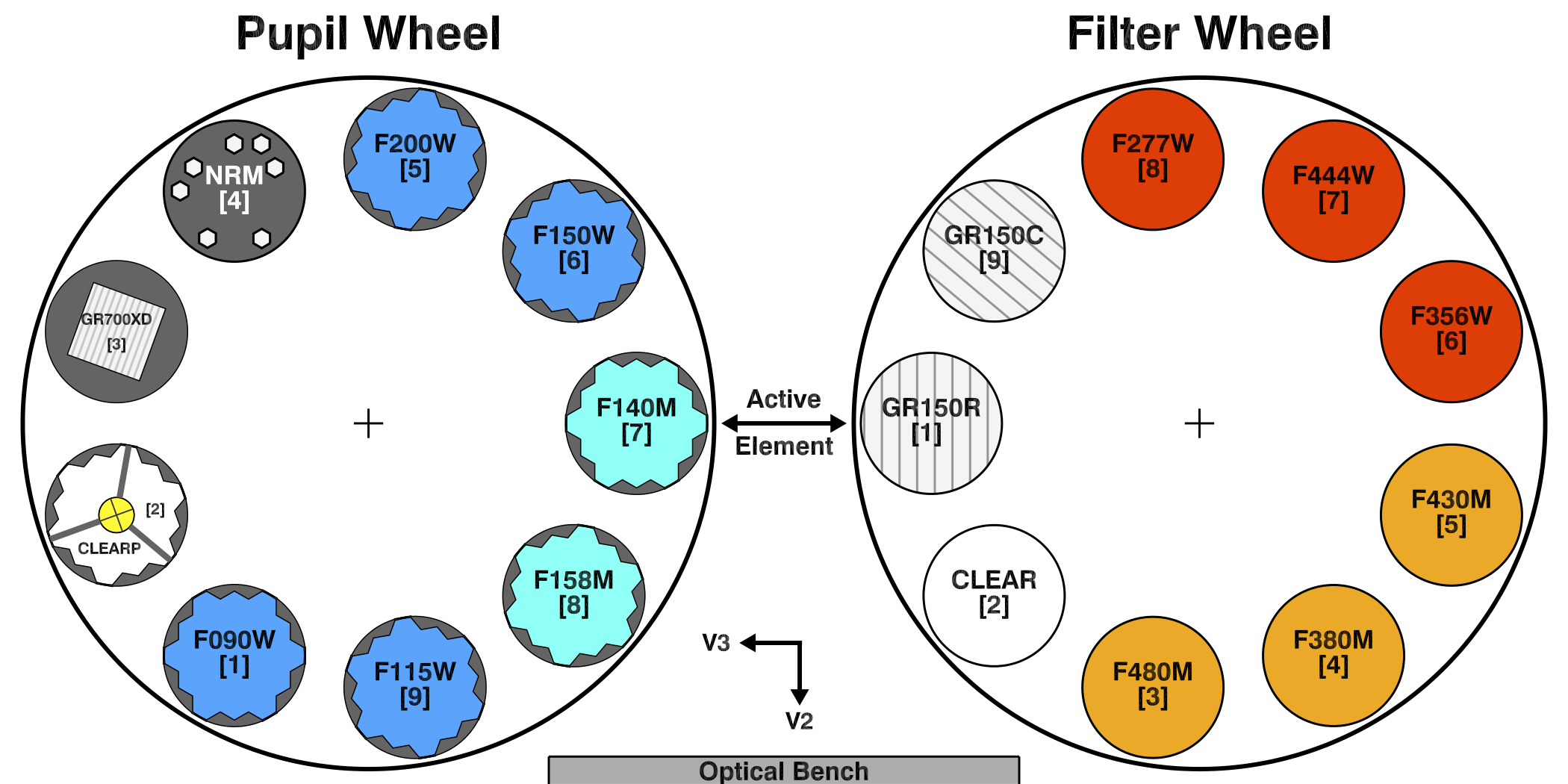
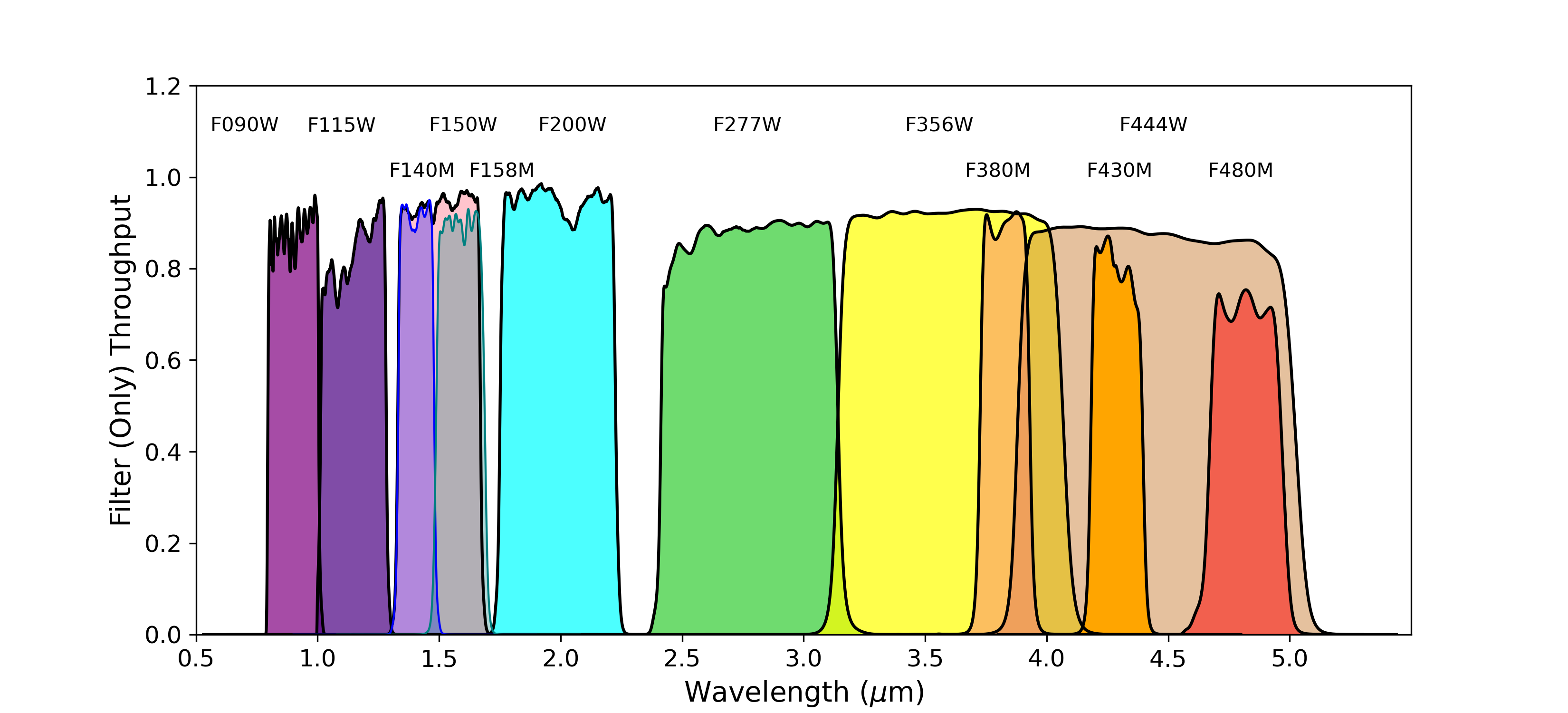
The Near-Infrared Imager and Slitless Spectrograph (NIRISS) is the science module of the Canadian-built Fine Guidance Sensor (FGS) onboard the James Webb Space Telescope (JWST). NIRISS has four observing modes: 1) broadband imaging featuring seven of the eight NIRCam broadband filters, 2) wide-field slitless spectroscopy (WFSS) at a resolving power of $\sim$150 between 0.8 and 2.2 $μ$m, 3) single-object cross-dispersed slitless spectroscopy (SOSS) enabling simultaneous wavelength coverage between 0.6 and 2.8 $μ$m at R$\sim$700, a mode optimized for exoplanet spectroscopy of relatively bright ($J<6.3$) stars and 4) aperture masking interferometry (AMI) between 2.8 and 4.8 $μ$m enabling high-contrast ($\sim10^{-3}-10^{-4}$) imaging at angular separations between 70 and 400 milliarcsec for relatively bright ($M<8$) sources. This paper presents an overview of the NIRISS instrument, its design, its scientific capabilities, and a summary of in-flight performance. NIRISS shows significantly better response shortward of $\sim2.5\,μ$m resulting in 10-40% sensitivity improvement for broadband and low-resolution spectroscopy compared to pre-flight predictions. Two time-series observations performed during instrument commissioning in the SOSS mode yield very stable spectro-photometry performance within $\sim$10% of the expected noise. The first space-based companion detection of the tight binary star AB Dor AC through AMI was demonstrated.
Motivation & Objective
- To document the in-orbit performance of the Near Infrared Imager and Slitless Spectrograph (NIRISS) on the James Webb Space Telescope.
- To validate the performance of all four observing modes—imaging, wide-field slitless spectroscopy, single-object slitless spectroscopy, and aperture masking interferometry—against pre-flight expectations.
- To demonstrate the instrument's enhanced sensitivity in the short-wavelength near-infrared, critical for key science programs.
- To establish detection limits and validate the reliability of point-source detection algorithms like KPI in real observing conditions.
- To confirm the first successful use of aperture masking interferometry from space for companion detection.
Proposed method
- Utilized in-flight data from NIRISS to assess performance across four observing modes: imaging, wide-field slitless spectroscopy (WFSS), single-object slitless spectroscopy (SOSS), and aperture masking interferometry (AMI).
- Applied the KPI (Kolmogorov-Petrovsky-Il’in) point-source detection algorithm to identify faint companions in high-sensitivity observations.
- Conducted closure phase and visibility amplitude analysis using the fouriever software to model and validate companion detections.
- Compared observed contrast and astrometry of known companions (e.g., AB Dor C) with theoretical and dynamical model predictions.
- Measured instrument throughput and photometric stability in time-series SOSS observations to assess spectro-photometric performance.
- Used multiple calibrator stars to test the reliability of interferometric and photometric measurements across different targets.
Experimental results
Research questions
- RQ1How does the in-flight performance of NIRISS compare to pre-flight predictions across its four observing modes?
- RQ2What is the sensitivity and detection limit of NIRISS for faint companions using aperture masking interferometry in space?
- RQ3To what extent does NIRISS outperform theoretical predictions in the short-wavelength near-infrared (1–2.4 µm)?
- RQ4Can the KPI algorithm reliably detect point sources in high-contrast, high-sensitivity observations with NIRISS?
- RQ5What is the astrometric and photometric accuracy of NIRISS in detecting companions, as validated against known systems like AB Dor C?
Key findings
- All four observing modes of NIRISS—imaging, WFSS, SOSS, and AMI—demonstrated in-flight performance exceeding pre-flight predictions.
- Imaging and WFSS modes showed 10–40% improved sensitivity in the short-wavelength near-infrared, particularly critical for exoplanet and high-redshift studies.
- The SOSS mode achieved a 60% throughput improvement in the second order, enhancing spectroscopic efficiency.
- Time-series SOSS observations exhibited spectro-photometric stability within 10–20% of expected noise levels, confirming instrument reliability.
- The first space-based detection of a stellar companion using aperture masking interferometry was successfully demonstrated with NIRISS.
- A 1.8 mag contrast companion was detected at 150 mas around CPD-66-562 using the KPI algorithm, with a 5-σ detection limit of ~6.5 mag at 200 mas and ~7 mag at 400 mas.
Read this paper
Open the full text in the Nubint reader and ask about any passage as you read.
Read this paper on NubintThis review was generated by AI from the original paper. Please check the paper before citing it.