
[Paper Review] Transformer models: an introduction and catalog
A catalog-style survey introducing Transformer fundamentals and presenting a comprehensive catalog of popular Transformer models, including both self-supervised and human-in-the-loop finetuned variants.
In the past few years we have seen the meteoric appearance of dozens of foundation models of the Transformer family, all of which have memorable and sometimes funny, but not self-explanatory, names. The goal of this paper is to offer a somewhat comprehensive but simple catalog and classification of the most popular Transformer models. The paper also includes an introduction to the most important aspects and innovations in Transformer models. Our catalog will include models that are trained using self-supervised learning (e.g., BERT or GPT3) as well as those that are further trained using a human-in-the-loop (e.g. the InstructGPT model used by ChatGPT).
Motivation & Objective
- Motivate understanding of Transformer architecture and its impact across NLP and beyond.
- Provide a simple, comprehensive catalog of popular Transformer models and their core properties.
- Explain foundation vs fine-tuned models and the role of RLHF and human feedback in contemporary systems.
- Highlight the evolution, applications, and extensions of Transformer models across tasks and modalities.
Proposed method
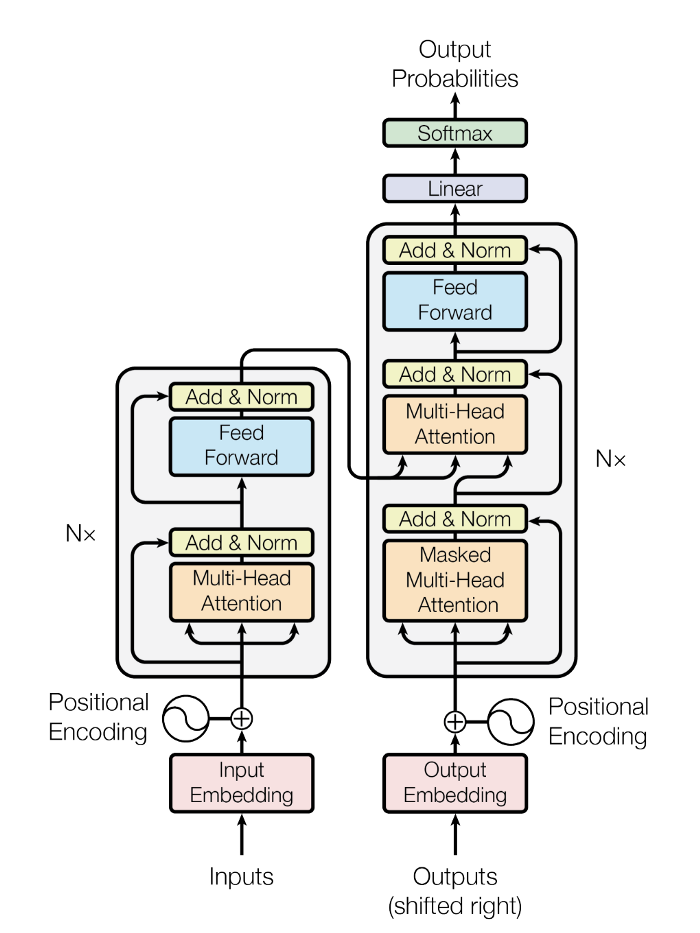
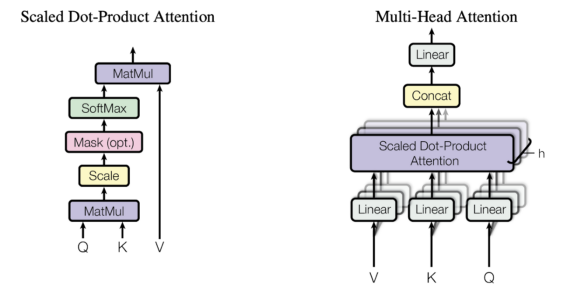
- Describe the encoder/decoder Transformer architecture and the attention mechanism.
- Classify models by pretraining architecture (encoder, decoder, or encoder-decoder) and by pretraining tasks (MLM, DAE, LM, etc.).
- Define and discuss foundation versus fine-tuned models and the role of RLHF in practice.
- Present a catalog table and family tree to trace model lineage and relationships.
- Provide a chronological timeline and an appendix catalog list detailing representative models with key attributes.
- Explain diffusion models in relation to Transformers and note their interoperability.
Experimental results
Research questions
- RQ1What are the core architectural variants and pretraining objectives that define major Transformer models?
- RQ2How do foundation models differ from fine-tuned models in practice, and what role does RLHF play?
- RQ3What is the landscape and lineage of popular Transformer models up to the present, including multimodal and dialog agents?
- RQ4What are the main applications and trends driving Transformer model development across tasks and modalities?
Key findings
- Transformers enable parallel computation and long-range dependency learning via self-attention, enabling advancement beyond RNN/LSTM architectures.
- Foundation models trained with self-supervision can be adapted to a wide range of downstream tasks through fine-tuning or prompting.
- Human-in-the-loop techniques like RLHF have become central to aligning and improving dialog agents such as ChatGPT and related systems.
- The catalog identifies numerous models across families (e.g., BERT, GPT, BART, T5, BLOOM) with varied pretraining architectures and tasks.
- Diffusion models are related to but distinct from Transformers, though many diffusion approaches integrate Transformer backbones.
- The paper emphasizes the ecosystem around Transformers, including tooling, hardware accelerators, and open-source communities (e.g., HuggingFace) that accelerate adoption.
Read this paper
Open the full text in the Nubint reader and ask about any passage as you read.
Read this paper on NubintThis review was generated by AI from the original paper. Please check the paper before citing it.