
[Paper Review] Virgo Detector Characterization and Data Quality during the O3 run
This paper presents a comprehensive characterization of the Advanced Virgo gravitational wave detector and its data quality during the third observing run (O3), employing advanced tools like BRUco and MONET to identify and diagnose correlated noise sources. It demonstrates that coherence-based techniques effectively isolate instrumental noise, such as 16.25 Hz modulations linked to suspension controls, enabling improved data quality and GW event detection.
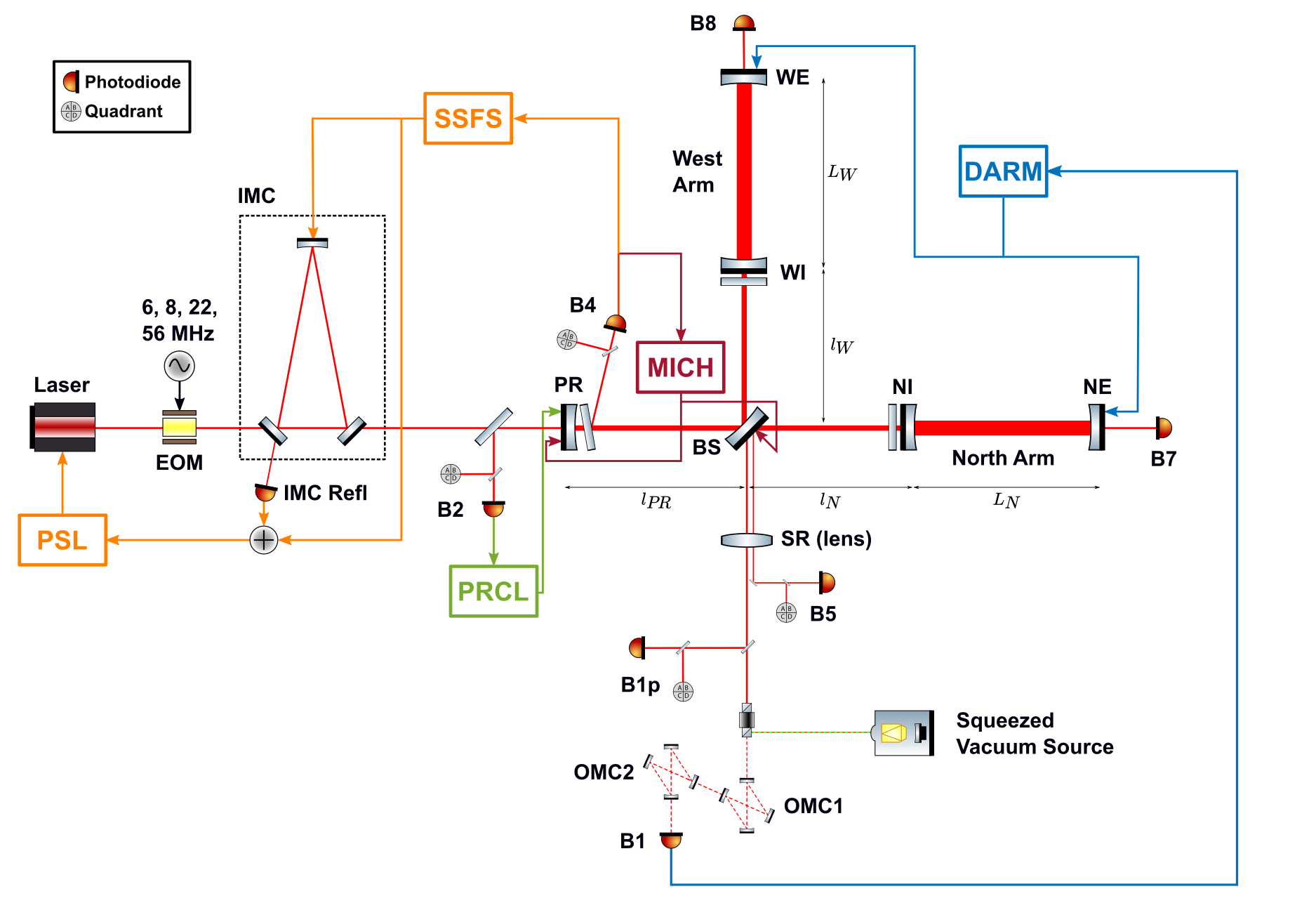
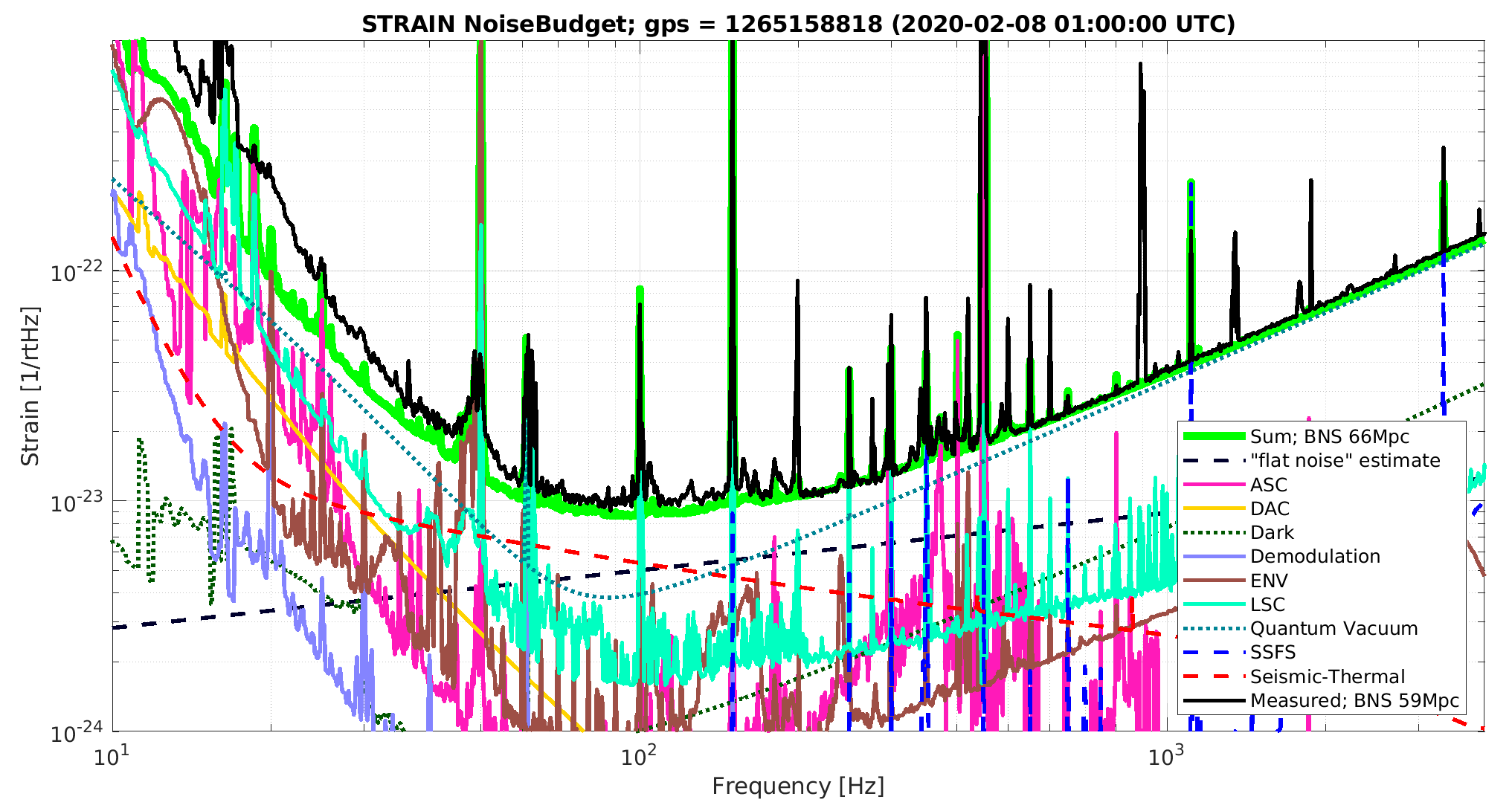
The Advanced Virgo detector has contributed with its data to the rapid growth of the number of detected gravitational-wave signals in the past few years, alongside the two LIGO instruments. First, during the last month of the Observation Run 2 (O2) in August 2017 (with, most notably, the compact binary mergers GW170814 and GW170817) and then during the full Observation Run 3 (O3): an 11 months data taking period, between April 2019 and March 2020, that led to the addition of about 80 events to the catalog of transient gravitational-wave sources maintained by LIGO, Virgo and KAGRA. These discoveries and the manifold exploitation of the detected waveforms require an accurate characterization of the quality of the data, such as continuous study and monitoring of the detector noise. These activities, collectively named {\em detector characterization} or {\em DetChar}, span the whole workflow of the Virgo data, from the instrument front-end to the final analysis. They are described in details in the following article, with a focus on the associated tools, the results achieved by the Virgo DetChar group during the O3 run and the main prospects for future data-taking periods with an improved detector.
Motivation & Objective
- To assess the performance and data quality of the Advanced Virgo detector during the O3 gravitational wave observing run.
- To identify and characterize correlated noise sources affecting the detector's sensitivity using coherence-based analysis.
- To validate and deploy tools like BRUco and MONET for real-time and post-processing noise diagnostics.
- To improve the reliability of gravitational wave event detection by isolating instrumental artifacts from astrophysical signals.
- To support the LIGO-Virgo-KAGRA collaboration by providing detailed data quality reports and diagnostic tools for O3 data.
Proposed method
- Utilized the BRUco tool to compute magnitude-squared coherence between the DARM channel and auxiliary channels across frequency bins.
- Applied a 1200-second data segment length and resampled to 1 kHz output frequency for coherence analysis.
- Used a 5 Hz low-pass filter cutoff for modulating auxiliary channels in coherence computations.
- Employed MONET to compute coherence between the DARM channel and modulated auxiliary signals, using carrier signals and low-pass filtered modulators.
- Generated hierarchical output directories for each analysis, with subdirectories for each modulator channel and associated coherence tables and plots.
- Combined results from BRUco and MONET into daily projections and visualizations to identify persistent noise lines.
Experimental results
Research questions
- RQ1What instrumental noise sources exhibit significant coherence with the DARM channel during O3?
- RQ2How effective are BRUco and MONET in identifying and isolating correlated noise in advanced interferometric detectors?
- RQ3Which auxiliary channels contribute most to coherent noise at specific frequency lines, such as 16.25 Hz?
- RQ4Can coherence-based diagnostics detect transient or persistent noise lines that degrade GW detection sensitivity?
- RQ5How do coherence thresholds (e.g., 0.3 or 0.5) correlate with known instrumental actuator or control system behavior?
Key findings
- BRUco identified a high-coherence signal at 155–170 Hz, prompting further investigation into its instrumental origin.
- MONET detected coherence above 0.3 at 16.25 Hz between the DARM channel and longitudinal correction signals of the west input mirror suspension.
- The 16.25 Hz coherence was linked to the control of the mirror suspension, indicating a localized noise source.
- Coherence values above 0.5 were observed at 16.25 Hz and 16.375 Hz, suggesting strong coupling between suspension control and DARM.
- MONET analysis revealed that the ASC_Diffp_TY and ASC_Diffp_TX channels—used to control mirror angular alignment—contributed significantly to noise at 350 Hz.
- The combined use of BRUco and MONET enabled systematic identification of noise lines, with results visualized in daily coherence projections and spectral density plots.
Read this paper
Open the full text in the Nubint reader and ask about any passage as you read.
Read this paper on NubintThis review was generated by AI from the original paper. Please check the paper before citing it.