
[Paper Review] Virus2Vec: Viral Sequence Classification Using Machine Learning
Virus2Vec is an alignment-free machine learning framework that uses minimizers and position weight matrices (PWM) to generate compact sequence embeddings for viral nucleotide and amino acid sequences, enabling accurate host prediction for coronaviruses and rabies virus. It achieves state-of-the-art classification accuracy while significantly reducing runtime compared to alignment-based and other embedding methods.
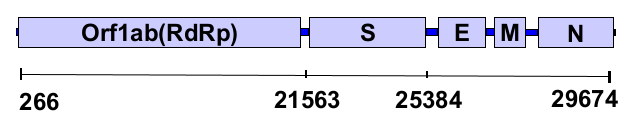
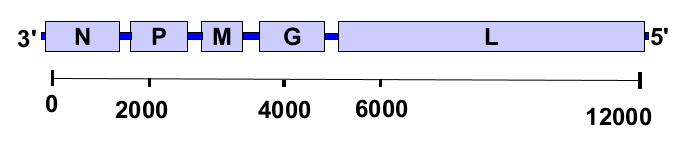
Understanding the host-specificity of different families of viruses sheds light on the origin of, e.g., SARS-CoV-2, rabies, and other such zoonotic pathogens in humans. It enables epidemiologists, medical professionals, and policymakers to curb existing epidemics and prevent future ones promptly. In the family Coronaviridae (of which SARS-CoV-2 is a member), it is well-known that the spike protein is the point of contact between the virus and the host cell membrane. On the other hand, the two traditional mammalian orders, Carnivora (carnivores) and Chiroptera (bats) are recognized to be responsible for maintaining and spreading the Rabies Lyssavirus (RABV). We propose Virus2Vec, a feature-vector representation for viral (nucleotide or amino acid) sequences that enable vector-space-based machine learning models to identify viral hosts. Virus2Vec generates numerical feature vectors for unaligned sequences, allowing us to forego the computationally expensive sequence alignment step from the pipeline. Virus2Vec leverages the power of both the \emph{minimizer} and position weight matrix (PWM) to generate compact feature vectors. Using several classifiers, we empirically evaluate Virus2Vec on real-world spike sequences of Coronaviridae and rabies virus sequence data to predict the host (identifying the reservoirs of infection). Our results demonstrate that Virus2Vec outperforms the predictive accuracies of baseline and state-of-the-art methods.
Motivation & Objective
- To develop an efficient, alignment-free method for classifying viral hosts using sequence data.
- To improve upon existing sequence embedding techniques that require computationally expensive multiple sequence alignments.
- To enable scalable and accurate host prediction for zoonotic viruses like SARS-CoV-2 and rabies virus using spike and genomic sequences.
- To demonstrate superior performance over baseline and state-of-the-art methods in host classification accuracy and inference speed.
- To provide a framework applicable to unassembled short-read data, supporting broader use in metagenomic and outbreak surveillance contexts.
Proposed method
- Virus2Vec generates feature vectors from unaligned viral sequences using a two-step process: first, it identifies minimizers—small, unique k-mers that represent sequence regions—across the input sequence.
- Second, it computes a position weight matrix (PWM) over the minimizer frequencies across the sequence to capture local motif patterns and positional biases.
- The combined minimizer-PWM representation forms a compact, numerical feature vector that preserves biological relevance while enabling vector-space machine learning.
- The method avoids sequence alignment by leveraging the combinatorial stability of minimizers and the statistical power of PWMs to model conserved functional motifs.
- It supports both nucleotide and amino acid sequences and is compatible with various downstream classifiers, including SVM, Random Forest, and Logistic Regression.
- The framework is designed to be scalable and efficient, with minimal computational overhead for embedding generation, especially compared to alignment-based or deep learning-based alternatives.
Experimental results
Research questions
- RQ1Can an alignment-free embedding method based on minimizers and PWMs achieve superior host classification accuracy for viral sequences compared to alignment-dependent baselines?
- RQ2How does Virus2Vec’s performance compare to state-of-the-art alignment-free methods like Spike2Vec, PWM2Vec, and PWN2Vec in predicting viral hosts?
- RQ3To what extent does Virus2Vec reduce computational cost in embedding generation while maintaining or improving predictive performance?
- RQ4Can Virus2Vec generalize to diverse viral families, such as Coronaviridae and Rhabdoviridae, using only spike or genomic sequences?
- RQ5Is Virus2Vec applicable to unassembled short-read data, enabling use in real-time genomic surveillance and metagenomic analysis?
Key findings
- Virus2Vec achieved the highest macro F1 score of 0.877 and AUC of 0.94 on aligned spike protein sequences, outperforming all baseline and SOTA methods.
- The method achieved 87% accuracy with Logistic Regression and 86% with Random Forest, significantly exceeding the next-best method (PWM2Vec) by 2–3 percentage points.
- Virus2Vec reduced training time for embedding generation to 105.45 seconds (SVM) and 5.57 seconds (Logistic Regression), compared to over 16,000 seconds for LSTM and GRU models.
- The framework demonstrated superior performance on both spike sequences (Coronaviridae) and full-genome sequences (rabies virus), confirming its generalizability across viral families.
- Virus2Vec outperformed the Approximate Kernel and PWN2Vec methods in all metrics, including F1 (macro), AUC, and precision, while maintaining low runtime.
- The method’s alignment-free design enables efficient processing of large-scale, real-world viral sequence data, making it suitable for rapid outbreak response and genomic surveillance.
Read this paper
Open the full text in the Nubint reader and ask about any passage as you read.
Read this paper on NubintThis review was generated by AI from the original paper. Please check the paper before citing it.