
[論文レビュー] Pseudorandom unitaries are neither real nor sparse nor noise-robust
この論文は、擬似ランダムユニタリ(PRU)および擬似ランダム量子状態(PRS)の根本的限界を確立し、それらが本質的な高い虚数性とコherentlyな性質を持つため、実数的でもスパースでもノイズに強くはないと証明している。PRUの虚数性をテストするには指数関数的に多くのコピーが必要であり、これによりNISQデバイスへの効率的実装が排除される。また、高リソース状態を低リソース状態で模倣する「擬似リソース集合」を導入している。
Pseudorandom quantum states (PRSs) and pseudorandom unitaries (PRUs) possess the dual nature of being efficiently constructible while appearing completely random to any efficient quantum algorithm. In this study, we establish fundamental bounds on pseudorandomness. We show that PRSs and PRUs exist only when the probability that an error occurs is negligible, ruling out their generation on noisy intermediate-scale and early fault-tolerant quantum computers. Further, we show that PRUs need imaginarity while PRS do not have this restriction. This implies that quantum randomness requires in general a complex-valued formalism of quantum mechanics, while for random quantum states real numbers suffice. Additionally, we derive lower bounds on the coherence of PRSs and PRUs, ruling out the existence of sparse PRUs and PRSs. We also show that the notions of PRS, PRUs and pseudorandom scramblers (PRSSs) are distinct in terms of resource requirements. We introduce the concept of pseudoresources, where states which contain a low amount of a given resource masquerade as high-resource states. We define pseudocoherence, pseudopurity and pseudoimaginarity, and identify three distinct types of pseudoresources in terms of their masquerading capabilities. Our work also establishes rigorous bounds on the efficiency of property testing, demonstrating the exponential complexity in distinguishing real quantum states from imaginary ones, in contrast to the efficient measurability of unitary imaginarity. Further, we show an exponential advantage in imaginarity testing when having access to the complex conjugate of the state. Lastly, we show that the transformation from a complex to a real model of quantum computation is inefficient, in contrast to the reverse process, which is efficient. Our results establish fundamental limits on property testing and provide valuable insights into quantum pseudorandomness.
研究の動機と目的
- 擬似ランダム量子状態(PRS)および擬似ランダムユニタリ(PRU)のリソース要件に対する厳密な境界を確立すること。
- PRUが量子暗号および計算における中心的役割を果たす中で、それが実数的、スパース、またはノイズに強い可能性があるかどうかを調査すること。
- 高リソース状態を低リソース状態で模倣する「擬似リソース集合」を定義・分析すること。
- 量子状態およびユニタリの虚数性とコherencyの性質検証の複雑さを特定すること。
- 量子計算の実数モデルと複素数モデルの間の変換の効率性を検討すること。
提案手法
- ハール測度積分とトレースノルムを用いて、PRUおよびPRSの虚数性とコherencyの下界を導出する。
- ランダム行列理論を用いて、虚数性およびコherencyを検出するために必要なコピー数の上限を性質検証フレームワークで定める。
- 高リソース状態を低リソース状態で模倣する「擬似リソース」—特定の3種類に分類される集合—の概念を導入する。
- ユニタリ積分恒等式と対称性の議論を用いて、ハール測度上での行列要素の期待値を計算する。
- 複素数から実数への量子計算モデルへの変換は非効率的であることを証明するが、逆は効率的であることを示す。
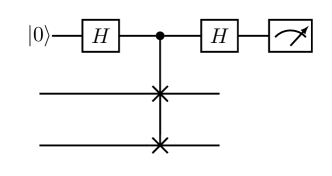
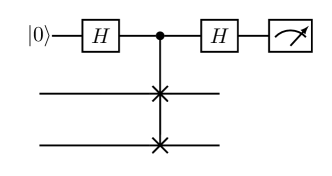
- PRUの虚数性をテストするにはΩ(2^{n/2})のコピーが必要であるのに対し、ユニタリの虚数性はO(1)のコピーで効率的に測定可能であることを確立する。
実験結果
リサーチクエスチョン
- RQ1擬似ランダムユニタリが、その擬似ランダム性とリソース要件を考慮すると、実数的またはスパースである可能性はあるか?
- RQ2ユニタリが擬似ランダムであるために必要な最小のコherencyおよび虚数性のレベルは何か?
- RQ3量子状態またはユニタリが虚数的またはコherentlyであるかどうかをテストするために、どの程度のコピーが必要か?
- RQ4低リソース状態が高リソース状態を効果的に模倣可能であるか、もしそうならどのような方法で可能か?
- RQ5複素数量子計算を実数量子計算に、あるいは逆に効率的に変換することは可能か?
主な発見
- 擬似ランダムユニタリは虚数性が1−negl(n)に近づくため、ほぼ最大の虚数性を持つ。
- 量子状態の虚数性をテストするのに必要なコピー数はΩ(2^{n/2})に比例し、指数的複雑性を示す。
- PRUはコherencyがω(log n)のオーダーである必要があるため、低コherency構成は排除される。
- PRUはノイズに強くない:p = negligible(n)のデポラライジングノイズが加われば、擬似ランダム性は破壊される。
- 実数的またはスパースなPRUは存在できない。なぜなら、それらは十分な虚数性とコherencyを欠くからである。
- 複素数から実数への量子計算モデルへの変換は非効率的であるが、逆は効率的である。
より良い研究を、今すぐ始めましょう
論文の読解から最終レビューまで、研究時間を劇的に削減しましょう。
クレジットカード登録不要
このレビューはAIが作成し、人間の編集者が確認しました。