
[論文レビュー] Safe Sequential Testing and Effect Estimation in Stratified Count Data
本稿は、e-変数を用いて層別度数データにおける逐次仮説検定およびいつでも有効な信頼区間系列を導入する新規手法を提示する。これにより、任意の停止ルール下でも有効な推論が可能になる。先行研究のe-値の枠組みを層別$2\times2$表に拡張し、層間の情報交換(クロス・トーク)を許容することで、第1種過誤の制御と被覆確率の保証を維持しつつ、パワーを向上させる。これは、サブポピュレーション間でリスク差が非一様であっても成立する。
Sequential decision making significantly speeds up research and is more cost-effective compared to fixed-n methods. We present a method for sequential decision making for stratified count data that retains Type-I error guarantee or false discovery rate under optional stopping, using e-variables. We invert the method to construct stratified anytime-valid confidence sequences, where cross-talk between subpopulations in the data can be allowed during data collection to improve power. Finally, we combine information collected in separate subpopulations through pseudo-Bayesian averaging and switching to create effective estimates for the minimal, mean and maximal treatment effects in the subpopulations.
研究の動機と目的
- 任意の停止ルール下でも第1種過誤を制御する、層別$2\times2$分割表における条件付き独立性の逐次仮説検定を構築すること。
- 固定サンプルサイズを要件としない、サブポピュレーションにおける治療効果のいつでも有効な信頼区間系列を構築すること。
- データ収集中に層間の情報交換を許容することで、結果が相関している場合でもパワーを向上させること。
- 疑似ベイズ的平均化およびスイッチング戦略を用いて、サブポピュレーション全体における合成効果測度(最小、平均、最大)を推定すること。
- 既存のe-変数手法を層別設定に拡張し、$2\times2$表の研究を多層構造に一般化すること。
提案手法
- 逐次監視下での第1種過誤制御を保証するため、e-変数およびe-プロセスを用い、Villeの不等式を活用していつでも有効な推論を実現する。
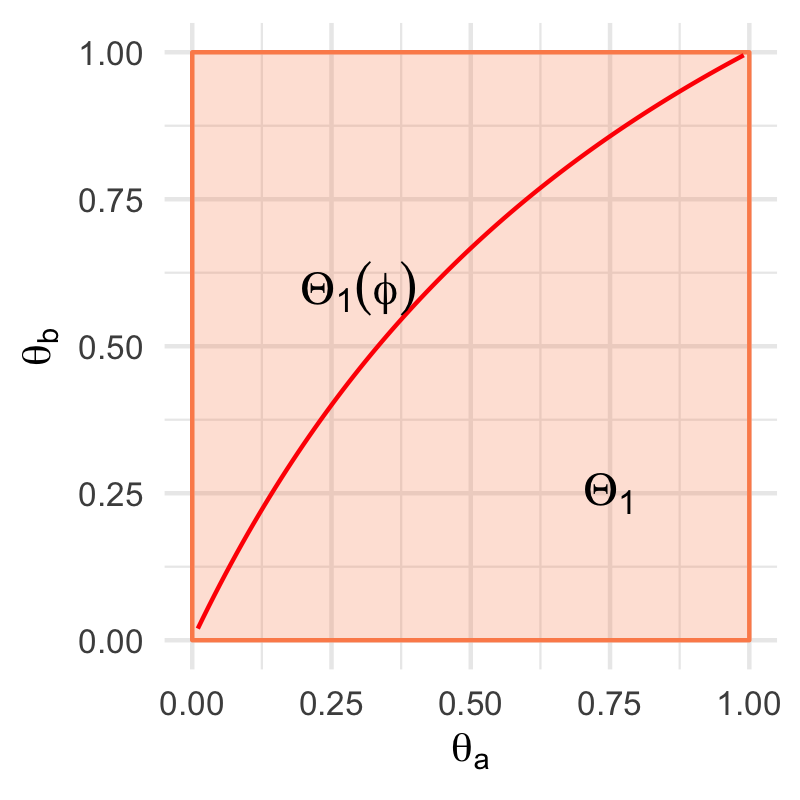
- 各層に対して成長率最適e-変数を基にe-変数を構築し、$\sum_k \pi_k \delta_k = \delta^*$ を満たす可能な発散ベクトル$\vec{\delta}$ における最小化により統合する。
- 普遍的推論(Wassermanら、2020年)を用いて、グローバルな帰無仮説の検定に適したグローバルe-変数$E^{*(m)}_{\delta^*} = \min_{\vec{\delta}} E^{(m)}_{[\vec{\delta}]}$ を構築する。
- e-プロセスの逆転により信頼区間系列を構成し、任意の停止時刻において真の効果サイズを適切に被覆することを保証する。
- 層間の『クロス・トーク』という概念を導入し、効果が類似する場合にサブポピュレーション間で情報共有を可能にすることで、信頼区間を狭める。
- 疑似ベイズ的学習およびスイッチング戦略を用いて、層全体における合成効果測度(例:平均、最小、最大効果)を推定する。
実験結果
リサーチクエスチョン
- RQ1e-変数は、層別$2\times2$表に一般化可能であり、任意の停止タイミングでの検定が可能になるか?
- RQ2逐次監視下でも被覆性を維持するため、層別治療効果の信頼区間系列はどのように構築できるか?
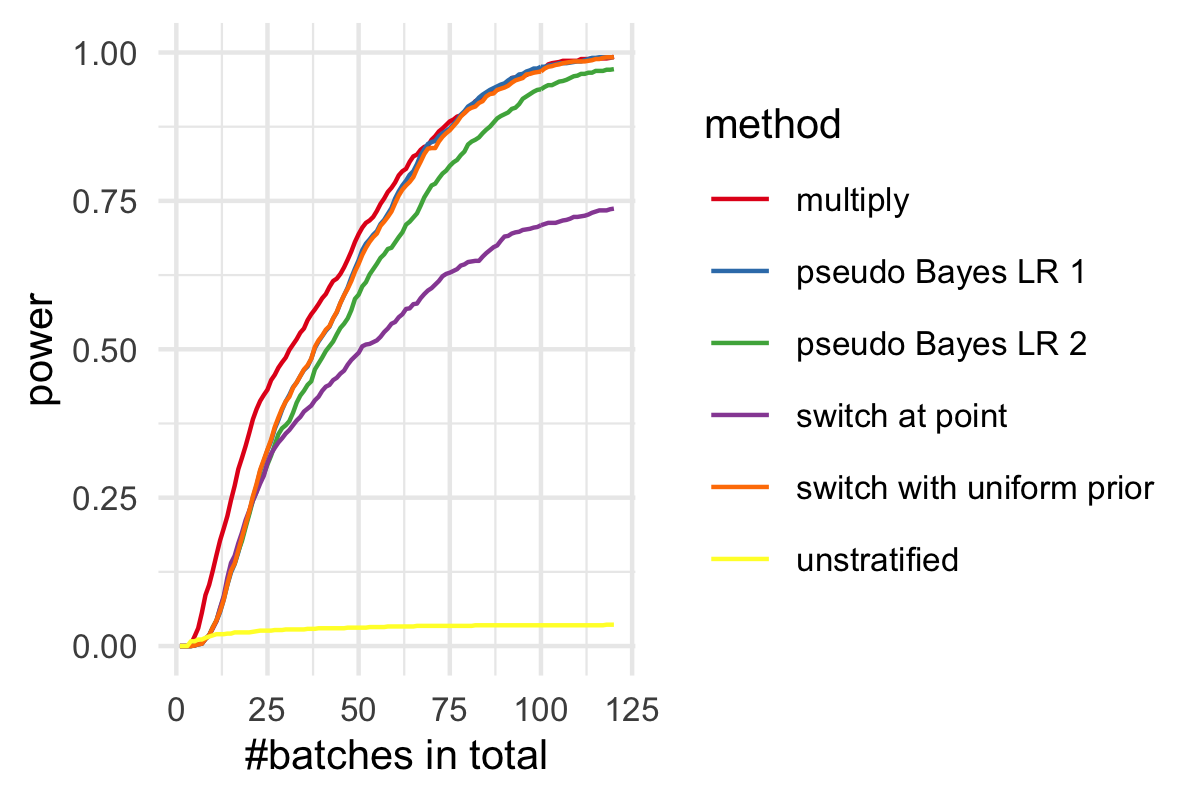
- RQ3層間のクロス・トークは、第1種過誤の制御を損なわずに、どれほどパワーを向上させ得るか?
- RQ4疑似ベイズ的平均化およびスイッチング戦略は、異質なサブポピュレーション間で合成効果測度を効果的に推定できるか?
- RQ5提案手法のいつでも有効な信頼区間系列は、Miettinen-Nuninen区間のような固定n法と比較して、どのように性能を発揮するか?
主な発見
- 提案手法は、停止ルールに依存せず、有意水準$\alpha$で第1種過誤が制御される、有効な推論を達成する。
- リスク差が層間で非一様であっても、任意の停止時刻において95%の被覆性を維持する信頼区間系列が得られる。
- リスク差が一様な状況下では、任意の停止タイミングで有効な信頼区間系列は、バッチ50で固定n法のMiettinen-Nuninen区間よりも0をはっきり除外した。
- 一様な状況下では信頼区間系列は固定n法の区間よりもわずかに広がっているが、連続的監視が可能で、モデル不適合下でも有効性を保つ利点がある。
- リスク差が類似する場合、層間のクロス・トークにより信頼区間が狭くなり、有効性を損なわず効率性が向上することが示された。
- 被覆性と誤り制御を正確に維持しながら、意思決定のスピードと柔軟性において固定n法を上回る性能を発揮する。
この論文を読む
Nubintのビューアで原文を開き、読みながら気になる箇所をすぐに質問できます。
Nubintでこの論文を読むこのレビューはAIが論文の原文をもとに作成しました。引用する前に原文をご確認ください。