
[論文レビュー] TR-ARPES Signal in Pumped Semiconductors within Dynamical Projective Operatorial Approach (DPOA)
本稿では、非平衡状態の半導体における時間分解角度分解光電子分光法(TR-ARPES)を効率的にシミュレートできる、新規な多体理論的フレームワーク「動的射影作用素的アプローチ」(DPOA)を提案する。第二量子化形式、Wannierに基づくタイトビンディングモデル、および電気双極子ゲージにおける独自のペイエルズ展開を組み合わせることで、多粒子・多時間相関関数の正確かつ高速な計算が可能となり、バンドドレッシング、サイドバンド、共鳴励起といった複雑な励起誘導効果を捉えることができる。TD-DFTに比べて計算効率が高く、一時的な電子状態のダイナミクスに関する物理的洞察を深めることが可能である。
In this manuscript, after discussing in detail the internals of our recently developed method, the dynamical projective operatorial approach (DPOA), we provide the framework to apply this method to pumped semiconductor lattice systems and, in particular, to study and analyze their electronic excitations and TR-ARPES signal. The expressions for relevant out-of-equilibrium Green's functions and TR-ARPES signal are given within the DPOA framework and, defining a retarded TR-ARPES signal, it is shown that it is possible to obtain an out-of-equilibrium version of the fluctuation-dissipation theorem. We clarify how single- and multi-photon resonances, rigid shifts, band dressings, and different types of sidebands emerge in the TR-ARPES signal. We also propose protocols for evaluating the strength of single- and multi-photon resonances and for assigning the residual excited electronic population at each crystal momentum and band to a specific excitation process. Hamiltonians, where intra- and inter-band transitions are selectively inhibited, are defined and used to analyze the effects on the TR-ARPES signal and the residual electronic excited population. Three relevant cases of light-matter coupling are examined within the dipole gauge: only a local dipole, only the Peierls substitution in the hopping term, and both terms at once. The transient and residual pump effects are studied in detail, including the consequences of the lattice symmetries at different crystal momenta on the TR-ARPES signal. A detailed study of the dependence of the TR-ARPES signal on the probe-pulse characteristics is also reported. To provide a guideline for understanding the complex effects and interplays and the variety of possible physical phenomena without being limited by the characteristics of a single particular real material, we have chosen to study a prototypical pumped two-band semiconductor lattice system.
研究の動機と目的
- TR-ARPES信号の非平衡状態をシミュレートする際の、既存手法(TD-DFT や単粒子的アプローチ)の計算非効率性と物理的洞察の不足を是正すること。
- Wannier化されたDFTバンド構造を通じて、現実の材料の複雑さを保ちつつ、弱い相関系から強い相関系まで取り扱えるフレームワークの構築。
- 第二量子化形式内に電気双極子ゲージとペイエルズ置換を組み込むことで、光-物質結合を時間依存場に適応し、ポンププローブ分光法の正確で数値的に効率的なシミュレーションを可能にすること。
- 新規に考案されたペイエルズ展開を通じて、単光子・多光子共鳴、剛体シフト、サイドバンドの発生を明確にすること。
- 残留励起状態が特定の励起過程に起因するかを特定する理論的根拠を提供し、TR-ARPESに適応した非平衡状態におけるフラクチュエーション-散逸定理を導出すること。
提案手法
- DPOAは、弱い相関系から強い相関系まで電子相関効果を記述可能な、複合演算子を用いた多体的第二量子化形式を採用する。
- 複雑な実材料を最小限の自由度を持つタイトビンディングモデルに写像するために、DFTバンド構造のWannier化を用いる。
- 時間依存場における光-物質結合をモデル化するため、ハミルトニアンに電気双極子ゲージとペイエルズ置換を組み込む。
- 時間発展するグリーン関数を効率的に計算し、サイドバンドやバンドシフトといった共鳴現象の起源を明確にするために、新規なペイエルズ展開を導入する。
- 多粒子・多時間相関関数を計算することで、単粒子近似を超えた非平衡スペクトル関数へのアクセスを可能にする。
- 周波数空間におけるレタードおよびレッサー・グリーン関数をフーリエ変換により導出し、非平衡状態におけるスペクトル関数およびTR-ARPES信号の定義を可能にする。
実験結果
リサーチクエスチョン
- RQ1ポンププローブTR-ARPES実験において、単光子・多光子共鳴はどのように発生するのか。時間依存する光-物質結合におけるその微視的起源は何か。
- RQ2ポンプパルス後の残留電子状態は、どの程度特定の励起チャネルに起因するか。その割合をどのように定量的に評価できるか。
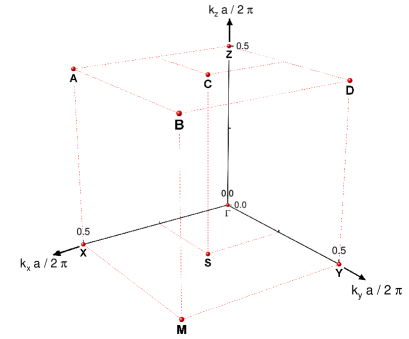
- RQ3格子対称性および結晶運動量は、2バンド系におけるポンプ駆動下の一時的および残留TR-ARPES信号にどのように影響を与えるか。
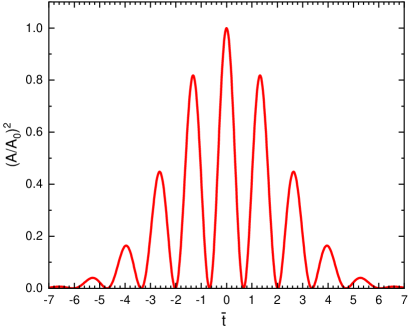
- RQ4プローブパルスの持続時間および遅延は、観測されるTR-ARPES信号にどのように作用し、スペクトル分解能にどのような影響を及えるか。
- RQ5非平衡状態におけるフラクチュエーション-散逸定理に類似した関係式を導出可能か。また、その関係はTR-ARPES信号とどのように関連するか。
主な発見
- DPOAフレームワークは、ポンプパルスによって誘発される非断熱遷移に起因するサイドバンドおよびバンドドレッシングの発生を正確に再現した。
- 本手法は、レジリエントバンドシフトおよび多光子共鳴が、ペイエルズ置換における時間依存位相の蓄積に起因することを明らかにした。この理解は、新規に考案されたペイエルズ展開によって明確化された。
- ポンプ後、特定のkポイントに残留励起状態が存在し、その分布は系の対称性およびバンド構造を反映している。これは、t > 0における占有スペクトル関数から示された。
- ポンプパルス中、レタードスペクトル関数が負の値をとるため、強い駆動下では物理的解釈が失われるが、パルス後には平衡状態に類似した特徴が回復する。
- 非平衡状態におけるフラクチュエーション-散逸定理が導出され、TR-ARPES信号が時間依存状態におけるレタードグリーン関数の虚部と関連づけられた。
- ハウストン法および単粒子密度行列アプローチとの比較により、DPOAが平均場近似を超えた多粒子効果を捉えていることが確認された。
この論文を読む
Nubintのビューアで原文を開き、読みながら気になる箇所をすぐに質問できます。
Nubintでこの論文を読むこのレビューはAIが論文の原文をもとに作成しました。引用する前に原文をご確認ください。