
[論文レビュー] Two Anderson impurities coupled through a superconducting island: charge stability diagrams and double impurity qubit
本稿では、超伝導島を介して結合された2つの量子ドットに基づく二重不純物キュービット(DIQ)を提案する。電子・正孔対称性とパリティ保護を活用することで、極めて電荷ノイズに敏感でない性能を実現する。主な結果として、遷移電気双極子モーメントがほぼゼロのチューナブルなキュービットが得られ、非一様なデcoh時間の長さが実現され、多光子駆動および強く非線形に結合されたキュービット操作のための新規なプラットフォームを示唆する。
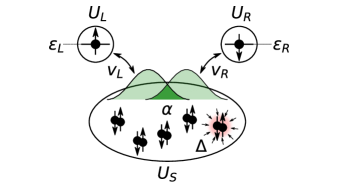
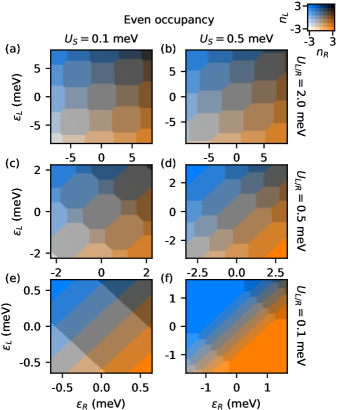
We present a model of two Anderson impurities coupled to and through a superconducting island. The model parametrizes the strength of the coupling between impurity sites, allowing it to represent a variable distance between the impurities. We systematically explore the effect of the model parameters in the subspaces with total even and odd occupancy, identifying unique features of the charge stability diagrams that distinguish the two parities. For total odd electron parity, we identify a device tuning, in which the splitting between the two lowest energy states is highly insensitive to changes of the chemical potentials. We investigate the degree to which a qubit based on such two states is tunable and discuss an optimal choice of parameters to maximize inhomogeneous dephasing time. Finally, we point out that the proposed qubit lacks a transition dipole moment, and outline some of the consequences on viable driving and readout mechanisms. The prototype qubits could be realized with the existing capabilities of coupling quantum dots to hard-gapped superconductors.
研究の動機と目的
- 超伝導スクリーニングと電子・正孔対称性を活用することで、電荷ノイズに対して極めて敏感でないキュービットアーキテクチャを設計すること。
- 化学ポテンシャルの変動に対してエネルギー準位差が安定するデバイスチューニング領域を同定すること。
- 二重不純物系をトポロジカルにインspiredされたキュービットとして、電荷感受性を最小限に抑えたものとしての可能性を検討すること。
- 遷移電気双極子モーメントがゼロであることがキュービット駆動および読み出しに与える影響を分析し、代替メカニズムを提案すること。
- 提案されたキュービットが、既存の量子ドット-超伝導体結合技術で実現可能であることを示すこと。
提案手法
- BCS零帯域幅近似を用いて、超伝導島に結合された二不純物アンダーソンモデルを定式化する。
- 混合角αを用いて不純物間結合強度をパrameter化し、有効距離および混合の制御を可能にする。
- 偶数および奇数の全電子占有状態の部分空間で系を分析し、電荷安定性ダイアグラムとエネルギー準位分裂に注目する。
- 対称性およびパリティ保護のおかげで、化学ポテンシャルの変動に対してエネルギー準位差が敏感でないパラメータ空間の「スイートスポット」を同定する。
- トンネル強度や非対称性などのパラメータを最適化することで、キュービットのチューナビリティとデコherence時間の評価を行う。
- 電気双極子モーメントが存在しないため、代替のキュービット制御および読み出しスキーム(量子容量の変化を介したパラメトリック駆動、レゾネータ結合など)を提案する。
実験結果
リサーチクエスチョン
- RQ1超伝導島を介して結合された二重不純物キュービットは、対称性およびパリティ保護を活用することで、高い電荷ノイズ耐性を達成できるか?
- RQ2どのパラメータ領域で、化学ポテンシャルの変動に対してエネルギー準位差が安定するか?
- RQ3遷移電気双極子モーメントがゼロであることは、キュービット駆動および読み出しにどのような影響を及ぼし、どのような代替メカニズムが有効か?
- RQ4最適なパラメータチューニングによって、キュービットの非一様デコherence時間はどの程度まで最大化できるか?
- RQ5この系は、現在の量子ドット-超伝導体統合技術で実現可能か?
主な発見
- 電子・正孔対称点かつ奇数の全電子パリティの状態にチューニングした場合、二重不純物キュービットは化学ポテンシャルの変動に対して極めて感度が低いエネルギー準位差を示す。
- キュービットの基底状態の重ね合わせは電荷中性であり、両不純物に等しい電子密度が分布し、電気双極子モーメントおよび遷移電気双極子モーメントがゼロとなる。
- スイートスポットにチューニングすることで、エネルギー準位差が電荷ノイズに対して最も敏感でなくなるため、非一様デコherence時間が最大に達する。
- 電気双極子モーメントがゼロのため、従来の単一光子駆動は効果がなく、二次の駆動依存性を示す強力な二光子Rabi駆動が必要となる。
- 読み出しは、キュービット状態間の量子容量の差を介したパラメトリック結合によるレゾネータ接続、またはベースバンドパルスによるエネルギー準位のずれを用いて実現可能である。
- この系はBravyiとKitaevが定義した最小フェルミオンキュービットを実現しており、強い非線形結合および多光子プロセスの研究に適したプラットフォームを提供する。
この論文を読む
Nubintのビューアで原文を開き、読みながら気になる箇所をすぐに質問できます。
Nubintでこの論文を読むこのレビューはAIが論文の原文をもとに作成しました。引用する前に原文をご確認ください。