
[論文レビュー] Valuing Distributed Energy Resources for Non-Wires Alternatives
本論文は、分散型エネルギー資源(DER)の投資をインcentivizeするとともにシステム運用コストを最小化する最適な共同設計価格信号を決定する二段階最適化フレームワークを提案する。DER投資家が得る必要があるリターンをシステム効率と一致させることで、従来のアップグレードの必要性が低減され、資本および運用コストが削減され、従来のアップグレードと比較して20年間でほぼ300万ドルの正規割引現在価値(NPV)の節約が達成される。
Distributed energy resources (DER) as non-wires alternatives, regardless of owner, have the potential to reduce system operating costs and delay system upgrades. However, it is difficult to determine the appropriate economic signal to incentivize DER investors to install capacity that will benefit both the DER investors and the system operator. In an attempt to determine this co-optimal price signal, we present a bilevel optimization framework for determining the least cost solution to distribution system over-loads. A key output of the framework is a spatiotemporal price signal to DER owners that simultaneously guarantees the DER owners' required rate of return and minimizes the system operation costs. The framework is demonstrated with a case by which the system operator considers utility owned battery energy storage systems, traditional system upgrades, and energy purchase from DER owners. The results show that by valuing DER for non-wires alternatives the utility owned storage system sizes can be reduced, less hardware upgrades are necessary, and upfront capital costs as well as operating costs are reduced.
研究の動機と目的
- 非ワイヤーズ代替手段としての配電系統運用者(DSO)と分散型エネルギー資源(DER)投資家のインセンティブを一致させる課題に対処すること。
- DER投資家が要求するリターンを達成するとともに、合計システム運用コストを最小化する経済的シグナルを開発すること。
- DERを非ワイヤーズ代替手段として評価することで、従来のインfraストラクチャアップグレードへの依存を減らし、ライフサイクルコストを低減できるかを示すこと。
提案手法
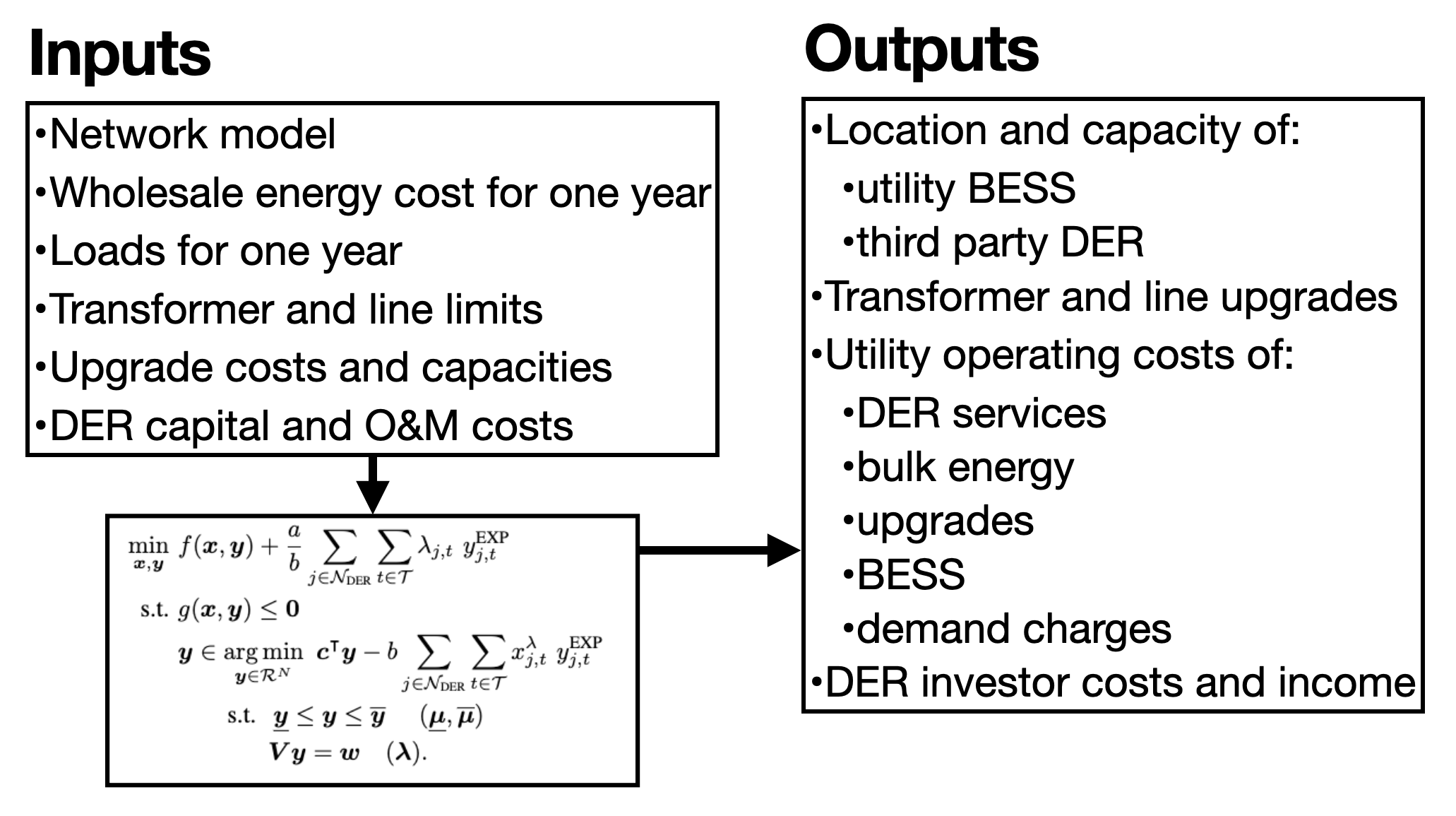
- フレームワークは二段階最適化構造を用いる:上段では、DER投資とアップグレードを含むシステムコストを最小化する。下段では、DER投資家が要求するリターンを達成することを保証する。
- 上段には、電力会社所有のバッテリーストレージ、トランスフォーマーおよび線路のアップグレード、DER所有者からのエネルギー購入の意思決定が含まれる。
- 下段では、技術的制約およびエネルギー流れの制限のもとで、DER投資家の正規割引現在価値を最大化する行動をモデル化する。
- フレームワークは、ノードごとの場所的価値および時間変動エネルギー流れを反映する空間的・時間的価格シグナルを組み込む。
- 下段には線形プログラミング、上段には混合整数プログラミング(バイナリ変数を含む設備アップグレード意思決定を含む)を用いる。
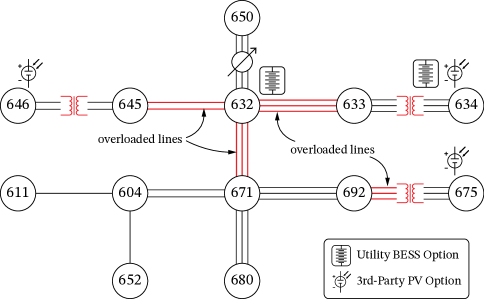
- モデルは123バスを有する実際の配電受電線でテストされ、2040年までの太陽光発電システム、バッテリーストレージ、負荷成長予測が組み込まれている。
実験結果
リサーチクエスチョン
- RQ1DER投資家の要求リターンを満たし、同時にシステム運用コストを最小化する共同最適価格シグナルをどのように設計できるか?
- RQ2DERを非ワイヤーズ代替手段として評価することで、従来の配電アップグレードの必要性にどのような影響を与えるか?
- RQ3第三者所有DERの導入は、電力会社所有のエネルギー貯蔵に依存する場合と比較して、ライフサイクルコストの節約にどの程度寄与するか?
- RQ4増加する電気化および負荷成長の下で、このフレームワークは資本および運用支出をどの程度削減できるか?
主な発見
- 従来のインfraストラクチャアップグレードの必要性が低減され、テストケースでは大部分の過負荷部品のアップグレードを回避した。
- DERを非ワイヤーズ代替手段として評価することで、従来のアップグレード経路と比較して20年間で正規割引現在価値でほぼ300万ドルの節約が達成された。
- 共同最適価格シグナルによって可能になった第三者所有DER投資により、電力会社所有のバッテリーのみのシナリオと比較して、追加で100万ドルの正規割引現在価値の節約が得られた。
- 価格シグナルの有無にかかわらず、DER投資家の正規割引現在価値コストは変わらず(279万ドル)、両シナリオで要求リターンが満たされていることが確認された。
- 価格シグナルにより、バス675に最大550kWのDER設置が可能となり、エネルギー販売および節約により高い資本コストを相殺し、システム効率が向上した。
- 二段階モデルは、標準ラップトップ上で1時間以内に2%未満の最適性ギャップを達成し、計算の複雑性にもかかわらず実用的妥当性を示した。
この論文を読む
Nubintのビューアで原文を開き、読みながら気になる箇所をすぐに質問できます。
Nubintでこの論文を読むこのレビューはAIが論文の原文をもとに作成しました。引用する前に原文をご確認ください。