
[Paper Review] Incipient Fault Detection in Power Distribution System: A Time-Frequency Embedded Deep Learning Based Approach
This paper proposes an AD-TFM-AT model that integrates adaptive wavelet transform with attention-enhanced LSTM to detect incipient faults in power distribution systems. By learning scale and translation parameters of wavelets for multi-resolution time-frequency analysis and using phase-switching and temporal-sliding data augmentation, the model achieves state-of-the-art accuracy of 99% on the SGAH dataset and 97% on the IFPD dataset.
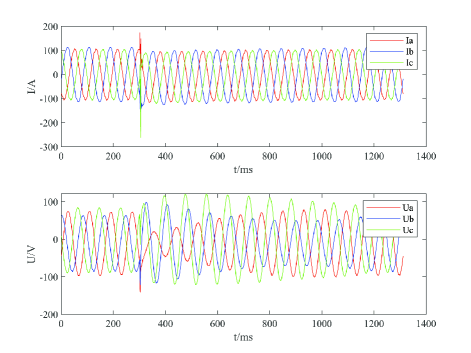
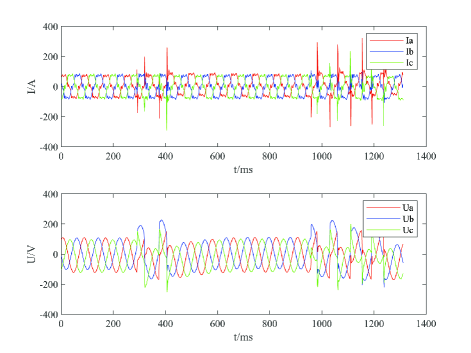
Incipient fault detection in power distribution systems is crucial to improve the reliability of the grid. However, the non-stationary nature and the inadequacy of the training dataset due to the self-recovery of the incipient fault signal, make the incipient fault detection in power distribution systems a great challenge. In this paper, we focus on incipient fault detection in power distribution systems and address the above challenges. In particular, we propose an ADaptive Time-Frequency Memory(AD-TFM) cell by embedding wavelet transform into the Long Short-Term Memory (LSTM), to extract features in time and frequency domain from the non-stationary incipient fault signals.We make scale parameters and translation parameters of wavelet transform learnable to adapt to the dynamic input signals. Based on the stacked AD-TFM cells, we design a recurrent neural network with ATtention mechanism, named AD-TFM-AT model, to detect incipient fault with multi-resolution and multi-dimension analysis. In addition, we propose two data augmentation methods, namely phase switching and temporal sliding, to effectively enlarge the training datasets. Experimental results on two open datasets show that our proposed AD-TFM-AT model and data augmentation methods achieve state-of-the-art (SOTA) performance of incipient fault detection in power distribution system. We also disclose one used dataset logged at State Grid Corporation of China to facilitate future research.
Motivation & Objective
- Address the challenge of detecting non-stationary, self-recovering incipient faults in power distribution systems due to limited labeled training data.
- Overcome the limitations of traditional feature-based and standard LSTM models in capturing complex, transient, non-stationary fault signals.
- Improve feature extraction from time and frequency domains using a learnable wavelet transform embedded in LSTM architecture.
- Enhance model generalization and fault detection accuracy through a novel attention mechanism and data augmentation strategies.
Proposed method
- Propose an ADaptive Time-Frequency Memory (AD-TFM) cell that embeds wavelet transform into the LSTM hidden state to jointly model temporal and spectral features.
- Make scale and translation parameters of the wavelet transform learnable to adapt dynamically to input signal characteristics for multi-resolution analysis.
- Stack multiple AD-TFM cells to build a deep recurrent network with enhanced long-term dependency modeling.
- Integrate an attention mechanism into the AD-TFM architecture (AD-TFM-AT) to focus on critical time-frequency features for improved decision-making.
- Design two data augmentation techniques—phase switching and temporal sliding—to increase training data diversity and mitigate data scarcity.
- Train and evaluate the AD-TFM-AT model on two open datasets: SGAH and IFPD, with ablation studies and comparison to SOTA models.
Experimental results
Research questions
- RQ1Can an end-to-end deep learning model effectively detect incipient faults in power distribution systems despite their non-stationary and self-recovering nature?
- RQ2How does integrating learnable wavelet transform into LSTM improve feature extraction from time-frequency representations of incipient fault signals?
- RQ3To what extent does the attention mechanism enhance the model’s ability to focus on salient fault features in noisy, transient signals?
- RQ4Can data augmentation techniques like phase switching and temporal sliding significantly improve model generalization when training data is scarce?
- RQ5Does the proposed AD-TFM-AT model outperform existing state-of-the-art methods in terms of accuracy, precision, recall, and F1-score on real-world incipient fault datasets?
Key findings
- The AD-TFM-AT model achieves a test accuracy of 99% on the SGAH dataset and 97% on the IFPD dataset, outperforming all baseline models.
- The model achieves an F1-score of 0.97 on both datasets, demonstrating strong balance between precision and recall.
- The AUC of the AD-TFM-AT model reaches 0.97 on the HRGF fault class, significantly outperforming TFM-AT (0.89) and AD-TFM (0.85), indicating superior detection capability.
- Phase switching and temporal sliding data augmentation methods effectively increase training data diversity and improve model robustness.
- The ablation study confirms that both the adaptive wavelet component and the attention mechanism are essential for high performance, with the full model showing the best generalization.
- Compared to convolutional models like SLI-CNN and Minirocket, AD-TFM-AT achieves significantly higher F1-scores (0.97 vs. 0.78 and 0.80), proving its superiority in handling non-stationary signals.
Read this paper
Open the full text in the Nubint reader and ask about any passage as you read.
Read this paper on NubintThis review was generated by AI from the original paper. Please check the paper before citing it.