
[Paper Review] On low-depth algorithms for quantum phase estimation
This paper proposes a low-depth quantum phase estimation algorithm based on robust phase estimation (RPE) that achieves Heisenberg-limited scaling with minimal ancilla qubits and tolerates inexact initial states. It further introduces a modified variant that reduces the maximum circuit depth prefactor to Θ(1−p₀) when the initial state overlap p₀ approaches 1, significantly improving performance on early fault-tolerant quantum devices compared to prior methods.
Quantum phase estimation is one of the critical building blocks of quantum computing. For early fault-tolerant quantum devices, it is desirable for a quantum phase estimation algorithm to (1) use a minimal number of ancilla qubits, (2) allow for inexact initial states with a significant mismatch, (3) achieve the Heisenberg limit for the total resource used, and (4) have a diminishing prefactor for the maximum circuit length when the overlap between the initial state and the target state approaches one. In this paper, we prove that an existing algorithm from quantum metrology can achieve the first three requirements. As a second contribution, we propose a modified version of the algorithm that also meets the fourth requirement, which makes it particularly attractive for early fault-tolerant quantum devices.
Motivation & Objective
- To develop a quantum phase estimation algorithm suitable for early fault-tolerant quantum devices with minimal resource overhead.
- To satisfy the four key requirements: few ancilla qubits, tolerance to inexact initial states, Heisenberg-limited total resource scaling, and diminishing maximum circuit depth as initial state fidelity increases.
- To improve upon existing methods by reducing the prefactor of maximum circuit depth when the initial state is close to the target eigenstate.
- To demonstrate that RPE-type algorithms can achieve near-optimal performance without requiring complex optimization procedures.
Proposed method
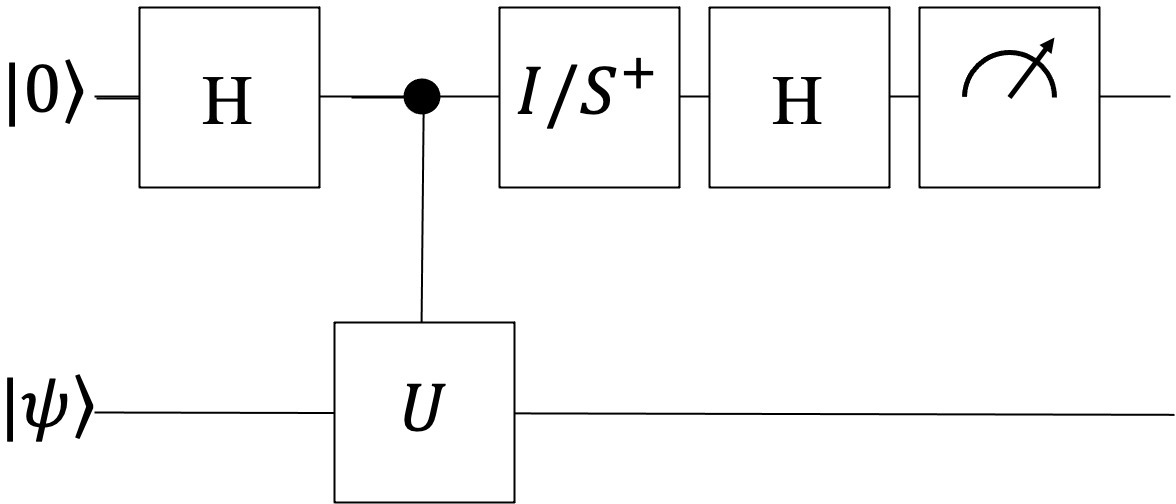
- Adapts a robust phase estimation (RPE) algorithm from quantum metrology for quantum phase estimation, using iterative phase estimation with controlled-U^{2^j} operations.
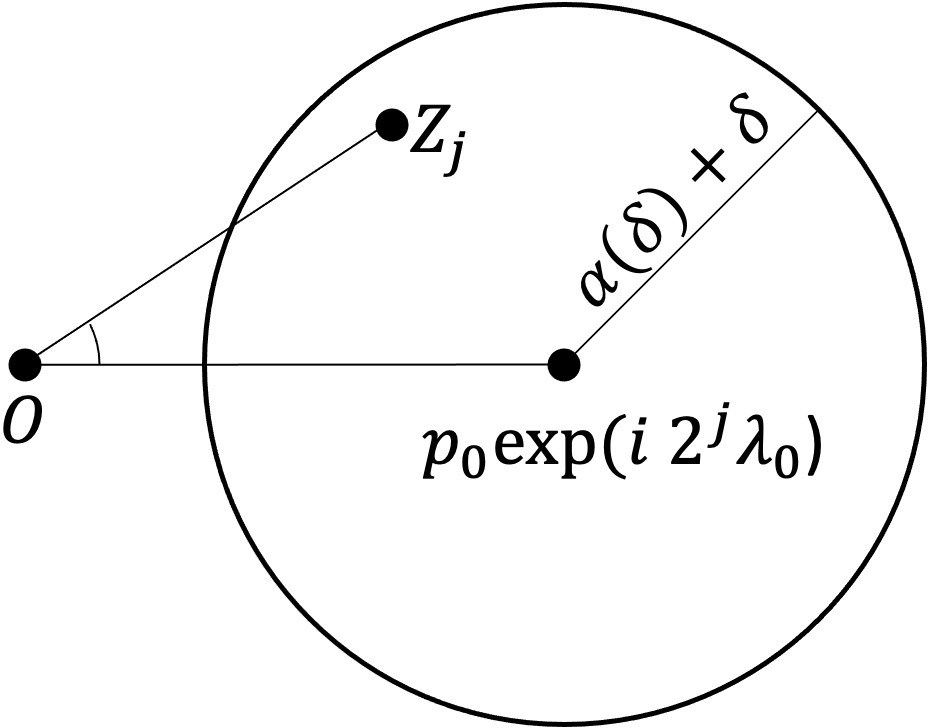
- Employs a binary search-like refinement of the phase estimate, halving the confidence interval in each iteration to achieve high precision.
- Introduces a modified version of RPE that adjusts the measurement strategy based on a tunable parameter ξ to reduce the maximum circuit depth.
- Analyzes the algorithm's performance using theoretical bounds on error and resource scaling, showing Heisenberg-limited total runtime T_total = Õ(ε⁻¹).
- Derives conditions under which the algorithm remains effective even when the initial state has low overlap with the target eigenstate, down to p₀ > 4−2√3 ≈ 0.536.
- Uses numerical simulations on a transverse field Ising model to validate performance across different initial overlaps and parameter choices.
Experimental results
Research questions
- RQ1Can a simple RPE-based algorithm achieve Heisenberg-limited scaling with minimal ancilla qubits and tolerate inexact initial states?
- RQ2Can the maximum circuit depth be made to scale as Õ(ε⁻¹) with a prefactor that diminishes as the initial state fidelity approaches 1?
- RQ3How does the performance of the modified RPE algorithm compare to optimization-based methods like QCELS in terms of runtime and error scaling?
- RQ4What is the minimal required initial overlap p₀ for reliable phase estimation in the proposed algorithm?
- RQ5Can the algorithm be adapted to work efficiently with approximate Hamiltonian simulations, where U is only approximately implemented?
Key findings
- The RPE-based algorithm achieves Heisenberg-limited total runtime T_total = Õ(ε⁻¹), satisfying the optimal resource scaling requirement.
- The algorithm tolerates initial state overlaps as low as p₀ > 4−2√3 ≈ 0.536, improving upon the previous threshold of 0.71 in [5].
- The modified algorithm reduces the maximum circuit depth prefactor to Θ(1−p₀), significantly better than the Θ(√(1−p₀)) bound in [5].
- Numerical simulations show that Algorithm 1 achieves lower total runtime T_total than QCELS while maintaining comparable error scaling.
- For high-fidelity initial states (p₀ = 0.99), decreasing the parameter ξ from 1 to 0.1 reduces the maximum circuit depth prefactor, confirming the theoretical scaling.
- The method avoids complex optimization procedures, offering a structurally simpler alternative to QCELS while matching or outperforming it in key metrics.
Read this paper
Open the full text in the Nubint reader and ask about any passage as you read.
Read this paper on NubintThis review was generated by AI from the original paper. Please check the paper before citing it.