
[Paper Review] Pseudorandom unitaries are neither real nor sparse nor noise-robust
This paper establishes fundamental limits on pseudorandom unitaries (PRUs) and pseudorandom quantum states (PRSs), proving they cannot be real, sparse, or noise-robust due to their inherent high imaginarity and coherence. It shows that PRUs require exponentially many copies to test for imaginarity, ruling out efficient implementation on noisy intermediate-scale quantum devices, and introduces pseudoresource ensembles that mimic high-resource states with low-resource ones.
Pseudorandom quantum states (PRSs) and pseudorandom unitaries (PRUs) possess the dual nature of being efficiently constructible while appearing completely random to any efficient quantum algorithm. In this study, we establish fundamental bounds on pseudorandomness. We show that PRSs and PRUs exist only when the probability that an error occurs is negligible, ruling out their generation on noisy intermediate-scale and early fault-tolerant quantum computers. Further, we show that PRUs need imaginarity while PRS do not have this restriction. This implies that quantum randomness requires in general a complex-valued formalism of quantum mechanics, while for random quantum states real numbers suffice. Additionally, we derive lower bounds on the coherence of PRSs and PRUs, ruling out the existence of sparse PRUs and PRSs. We also show that the notions of PRS, PRUs and pseudorandom scramblers (PRSSs) are distinct in terms of resource requirements. We introduce the concept of pseudoresources, where states which contain a low amount of a given resource masquerade as high-resource states. We define pseudocoherence, pseudopurity and pseudoimaginarity, and identify three distinct types of pseudoresources in terms of their masquerading capabilities. Our work also establishes rigorous bounds on the efficiency of property testing, demonstrating the exponential complexity in distinguishing real quantum states from imaginary ones, in contrast to the efficient measurability of unitary imaginarity. Further, we show an exponential advantage in imaginarity testing when having access to the complex conjugate of the state. Lastly, we show that the transformation from a complex to a real model of quantum computation is inefficient, in contrast to the reverse process, which is efficient. Our results establish fundamental limits on property testing and provide valuable insights into quantum pseudorandomness.
Motivation & Objective
- To establish rigorous bounds on the resource requirements for pseudorandom quantum states (PRSs) and pseudorandom unitaries (PRUs).
- To investigate whether PRUs can be real, sparse, or robust to noise, given their essential role in quantum cryptography and computation.
- To define and analyze pseudoresource ensembles that masquerade as high-resource states using only low-resource states.
- To determine the complexity of property testing for imaginarity and coherence in quantum states and unitaries.
- To examine the efficiency of transforming between real and complex models of quantum computation.
Proposed method
- Derives lower bounds on the imaginarity and coherence of PRUs and PRSs using Haar measure integrals and trace norms.
- Applies property testing frameworks to bound the number of copies needed to detect imaginarity and coherence, using random matrix theory.
- Introduces the concept of pseudoresources—ensembles that mimic high-resource states with low-resource ones—classifying them into three distinct types.
- Uses unitary integral identities and symmetry arguments to compute expected values of matrix elements over the Haar measure.
- Proves that the transformation from complex to real quantum computation is inefficient, while the reverse is efficient.
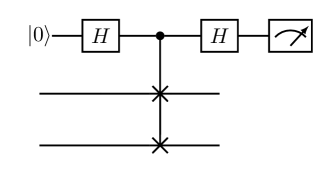
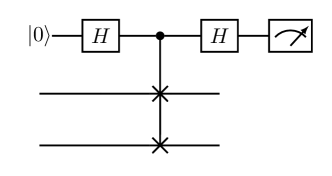
- Establishes that PRUs require Ω(2^{n/2}) copies to test for imaginarity, while unitary imaginarity can be measured efficiently with O(1) copies.
Experimental results
Research questions
- RQ1Can pseudorandom unitaries be real or sparse, given their pseudorandomness and resource requirements?
- RQ2What is the minimum level of coherence and imaginarity required for a unitary to be pseudorandom?
- RQ3How many copies are needed to test whether a quantum state or unitary is imaginary or coherent?
- RQ4Can low-resource states effectively masquerade as high-resource ones, and if so, in what ways?
- RQ5Is it possible to efficiently transform a complex quantum computation into a real one, or vice versa?
Key findings
- Pseudorandom unitaries require imaginarity approaching 1−negl(n), meaning they are almost maximally imaginary.
- The number of copies needed to test the imaginarity of a quantum state scales as Ω(2^{n/2}), indicating exponential complexity.
- PRUs require coherence of order ω(log n), ruling out low-coherence constructions.
- PRUs are not robust to noise: any depolarizing noise with probability p = negligible(n) breaks pseudorandomness.
- Real or sparse PRUs cannot exist, as they would lack sufficient imaginarity and coherence.
- Transforming from a complex to a real quantum model is inefficient, while the reverse transformation is efficient.
Read this paper
Open the full text in the Nubint reader and ask about any passage as you read.
Read this paper on NubintThis review was generated by AI from the original paper. Please check the paper before citing it.