
[Paper Review] QChecker: Detecting Bugs in Quantum Programs via Static Analysis
QChecker is a static analysis tool that detects bugs in Qiskit quantum programs by analyzing abstract syntax trees (ASTs) and matching code patterns against known bug signatures. It achieves high detection accuracy on the Bugs4Q benchmark, demonstrating effectiveness in identifying common quantum programming errors without execution, offering a fast, low-cost alternative to dynamic testing.
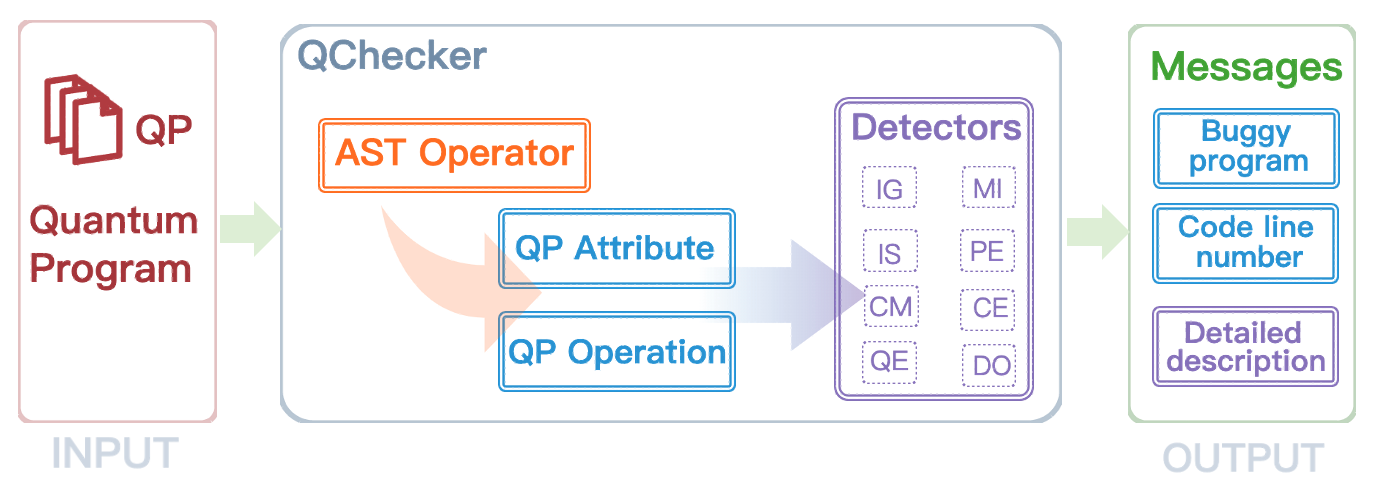
Static analysis is the process of analyzing software code without executing the software. It can help find bugs and potential problems in software that may only appear at runtime. Although many static analysis tools have been developed for classical software, due to the nature of quantum programs, these existing tools are unsuitable for analyzing quantum programs. This paper presents QChecker, a static analysis tool that supports finding bugs in quantum programs in Qiskit. QChecker consists of two main modules: a module for extracting program information based on abstract syntax tree (AST), and a module for detecting bugs based on patterns. We evaluate the performance of QChecker using the Bugs4Q benchmark. The evaluation results show that QChecker can effectively detect various bugs in quantum programs.
Motivation & Objective
- To address the lack of effective, low-cost debugging tools for quantum programs, especially given the high cost of running on quantum hardware or simulators.
- To develop a static analysis solution tailored to quantum programs, overcoming limitations of classical static analysis tools due to quantum-specific behaviors like superposition and entanglement.
- To identify and codify common quantum programming bugs into detectable patterns for automated analysis.
- To evaluate the tool’s effectiveness and performance on a realistic benchmark of real-world buggy quantum programs.
- To enable early, efficient detection of quantum bugs during development, reducing reliance on expensive dynamic execution.
Proposed method
- Extract program information from Qiskit code using AST-based analysis to model quantum circuit structure and operations.
- Define eight distinct bug detectors based on common error patterns derived from real-world quantum bugs in prior studies.
- Apply pattern-matching heuristics to detect issues such as incorrect qubit usage, measurement timing errors, and gate application flaws.
- Use a two-module architecture: one for AST traversal and metadata extraction, and another for applying bug detection rules.
- Support extensibility to other Python-based quantum languages like Cirq and ProjectQ through modular design.
- Validate the tool using the Bugs4Q benchmark, which contains 42 real-world buggy quantum programs.
Experimental results
Research questions
- RQ1Can static analysis effectively detect common bugs in quantum programs without dynamic execution?
- RQ2How accurately can pattern-based detection identify known quantum programming errors in real-world code?
- RQ3What is the performance overhead and scalability of applying static analysis to quantum programs?
- RQ4To what extent can the tool be extended to other quantum programming frameworks beyond Qiskit?
- RQ5How does the tool compare to dynamic testing in terms of false positive/negative rates and resource usage?
Key findings
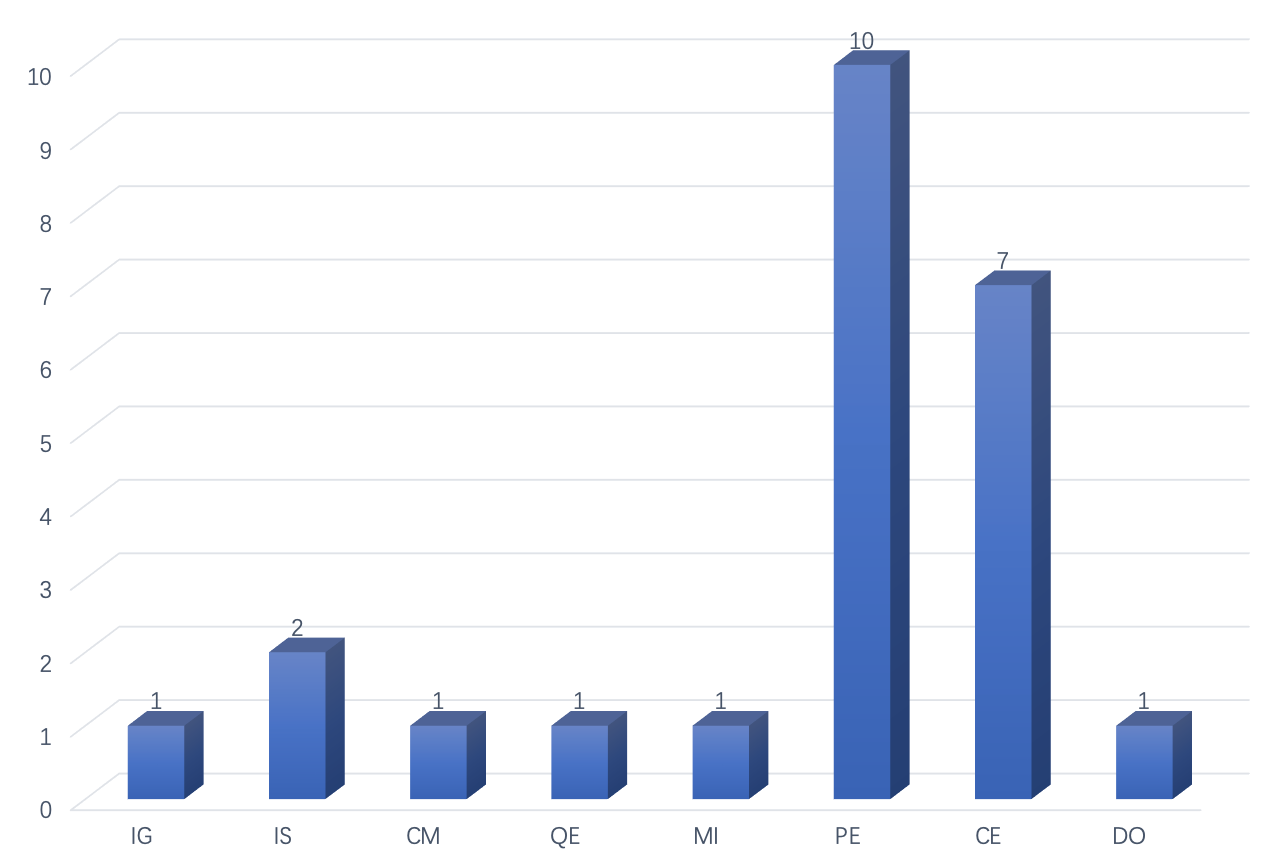
- QChecker successfully detected a significant portion of the 42 buggy quantum programs in the Bugs4Q benchmark, demonstrating high detection capability.
- The tool identified various common bug patterns such as incorrect qubit measurement, improper gate ordering, and incorrect register usage.
- Evaluation confirmed that QChecker operates efficiently, offering a fast and low-cost alternative to dynamic testing.
- The AST-based extraction module correctly parsed and analyzed Qiskit code, enabling accurate pattern matching.
- The tool showed potential for extension to other quantum languages, though limitations exist with syntax-heavy frameworks like ProjectQ.
- The replication package is publicly available, supporting reproducibility and further research.
Read this paper
Open the full text in the Nubint reader and ask about any passage as you read.
Read this paper on NubintThis review was generated by AI from the original paper. Please check the paper before citing it.