
[Paper Review] Quantum Computing in Logistics and Supply Chain Management an Overview
The paper surveys how quantum computing can address complex optimization in logistics and supply chain management, emphasizing quantum annealing and gate-based approaches, and highlighting hybrid quantum-classical solutions and current hardware limitations.
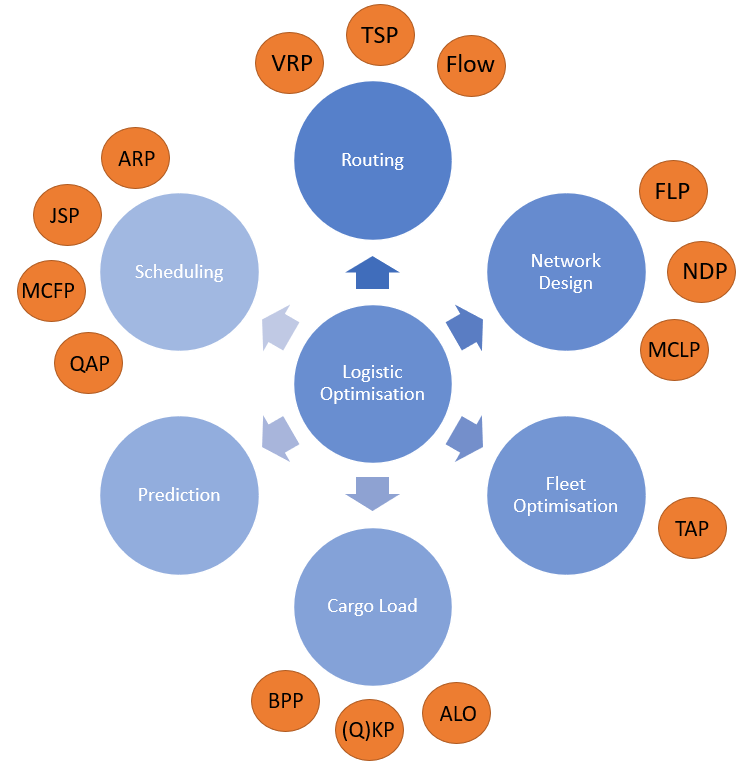
The work explores the integration of quantum computing into logistics and supply chain management, emphasising its potential for use in complex optimisation problems. The discussion introduces quantum computing principles, focusing on quantum annealing and gate-based quantum computing, with the Quantum Approximate Optimisation Algorithm and Quantum Annealing as key algorithmic approaches. The paper provides an overview of quantum approaches to routing, logistic network design, fleet maintenance, cargo loading, prediction, and scheduling problems. Notably, most solutions in the literature are hybrid, combining quantum and classical computing. The conclusion highlights the early stage of quantum computing, emphasising its potential impact on logistics and supply chain optimisation. In the final overview, the literature is categorised, identifying quantum annealing dominance and a need for more research in prediction and machine learning is highlighted. The consensus is that quantum computing has great potential but faces current hardware limitations, necessitating further advancements for practical implementation.
Motivation & Objective
- Motivate the integration of quantum computing into logistics and supply chain optimization.
- Summarize quantum computing paradigms (gate-based and quantum annealing) and key algorithms (QAOA, QA).
- Map quantum approaches to common logistics problems (routing, network design, fleet, cargo loading, prediction, scheduling).
- Assess literature trends, practical viability, and blind spots to guide future research.
Proposed method
- Explain fundamental quantum concepts (superposition, entanglement, interference, tunnelling).
- Describe gate-based quantum computing and circuit representations for encoding data and problems.
- Present QUBO/Ising formulations as standard inputs for quantum optimization.
- Explain quantum annealing and the D-Wave approach with its challenges (parameters, chaining, hardware limits).
- Introduce QAOA as a gate-based, hybrid alternative to quantum annealing for combinatorial problems.
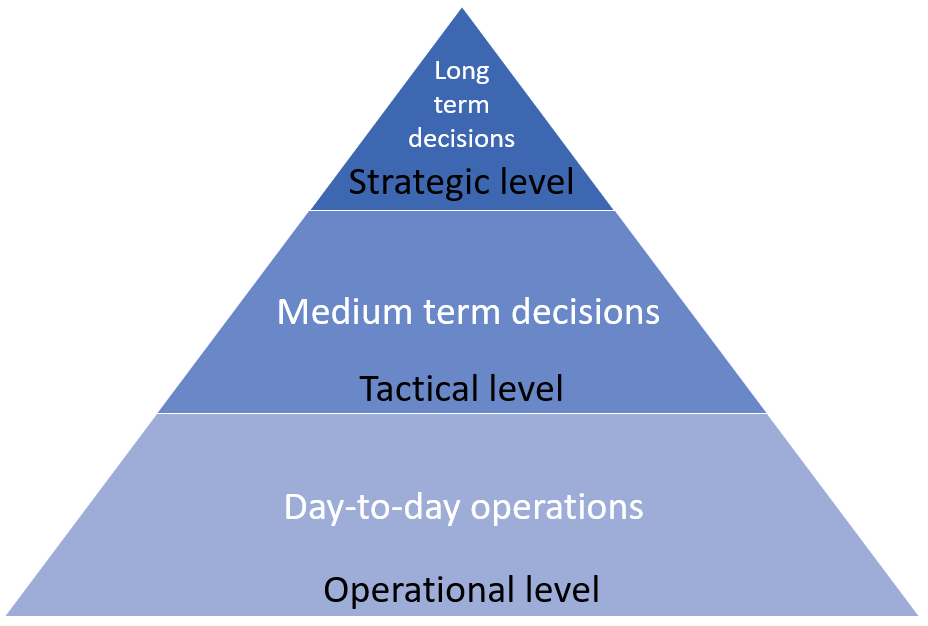
- Conduct a literature overview of over 80 papers across six logistics problem areas to identify trends and gaps.
Experimental results
Research questions
- RQ1How can quantum computing paradigms be applied to core logistics optimization problems (routing, network design, fleet, cargo loading, prediction, scheduling)?”
- RQ2What are the dominant quantum approaches (QA vs gate-based, QAOA) and how do they compare in terms of applicability and current hardware constraints?
- RQ3What are the practical limitations and research blind spots preventing real-world quantum-enabled logistics solutions?
- RQ4To what extent do hybrid quantum-classical methods dominate current literature, and where might they offer the most advantage?
- RQ5What future research directions are recommended to advance quantum computing in logistics and supply chain management?
Key findings
- Quantum computing offers potential advantages for solving combinatorial optimization problems in logistics, with a focus on quantum annealing and QAOA as key approaches.
- Most literature on the topic is hybrid, combining quantum and classical computing techniques.
- Quantum annealing, particularly via D-Wave, is a dominant method but faces hardware and parameter tuning limitations, such as chain strength and annealing time.
- QAOA provides a gate-based, variational alternative with potential resilience to noise but requires careful parameter optimization and problem encoding.
- The literature identifies routing, network design, fleet management, cargo loading, prediction, and scheduling as primary application areas, with emphasis on multi-objective and dynamic optimization; there is a call for more research in prediction and machine learning within quantum approaches.
Read this paper
Open the full text in the Nubint reader and ask about any passage as you read.
Read this paper on NubintThis review was generated by AI from the original paper. Please check the paper before citing it.