
[Paper Review] Topology of critical points in boundary matrix duals
This paper proposes a topological classification of critical points and equilibrium phases in the AdS/CFT correspondence by computing topological charges of Schwarzschild and charged black holes in AdS and their dual ${\cal{N}}=4$ $SU(N)$ SYM matrix models. Using an off-shell Bragg-Williams free energy, it shows that critical points in the bulk and boundary matrix model carry identical topological charges (+1 for HP transition, ±1 for stable/unstable phases), confirming consistency between bulk and boundary topological invariants and supporting the conjecture that total topological charge for black holes is zero.
Computation of topological charges of the Schwarzschild and charged black holes in AdS in canonical and grand canonical ensembles allows for a classification of the phase transition points via the Bragg-Williams off-shell free energy. We attempt a topological classification of the critical points and the equilibrium phases of the dual gauge theory via a phenomenological matrix model, which captures the features of the ${\cal{N}}=4$, $SU(N)$ Super Yang-Mills theory on $S^3$ at finite temperature at large $N$. With minimal modification of parameters, critical points of the matrix model at finite chemical potential can be classified as well. The topological charges of locally stable and unstable dynamical phases of the system turn out to be opposite to each other, totalling to zero, and this matches the analysis in the bulk.
Motivation & Objective
- To establish a topological classification of critical points in black hole thermodynamics using topological charges derived from off-shell free energy.
- To investigate whether the same topological invariants emerge in the dual boundary matrix model for ${\cal{N}}=4$ $SU(N)$ SYM theory on $S^3$ at finite temperature.
- To verify the holographic consistency between bulk black hole phase transitions and boundary matrix model phase structures via topological invariants.
- To explore the role of chemical potential in modifying the matrix model parameters and its impact on topological classification.
- To test the conjecture that the total topological charge of locally stable and unstable black hole phases sums to zero.
Proposed method
- Construct an off-shell Bragg-Williams free energy for black holes in AdS to compute topological charges of critical points.
- Define a vector field from the effective potential of the boundary matrix model to compute topological charges of phase transition points.
- Use the topological charge formalism from [18] to classify critical points as +1 or -1 based on the index of the vector field's zeros.
- Map the topological charges of stable and unstable equilibrium phases in the bulk and boundary, ensuring consistency between both sides.
- Incorporate chemical potential dependence into the matrix model parameters (a,b), allowing classification of critical points at finite chemical potential.
- Compare topological charges of the Hawking-Page transition and second-order critical points in both bulk and boundary models.
Experimental results
Research questions
- RQ1Do the topological charges of critical points in the bulk black hole phase diagram match those computed from the boundary matrix model?
- RQ2What is the topological charge of the Hawking-Page transition point in the bulk and its dual matrix model, and does it remain consistent under finite chemical potential?
- RQ3How do the topological charges of stable and unstable equilibrium phases in the bulk relate to those in the boundary matrix model?
- RQ4Does the total topological charge of all phases (stable + unstable) sum to zero, as conjectured?
- RQ5How does the inclusion of chemical potential affect the topological classification of phase transitions in the boundary matrix model?
Key findings
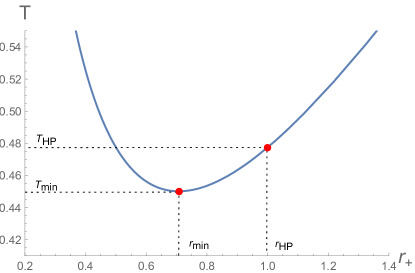
- The Hawking-Page transition point in the bulk has a topological charge of +1, which is reproduced in the boundary matrix model with the same value.
- The topological charge of the critical point in the grand canonical ensemble is +1, consistent with the bulk analysis.
- Stable equilibrium phases in both bulk and boundary carry topological charge +1, while unstable phases carry -1, summing to zero as conjectured.
- The second-order critical point of charged black holes in the canonical ensemble has a topological charge of +1, differing from results in [18] due to differing thermodynamic frameworks.
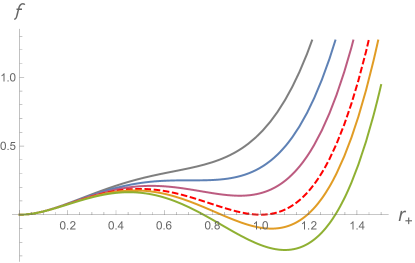
- The topological charges of saddle points in the effective potential $V(\rho)$ on the boundary match those of the corresponding black holes in the bulk.
- The results support the holographic consistency of topological invariants between bulk black hole thermodynamics and boundary matrix models.
Read this paper
Open the full text in the Nubint reader and ask about any passage as you read.
Read this paper on NubintThis review was generated by AI from the original paper. Please check the paper before citing it.